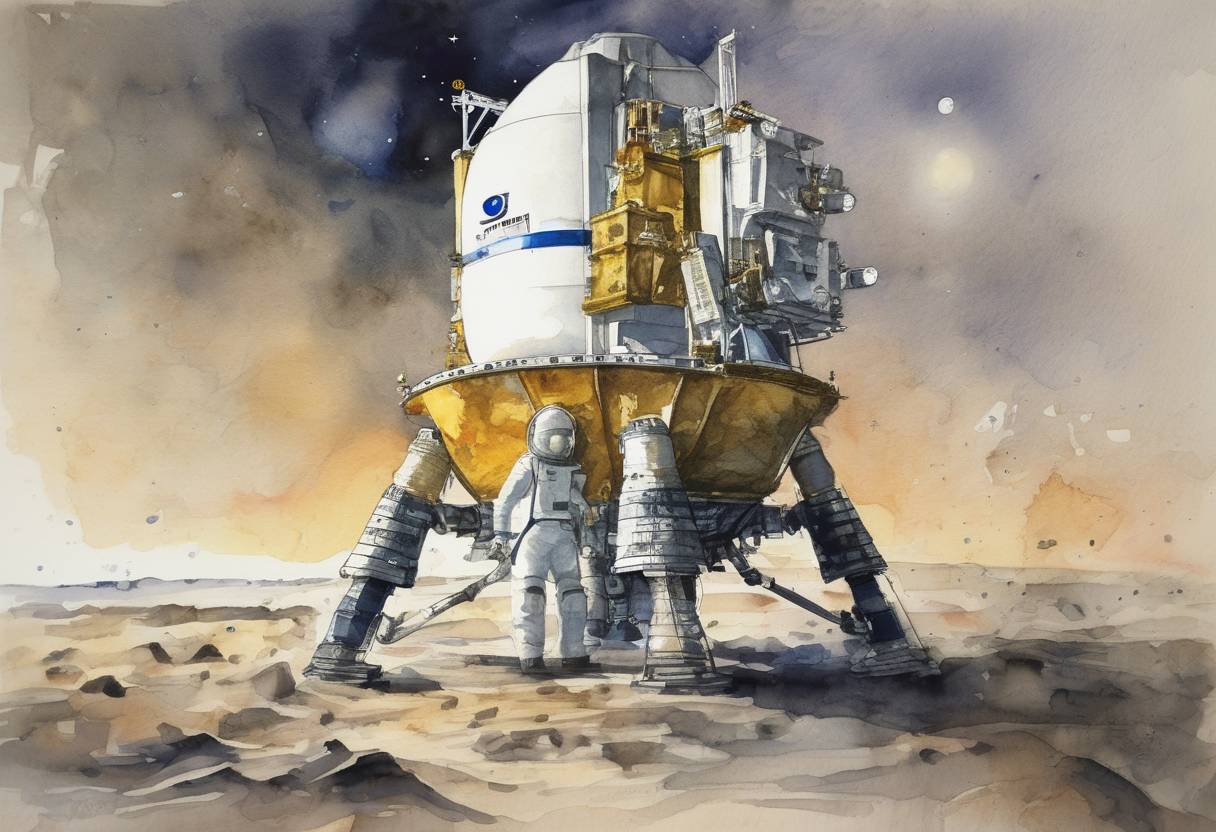
Chandrayaan-1: India’s First Lunar Probe
On October 22, 2008, India marked a significant milestone in its space exploration efforts with the successful launch of its first lunar probe, Chandrayaan-1. This mission was a pivotal moment for the Indian Space Research Organisation (ISRO) and positioned India among the elite group of nations capable of conducting lunar exploration.
Background and Objectives
Chandrayaan-1, meaning “Moon Craft” in Sanskrit, was part of India’s ambitious space program aimed at expanding its scientific capabilities and asserting its presence in space exploration. The mission had several key objectives:
- Mapping the Moon: To create a detailed map of the Moon’s surface, including its topography and mineral composition.
- Searching for Water: To investigate the presence of water ice in the Moon’s polar regions.
- Studying the Moon’s Atmosphere: To analyze the Moon’s thin atmosphere and its interaction with solar wind.
- Technological Demonstration: To showcase India’s ability to design, launch, and manage a complex space mission.
The Launch
Chandrayaan-1 was launched aboard the Polar Satellite Launch Vehicle (PSLV-C11) from the Satish Dhawan Space Centre in Sriharikota, India. The launch was executed flawlessly, with the spacecraft successfully entering a lunar transfer trajectory.
Key Achievements
- Lunar Orbit Insertion: On November 8, 2008, Chandrayaan-1 entered lunar orbit, making India the fourth country to place a spacecraft around the Moon.
- Moon Impact Probe: On November 14, 2008, the Moon Impact Probe (MIP) was released from Chandrayaan-1, impacting the lunar surface and marking India’s presence on the Moon. This event coincided with the birth anniversary of Jawaharlal Nehru, India’s first Prime Minister.
- Water Discovery: One of the mission’s most significant achievements was the discovery of water molecules on the lunar surface, a finding that was confirmed by NASA and other international space agencies.
Scientific Contributions
Chandrayaan-1 carried 11 scientific instruments, including five from international space agencies such as NASA and the European Space Agency (ESA). These instruments provided valuable data on the Moon’s surface composition, mineralogy, and exosphere.
Aftermath and Legacy
Although the mission was initially planned to last two years, contact with Chandrayaan-1 was lost on August 29, 2009, after 312 days in orbit. Despite this, the mission was considered a resounding success, achieving 95% of its objectives.
Chandrayaan-1’s success laid the groundwork for future Indian space missions, including Chandrayaan-2 and the Mars Orbiter Mission (Mangalyaan). It also bolstered India’s reputation as a capable and cost-effective player in the global space community.
Broader Significance
The launch of Chandrayaan-1 was a testament to India’s growing technological prowess and its commitment to advancing scientific knowledge. It inspired a new generation of scientists and engineers in India and demonstrated the potential for international collaboration in space exploration.
Chandrayaan-1 remains a source of national pride and a symbol of India’s aspirations in the realm of space science and exploration.