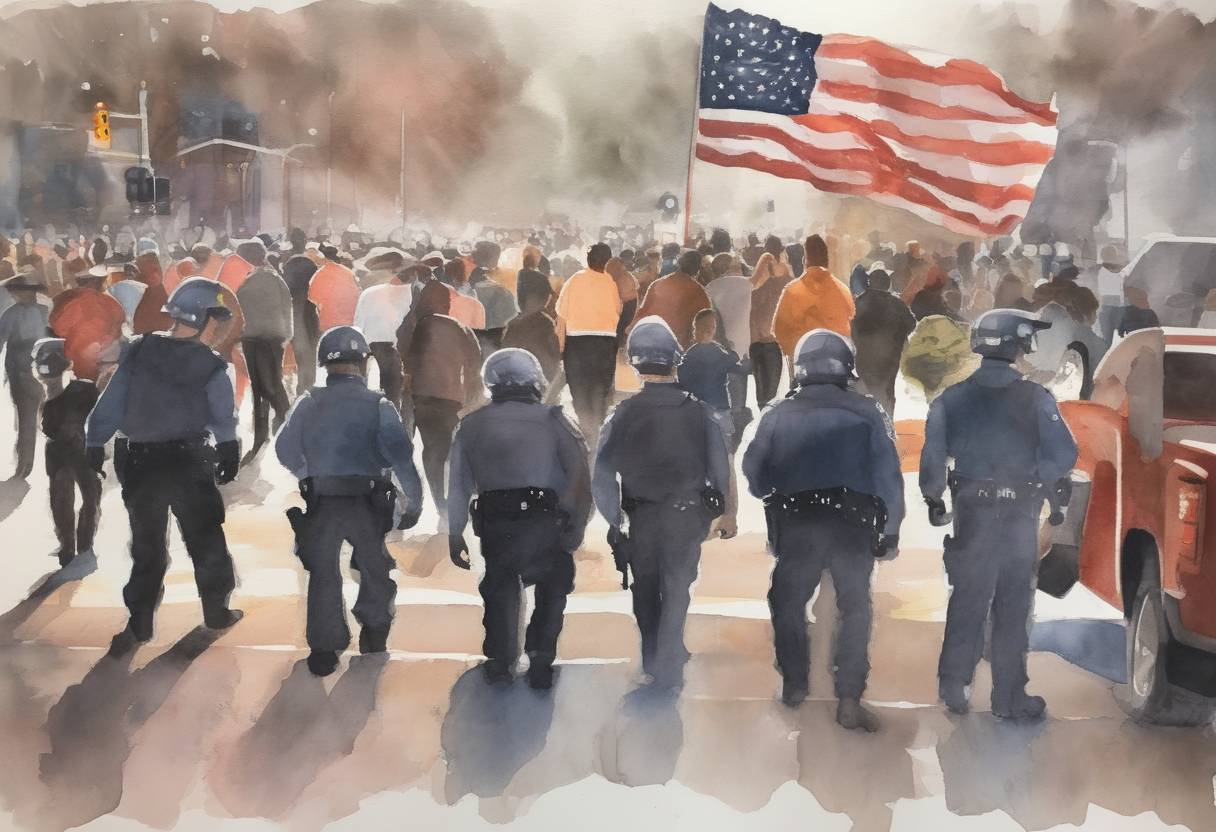
The U.S. Department of Justice Report on the Ferguson Police Department
On March 3, 2015, the U.S. Department of Justice (DOJ) released a comprehensive report condemning the Ferguson Police Department for systemic racial bias. This report was a significant outcome of the investigation that followed the shooting of Michael Brown, an unarmed African American teenager, by a white police officer, Darren Wilson, on August 9, 2014, in Ferguson, Missouri. The incident had sparked widespread protests and national debate over race relations and law enforcement practices in the United States.
Background
The shooting of Michael Brown led to intense scrutiny of the Ferguson Police Department and its practices. The incident highlighted longstanding tensions between the predominantly African American community and the largely white police force. In response to public outcry and civil unrest, the DOJ launched a civil rights investigation into the Ferguson Police Department.
Key Findings of the DOJ Report
The DOJ’s report, released on March 3, 2015, revealed several critical findings:
Racial Disparities: The report documented significant racial disparities in the Ferguson Police Department’s practices. African Americans were disproportionately targeted in traffic stops, searches, and arrests compared to their white counterparts.
Unconstitutional Practices: The investigation found that the police department routinely violated the constitutional rights of African American residents. This included excessive use of force and unlawful stops and searches.
Revenue-Driven Policing: The report criticized the city of Ferguson for using its police department as a revenue-generating tool. Officers were pressured to issue fines and citations, which disproportionately affected African American residents, further straining community relations.
Lack of Accountability: The DOJ highlighted a lack of accountability within the police department, with inadequate systems in place to address misconduct or implement reforms.
Broader Impact and Aftermath
The DOJ’s findings had significant implications:
National Dialogue: The report intensified the national conversation about racial bias in policing and the need for comprehensive reform in law enforcement agencies across the country.
Policy Reforms: In response to the report, Ferguson and other cities began implementing changes, including revising policing practices, improving community relations, and increasing transparency and accountability.
Continued Advocacy: The findings fueled ongoing advocacy for racial justice and police reform, contributing to movements such as Black Lives Matter, which had gained momentum following the shooting of Michael Brown.
The DOJ’s report on the Ferguson Police Department remains a pivotal document in understanding the systemic issues within law enforcement and the ongoing efforts to address racial inequality in the United States.