The Premiere of "King Kong" on March 2, 1933
1933 · New York City, United States
The film 'King Kong' premiered at Radio City Music Hall in New York City, becoming a significant cultural and cinematic event.
December 27, 1932
Radio City Music Hall opened in New York City, becoming a leading venue for entertainment.
New York City, United States | Radio City Music Hall
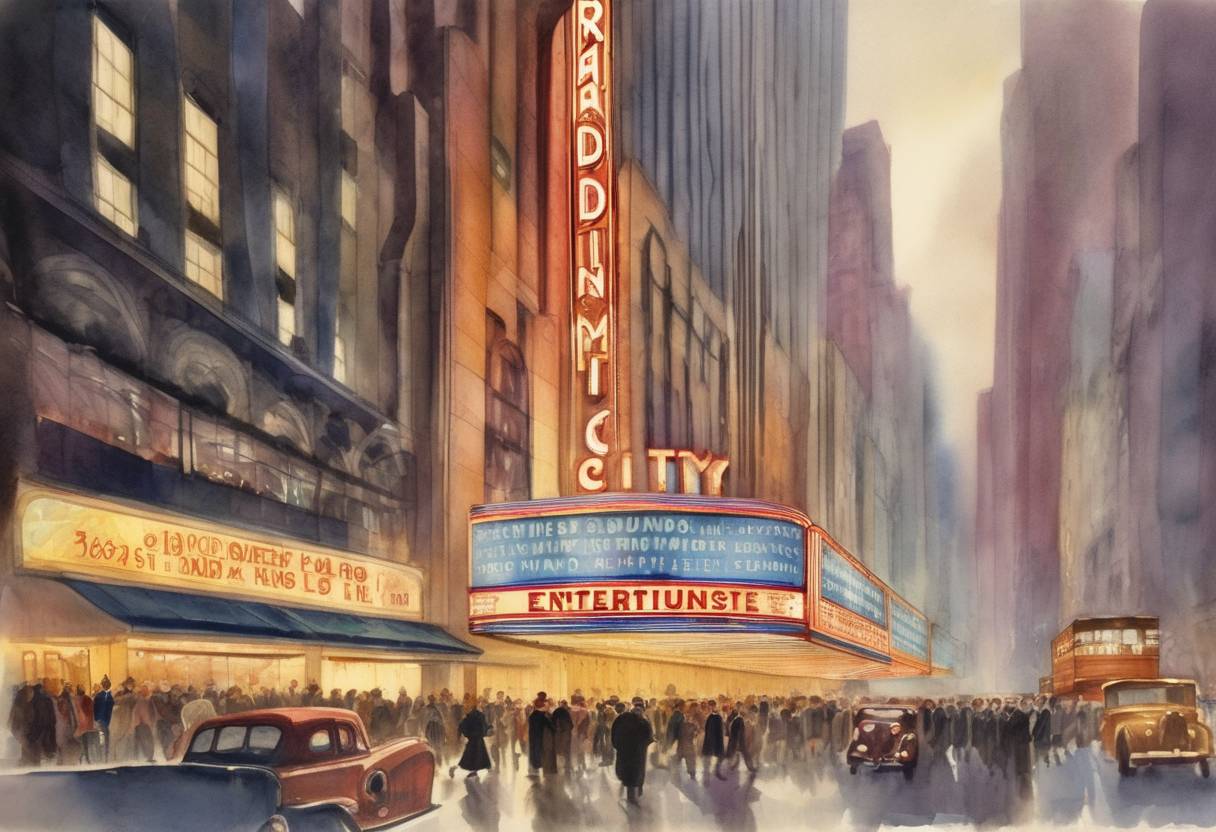
On December 27, 1932, Radio City Music Hall opened its doors in New York City, marking the debut of what would become one of the world’s most iconic entertainment venues. Located in the heart of Rockefeller Center, Radio City Music Hall was conceived as a grand showcase for the performing arts and quickly became a symbol of New York’s vibrant cultural scene.
Development and Design: The idea for Radio City Music Hall was part of John D. Rockefeller Jr.’s larger vision for Rockefeller Center. The venue was designed by architect Edward Durell Stone and interior designer Donald Deskey, who created an Art Deco masterpiece that combined modernist aesthetics with luxurious materials.
Construction: Construction began in 1931, during the Great Depression, providing much-needed jobs and economic stimulation. The project was funded by the Rockefeller family, along with the Radio Corporation of America (RCA) and the RKO Pictures film studio.
Inaugural Event: The opening night was a lavish affair attended by New York’s elite, including Mayor Jimmy Walker and various celebrities. The program featured a variety of acts, including the Radio City Rockettes, who became a staple of the venue’s performances.
Initial Reception: Despite the grandeur of the opening, the initial format of the shows, which combined films with live performances, was not well-received by critics. This led to a rethinking of the programming strategy.
Programming Changes: In response to early criticism, Radio City Music Hall shifted its focus to more live performances and stage shows, eventually becoming known for its spectacular productions and the annual Christmas Spectacular featuring the Rockettes.
Cultural Significance: Over the decades, Radio City Music Hall has hosted a wide array of events, from movie premieres and award shows to concerts and stage productions. It has become a cultural landmark, known for its stunning architecture and as a venue where many legendary performers have graced the stage.
Preservation and Renovation: In the late 20th century, the Music Hall faced potential closure but was saved by public outcry and designated a New York City Landmark in 1978. It underwent significant renovations in the 1990s to restore its original splendor.
Continued Relevance: Today, Radio City Music Hall remains a premier destination for entertainment, attracting millions of visitors each year and continuing to host a diverse range of events.
Radio City Music Hall’s opening on December 27, 1932, marked the beginning of a storied history that has seen it become an enduring symbol of entertainment excellence and architectural beauty in New York City.
Source: www.radiocity.com