Creation of the Department of Homeland Security
2002 · Washington, D.C., United States
U.S. President George W. Bush signs the Homeland Security Act into law, creating the Department of Homeland Security in response to the September 11 attacks.
October 8, 2001
U.S. President George W. Bush announces the establishment of the Office of Homeland Security to coordinate national efforts against terrorism following the September 11 attacks.
Washington, D.C., United States | U.S. Government
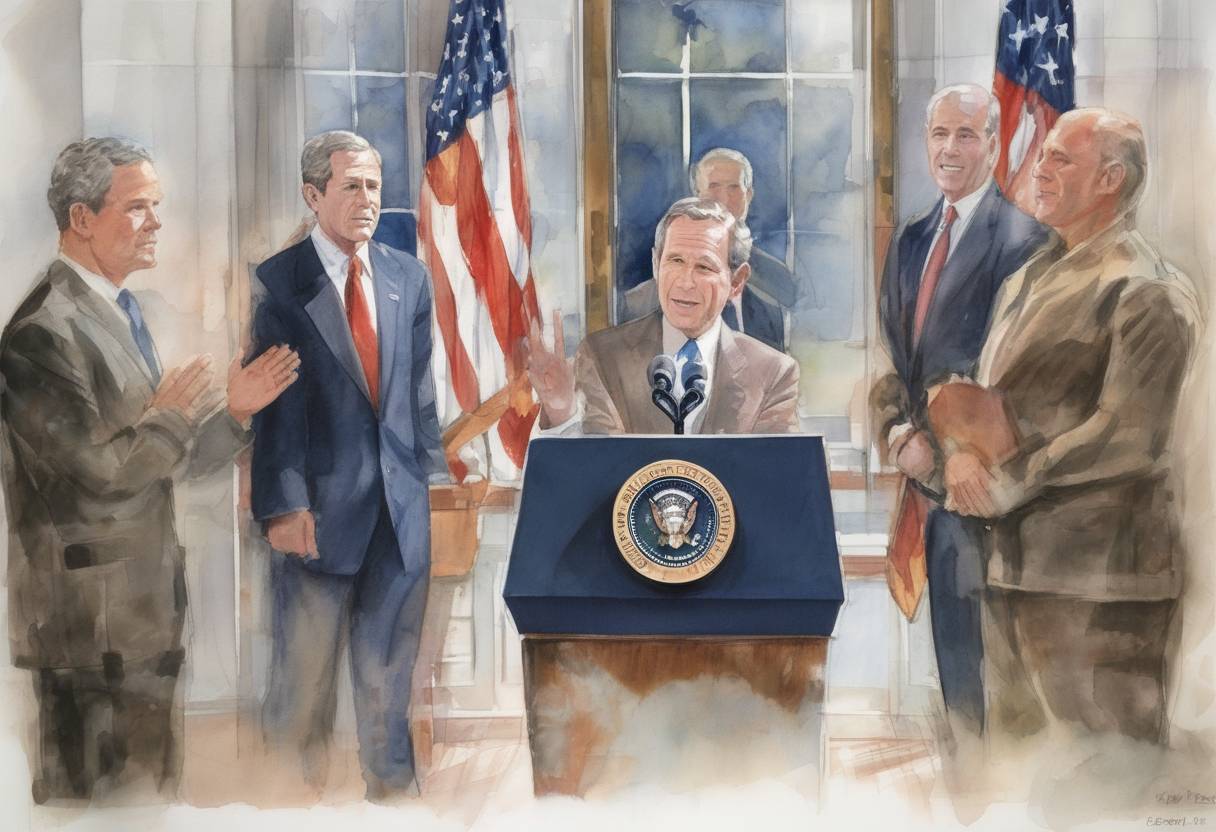
On October 8, 2001, U.S. President George W. Bush announced the creation of the Office of Homeland Security, a pivotal step in the United States’ response to the terrorist attacks that occurred on September 11, 2001. This announcement marked a significant shift in national security policy, emphasizing the need for a coordinated effort to protect the United States from future terrorist threats.
The September 11 attacks were a series of coordinated terrorist acts carried out by the extremist group al-Qaeda, resulting in the deaths of nearly 3,000 people and causing widespread destruction. The attacks targeted key symbols of American power, including the World Trade Center in New York City and the Pentagon in Arlington, Virginia. In the wake of these events, there was an urgent need to reassess and strengthen the nation’s security infrastructure.
Purpose: The primary aim of the Office of Homeland Security was to develop and implement a comprehensive national strategy to safeguard the United States against terrorism. This included coordinating efforts across federal, state, and local agencies.
Leadership: President Bush appointed Pennsylvania Governor Tom Ridge as the first Director of the Office of Homeland Security. Ridge was tasked with overseeing the integration of various security measures and ensuring effective communication between different levels of government.
Functions: The office was responsible for advising the President on homeland security matters, coordinating the federal government’s efforts to detect, prepare for, prevent, protect against, respond to, and recover from terrorist attacks.
The establishment of the Office of Homeland Security was a precursor to the creation of the Department of Homeland Security (DHS) in 2002, which became a cabinet-level department. The DHS consolidated 22 different federal departments and agencies, making it one of the largest reorganizations of the U.S. government in recent history.
This move underscored a significant shift in U.S. domestic policy, prioritizing homeland security and counterterrorism. It also reflected a broader global trend towards increased security measures and international cooperation in combating terrorism.
Legislation: The creation of the Office of Homeland Security paved the way for significant legislative changes, including the USA PATRIOT Act, which expanded the government’s surveillance and investigative powers.
Public Perception: The establishment of the office and subsequent security measures received mixed reactions from the public, balancing concerns over civil liberties with the need for enhanced security.
Long-term Impact: The focus on homeland security has had lasting implications on U.S. policy, influencing areas such as immigration, transportation security, and emergency preparedness.
In summary, the announcement on October 8, 2001, was a critical step in reshaping the United States’ approach to national security in the post-9⁄11 era, reflecting the urgent need to address new and evolving threats.
Source: www.dhs.gov