Swearing in of Chief Justice John G. Roberts Jr.
2005 · Washington, D.C., United States
John G. Roberts Jr. was sworn in as Chief Justice of the United States, becoming the 17th person to hold the position.
December 13, 2000
Al Gore conceded the U.S. presidential election to George W. Bush following a Supreme Court decision.
Washington, D.C., United States | Supreme Court of the United States
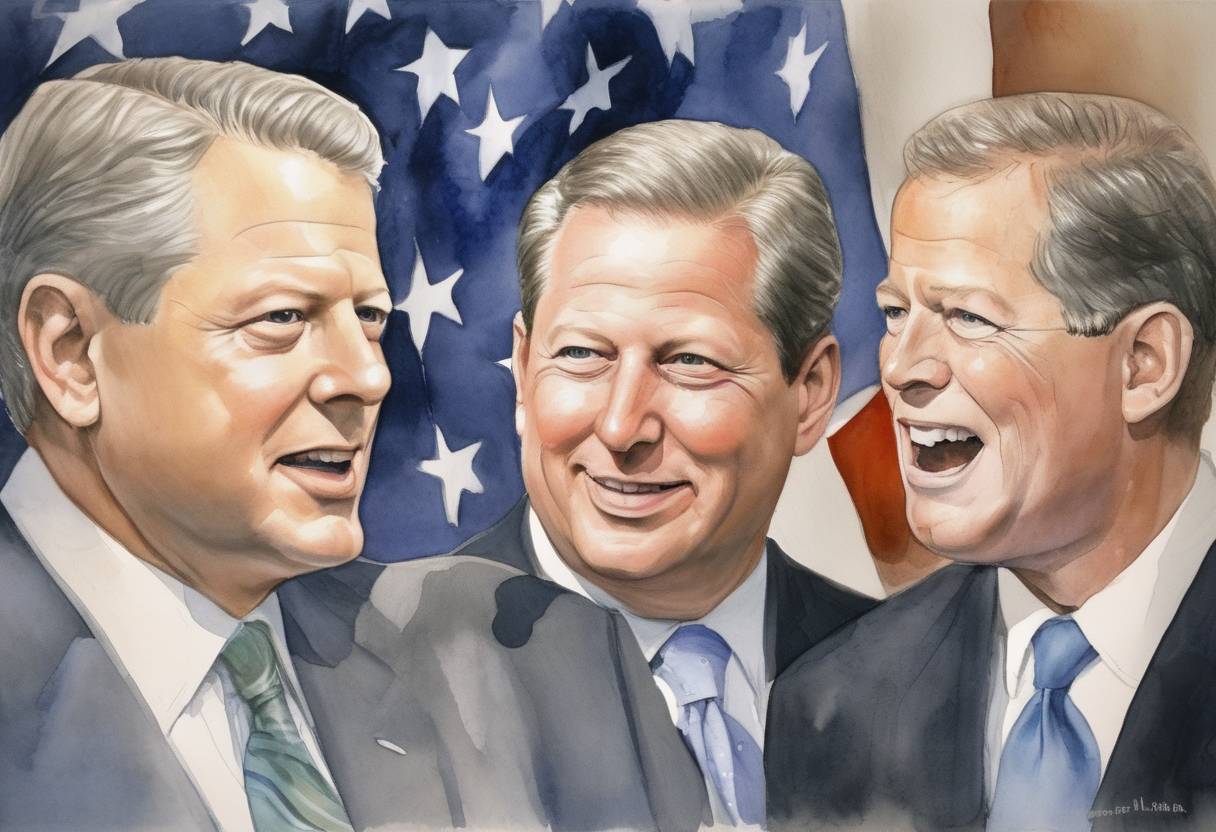
On December 13, 2000, Vice President Al Gore formally conceded the U.S. presidential election to Texas Governor George W. Bush, following a pivotal decision by the United States Supreme Court. This concession marked the end of one of the most contentious and closely scrutinized elections in American history.
The 2000 U.S. presidential election, held on November 7, was one of the closest in American history. The election hinged on the results in Florida, where the vote was so close that it triggered an automatic recount. The state’s 25 electoral votes were crucial, as they would determine the winner of the presidency.
On December 13, Al Gore addressed the nation in a televised speech from his office in Washington, D.C. In a dignified and conciliatory address, he acknowledged the Supreme Court’s decision and the finality of the electoral process. Gore stated:
“I accept the finality of this outcome, which will be ratified next Monday in the Electoral College. And tonight, for the sake of our unity as a people and the strength of our democracy, I offer my concession.”
Gore’s concession speech was noted for its grace and emphasis on national unity, despite the contentious and protracted nature of the election.
The 2000 election remains a pivotal moment in U.S. history, illustrating the complexities of the electoral process and the resilience of democratic institutions in resolving electoral disputes.
Source: www.britannica.com