The First Saint Patrick's Day Parade in New York City - March 17, 1762
1762 · New York City, United States
The first Saint Patrick's Day parade is held in New York City by Irish soldiers serving in the British army.
November 27, 1924
In New York City, the first Macy's Thanksgiving Day Parade was held, becoming an annual tradition in the United States.
New York City, United States | Macy's
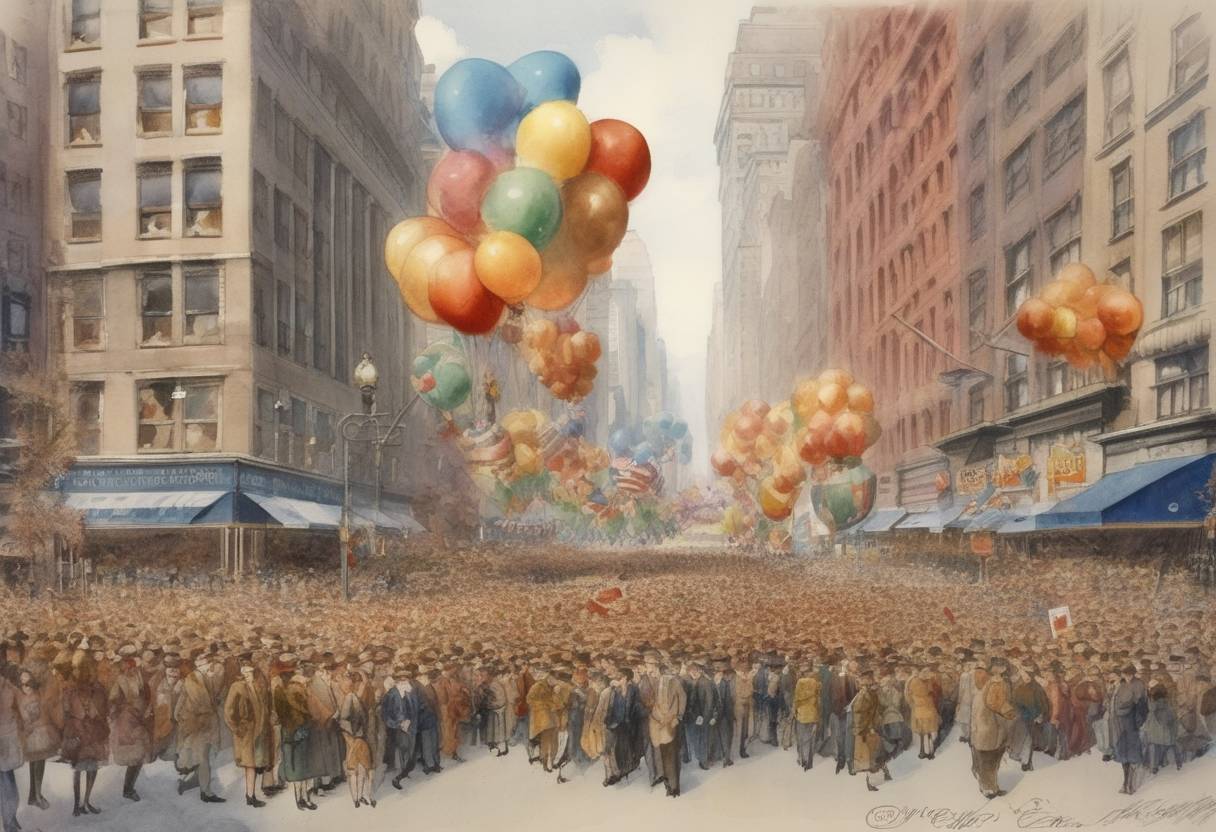
On November 27, 1924, New York City witnessed the inaugural Macy’s Thanksgiving Day Parade, an event that would grow into a cherished annual tradition in the United States. This parade, organized by the department store Macy’s, marked the beginning of a cultural phenomenon that has captivated audiences for nearly a century.
Macy’s Department Store: Founded in 1858, Macy’s had become one of the largest and most popular department stores in the United States by the early 20th century. To celebrate the expansion of its flagship store in Manhattan, Macy’s sought to create a grand event that would draw in customers and mark the start of the holiday shopping season.
Inspiration: The idea for the parade was inspired by similar European festivals and parades. Many of Macy’s employees at the time were first-generation immigrants who wanted to celebrate their new American heritage with a festival reminiscent of the ones they knew from their homelands.
Route: The first parade began at 145th Street and Convent Avenue in Harlem and traveled six miles to Macy’s flagship store on 34th Street.
Participants: The parade featured Macy’s employees, professional entertainers, and animals borrowed from the Central Park Zoo, including elephants, camels, and bears. There were no large balloons, which would become a hallmark of later parades.
Floats and Themes: The parade included floats with themes from popular nursery rhymes and fairy tales, such as “The Old Woman Who Lived in a Shoe” and “Little Miss Muffet.”
Santa Claus: The parade concluded with the arrival of Santa Claus, who was enthroned on the balcony of Macy’s flagship store, signaling the official start of the holiday season.
Public Reception: The parade was an immediate success, drawing a crowd of over 250,000 spectators. Its popularity ensured that it would become an annual event.
Evolution: Over the years, the parade evolved significantly. In 1927, the first giant helium balloons were introduced, replacing live animals. The parade was broadcast on the radio in 1932 and later on television, expanding its reach to millions of viewers nationwide.
Cultural Impact: The Macy’s Thanksgiving Day Parade has become an integral part of American culture, symbolizing the start of the holiday season. It is known for its elaborate floats, marching bands, celebrity appearances, and, of course, the iconic giant balloons.
The first Macy’s Thanksgiving Day Parade in 1924 laid the foundation for what would become a beloved American tradition. Its success demonstrated the power of public spectacle and marketing, while also providing a festive celebration that has brought joy to generations of families across the United States.
Source: en.wikipedia.org