The Panic of 1893 and the New York Stock Exchange Crash
1893 · New York City, United States
The New York Stock Exchange crashed, leading to the Panic of 1893, a serious economic depression in the United States.
September 18, 1873
The Panic of 1873 begins, triggering a severe international economic depression in both Europe and the United States.
New York City, United States | Jay Cooke & Company
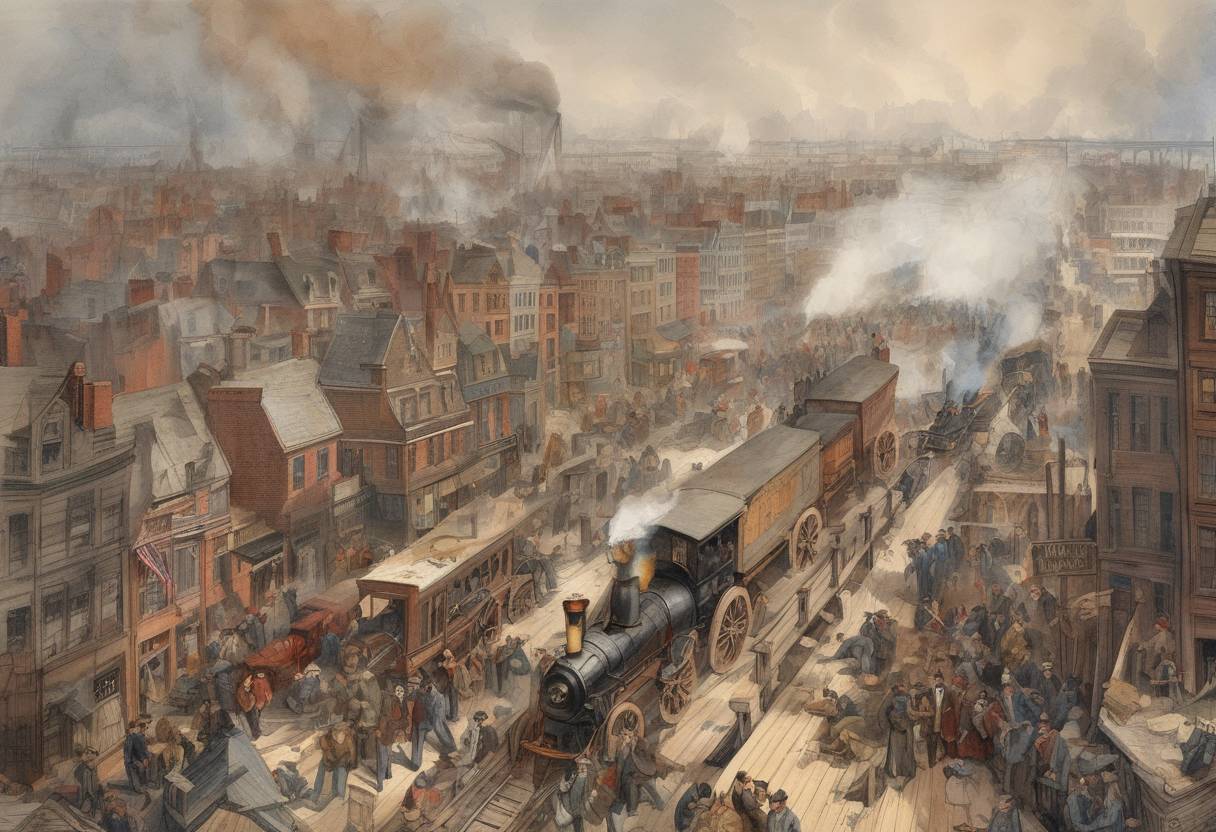
On September 18, 1873, the financial world was rocked by the collapse of Jay Cooke & Company, a prominent American banking firm. This event marked the beginning of the Panic of 1873, which triggered a severe international economic depression affecting both Europe and the United States.
The roots of the Panic of 1873 can be traced back to the post-Civil War economic expansion in the United States. During this period, there was a significant boom in railroad construction, fueled by speculative investments and heavy borrowing. Jay Cooke & Company was heavily involved in financing the Northern Pacific Railway, one of the ambitious projects of the era.
In Europe, the economic environment was also precarious. The Franco-Prussian War (1870-1871) had disrupted economies, and many European banks were overextended due to speculative investments in railroads and other ventures.
Overexpansion and Speculation: The rapid expansion of railroads led to overbuilding, and many projects were not financially viable. Speculative investments created a bubble that was unsustainable.
Financial Instability: Jay Cooke & Company, heavily invested in the Northern Pacific Railway, struggled to sell bonds to finance the project. When they failed to secure additional funding, the firm declared bankruptcy on September 18, 1873.
Bank Failures: The collapse of Jay Cooke & Company sent shockwaves through the financial system. Banks and businesses that were interconnected with the firm faced insolvency, leading to a cascade of failures.
The Panic of 1873 highlighted the vulnerabilities of an interconnected global economy and the dangers of speculative investment. It underscored the need for more robust financial regulations and set the stage for future economic reforms. The event also contributed to shifts in political power, as economic distress influenced public opinion and policy decisions in the years that followed.
In summary, the Panic of 1873 was a pivotal moment in economic history, demonstrating the far-reaching impacts of financial instability and the importance of sound economic governance.
Source: en.wikipedia.org