CBS Makes the First Color Television Broadcast in the United States
1951 · New York City, United States
CBS makes the first color television broadcast in the United States.
February 21, 1947
Edwin Land demonstrated the first instant camera, the Polaroid Land Camera, at a meeting of the Optical Society of America in New York City.
New York City, United States | Polaroid Corporation
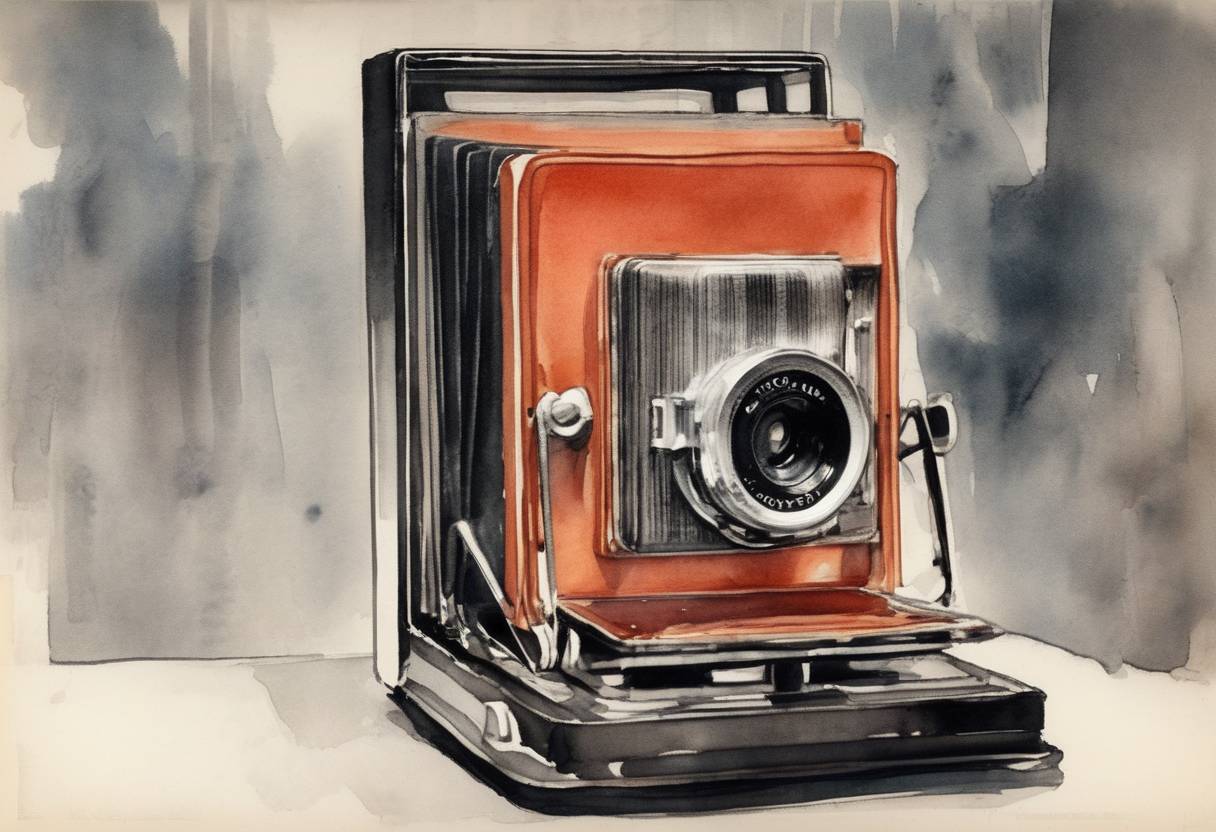
On February 21, 1947, Edwin H. Land, an American scientist and inventor, made a groundbreaking demonstration of the first instant camera, known as the Polaroid Land Camera, at a meeting of the Optical Society of America in New York City. This event marked a significant milestone in the field of photography and consumer technology.
Edwin Land, co-founder of the Polaroid Corporation, was a prolific inventor with a keen interest in optics and light polarization. Before the development of the instant camera, Land had already made significant contributions to the field with his invention of the Polaroid filter, which had applications in sunglasses, photography, and scientific instruments.
The idea for an instant camera reportedly came to Land during a family vacation in 1943 when his young daughter asked why she couldn’t see a photograph immediately after it was taken. This question inspired Land to develop a camera that could produce a finished photograph within minutes.
During the demonstration in 1947, Land showcased the Polaroid Land Camera, which utilized a novel process to develop photographs instantly. The camera used a special film that contained all the necessary chemicals to develop and fix the image. After taking a picture, the film was pulled through rollers inside the camera, which spread the developing chemicals evenly across the image surface. Within about 60 seconds, a black-and-white photograph was produced.
The introduction of the Polaroid Land Camera revolutionized photography by eliminating the need for separate film development processes, which were time-consuming and required specialized equipment. This innovation made photography more accessible to the general public and paved the way for future advancements in instant photography.
Following the successful demonstration, the first commercial version of the Polaroid Land Camera, the Model 95, was released to the public in 1948. It became an immediate success, selling out its initial production run. Over the years, Polaroid continued to innovate, introducing color instant film and various camera models.
Edwin Land’s contributions to photography and his pioneering work in instant cameras left a lasting impact on the industry. The Polaroid brand became synonymous with instant photography, and its influence can still be seen today in the resurgence of interest in instant cameras and film.
In summary, Edwin Land’s demonstration of the Polaroid Land Camera on February 21, 1947, was a pivotal moment in the history of photography, showcasing the potential of instant image development and setting the stage for decades of innovation in the field.
Source: en.wikipedia.org