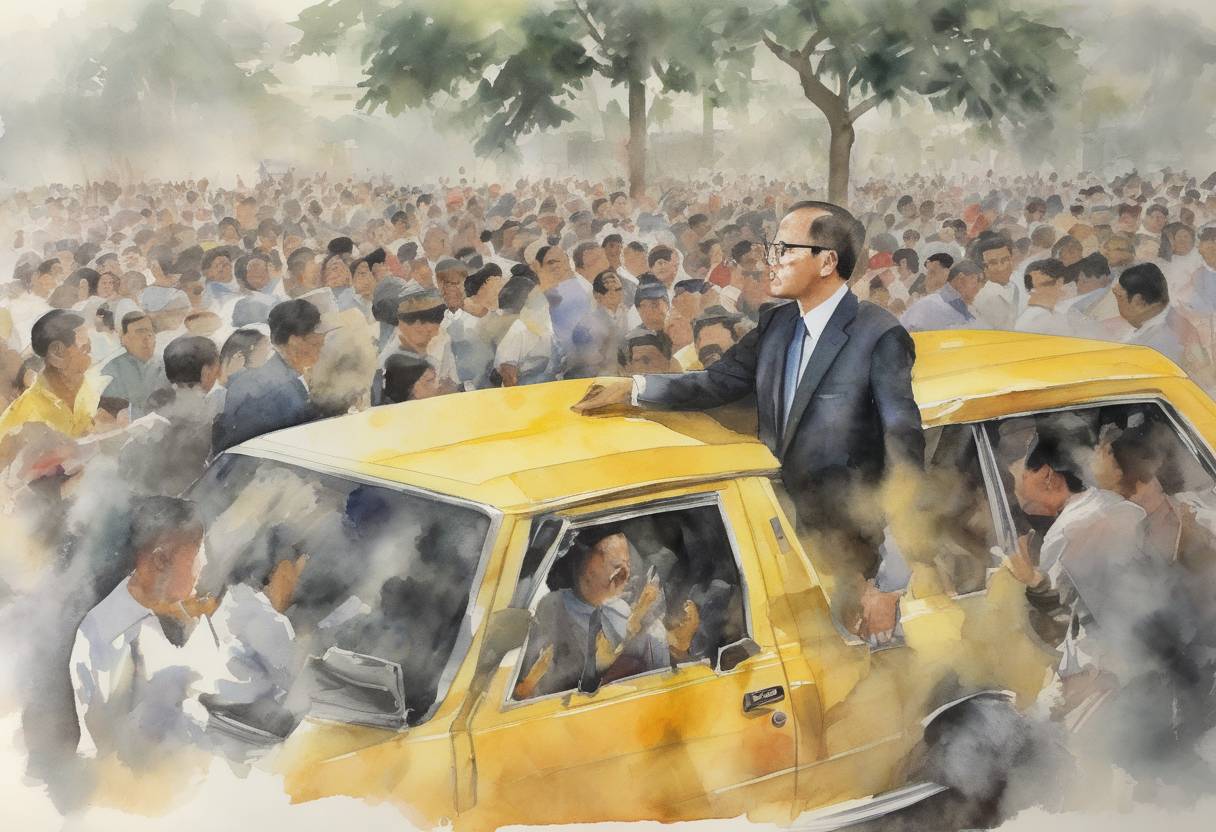
Assassination of Benigno Aquino Jr. - August 21, 1983
On August 21, 1983, Benigno “Ninoy” Aquino Jr., a prominent Filipino opposition leader, was assassinated at Manila International Airport (now Ninoy Aquino International Airport) upon returning from a three-year exile in the United States. His assassination became a pivotal moment in Philippine history, sparking widespread protests and eventually leading to the downfall of the Marcos regime.
Background
- Benigno Aquino Jr.: A charismatic and influential politician, Aquino was a staunch critic of President Ferdinand Marcos. He served as a senator and was a leading figure in the opposition against Marcos’ authoritarian rule.
- Martial Law: In 1972, Marcos declared martial law, citing threats of communist insurgency. This move allowed him to extend his presidency beyond the constitutional limits, suppress dissent, and consolidate power.
- Exile: Aquino was arrested and imprisoned shortly after martial law was declared. In 1980, he was allowed to leave for the United States for medical treatment, where he continued his opposition activities.
The Assassination
- Return to the Philippines: Despite warnings of danger, Aquino decided to return to the Philippines to continue his fight against the Marcos regime. He believed his presence would galvanize the opposition.
- Arrival and Assassination: Upon his arrival at Manila International Airport, Aquino was escorted off the plane by military personnel. Moments later, he was shot in the head on the tarmac. The assassination was captured on camera and broadcast worldwide, shocking the international community.
Aftermath and Impact
- Public Outrage: Aquino’s assassination ignited widespread outrage and protests across the Philippines. It galvanized the opposition and united various factions against Marcos.
- People Power Revolution: The assassination is widely seen as a catalyst for the People Power Revolution, a series of nonviolent demonstrations that culminated in the ousting of Ferdinand Marcos in February 1986.
- Legacy: Aquino’s death transformed him into a martyr for democracy in the Philippines. His widow, Corazon Aquino, became a central figure in the opposition and eventually assumed the presidency after Marcos’ fall.
Broader Historical Significance
- End of Authoritarian Rule: The events following Aquino’s assassination marked the beginning of the end for the Marcos dictatorship, restoring democratic governance in the Philippines.
- Inspiration for Global Movements: The peaceful nature of the People Power Revolution inspired similar movements worldwide, demonstrating the power of nonviolent resistance.
Aquino’s assassination remains a significant event in Philippine history, symbolizing the struggle for democracy and the resilience of the Filipino people in the face of tyranny.