Apollo 15 and the First Lunar Rover Ride
1971 · Moon, Space
Apollo 15 astronauts David Scott and James Irwin become the first to ride in a lunar rover on the Moon.
July 26, 1971
Apollo 15 was launched from Cape Kennedy, marking the first mission with a Lunar Roving Vehicle.
Cape Kennedy, United States | NASA
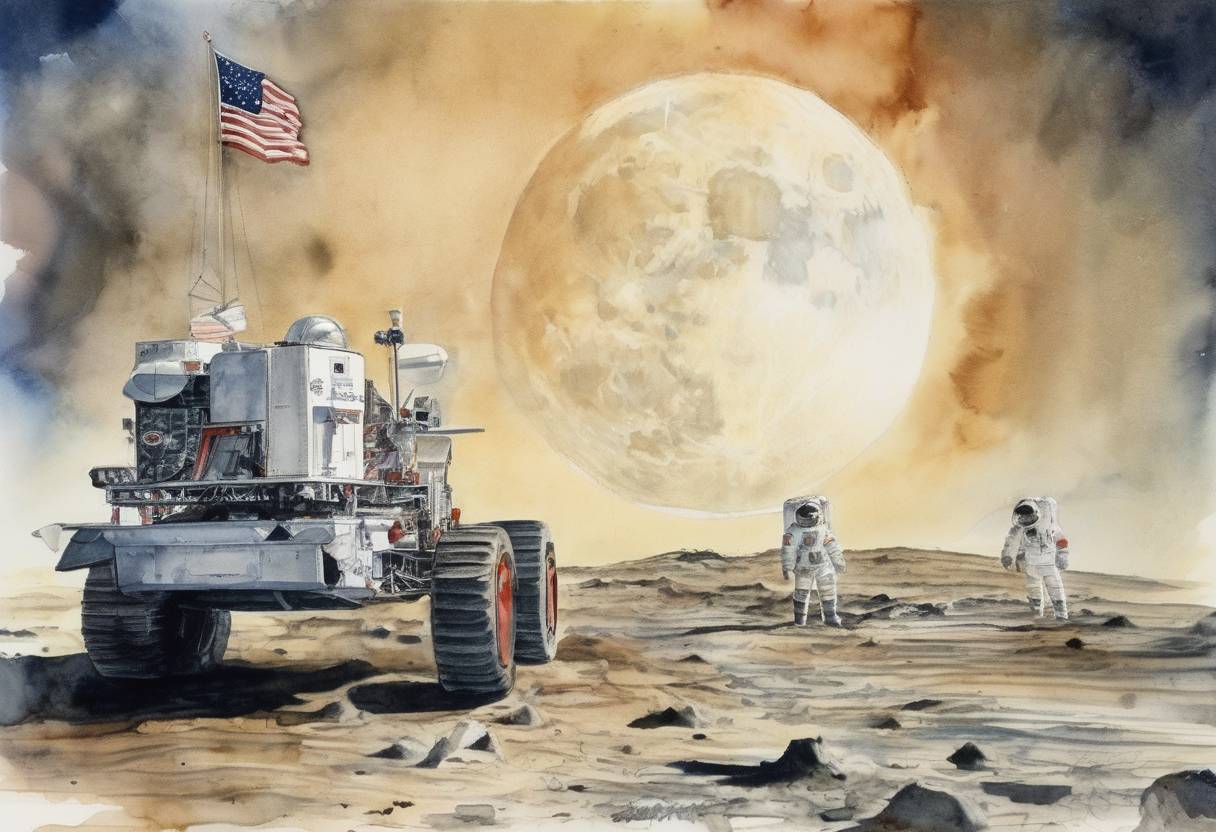
On July 26, 1971, NASA launched Apollo 15 from Cape Kennedy (now known as Cape Canaveral), Florida. This mission marked a significant advancement in lunar exploration, primarily due to the introduction of the Lunar Roving Vehicle (LRV), which allowed astronauts to travel further distances on the Moon’s surface than ever before.
Apollo 15 was the ninth crewed mission in the Apollo program and the fourth mission intended to land on the Moon. It was part of NASA’s efforts to conduct more detailed scientific exploration of the lunar surface. The mission was commanded by David R. Scott, with Alfred M. Worden serving as the Command Module Pilot and James B. Irwin as the Lunar Module Pilot.
One of the most notable innovations of Apollo 15 was the deployment of the Lunar Roving Vehicle. This battery-powered rover was designed to extend the range of exploration on the lunar surface, allowing astronauts to cover more ground and conduct more extensive scientific research.
Apollo 15 set a new standard for lunar exploration, demonstrating the effectiveness of the Lunar Roving Vehicle in enhancing the scope of scientific research. The mission’s success paved the way for subsequent Apollo missions, which continued to utilize the LRV for expanded exploration.
The mission also contributed significantly to our understanding of the Moon’s geology and history, providing valuable data that continues to inform lunar science today. Apollo 15’s achievements underscored the importance of technological innovation in space exploration and set a precedent for future missions to other celestial bodies.
Source: en.wikipedia.org