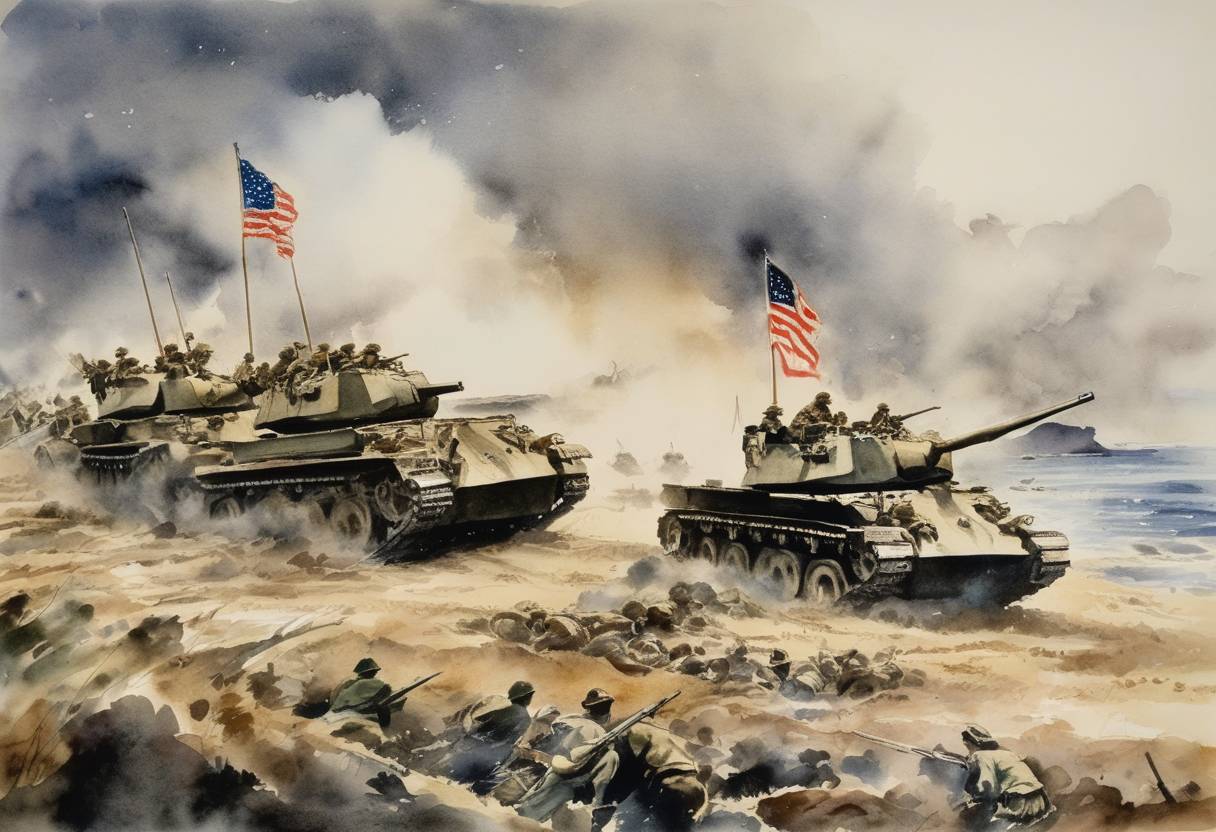
The End of the Battle of Iwo Jima: March 16, 1945
The Battle of Iwo Jima, one of the most significant battles in the Pacific Theater during World War II, officially concluded when the United States declared the island secure on March 16, 1945. This moment marked the end of a brutal and strategically crucial military campaign that had begun over a month earlier.
Context and Background
Iwo Jima is a small volcanic island located approximately halfway between Japan and the Mariana Islands. Its strategic importance lay in its location, which provided the US with an ideal base for fighter escorts and emergency landings to support the Allied bombing campaign against Japan. The decision to capture Iwo Jima was part of a broader Allied strategy aimed at establishing air control over the Pacific while paving the way for a potential invasion of the Japanese home islands.
The Battle
The battle commenced on February 19, 1945, involving approximately 70,000 US Marines and Army personnel against the entrenched Japanese forces estimated at around 21,000 men under the command of General Tadamichi Kuribayashi. The American forces faced formidable defenses, including an intricate network of underground tunnels, bunkers, and concealed artillery emplacements that maximized the island’s natural terrain.
Fierce fighting characterized the initial stages, with US forces encountering unexpected resistance despite intense pre-invasion bombardments. The iconic raising of the American flag on Mount Suribachi, symbolizing a moment of triumph amidst ongoing ferocity, occurred on February 23, 1945. However, the battle continued for several weeks afterward.
Conclusion and Aftermath
By March 16, 1945, organized resistance on Iwo Jima had ceased. The declaration of the island being secure meant that the remaining Japanese forces were either killed or captured. Despite this designation, sporadic fighting continued for several days as isolated pockets of Japanese soldiers conducted guerrilla-style resistance, with the last of these continuing until June 1945.
The capture of Iwo Jima came at a considerable human cost. US casualties were approximately 26,000, with nearly 7,000 Marines killed. Japanese casualties were overwhelmingly fatal, with nearly all defenders perishing.
Historical Significance
The capture of Iwo Jima provided a critical support base for American air operations in the Pacific, contributing significantly to the future successes of Allied campaigns against Japan. The battle exemplified the determination and resilience of both American and Japanese forces, symbolizing the intense and costly nature of the Pacific War. The valor displayed during the combat led to the awarding of 27 Medals of Honor, the most for any single battle in US history, showcasing the intensity and sacrifice experienced by those involved.