1803 · Aranjuez, Spain
The United States and Spain signed the Treaty of Aranjuez, which was part of the negotiations leading to the Louisiana Purchase.
November 18, 1776
The United States and Spain sign the Treaty of Aranjuez.
Aranjuez, Spain | United States and Spain
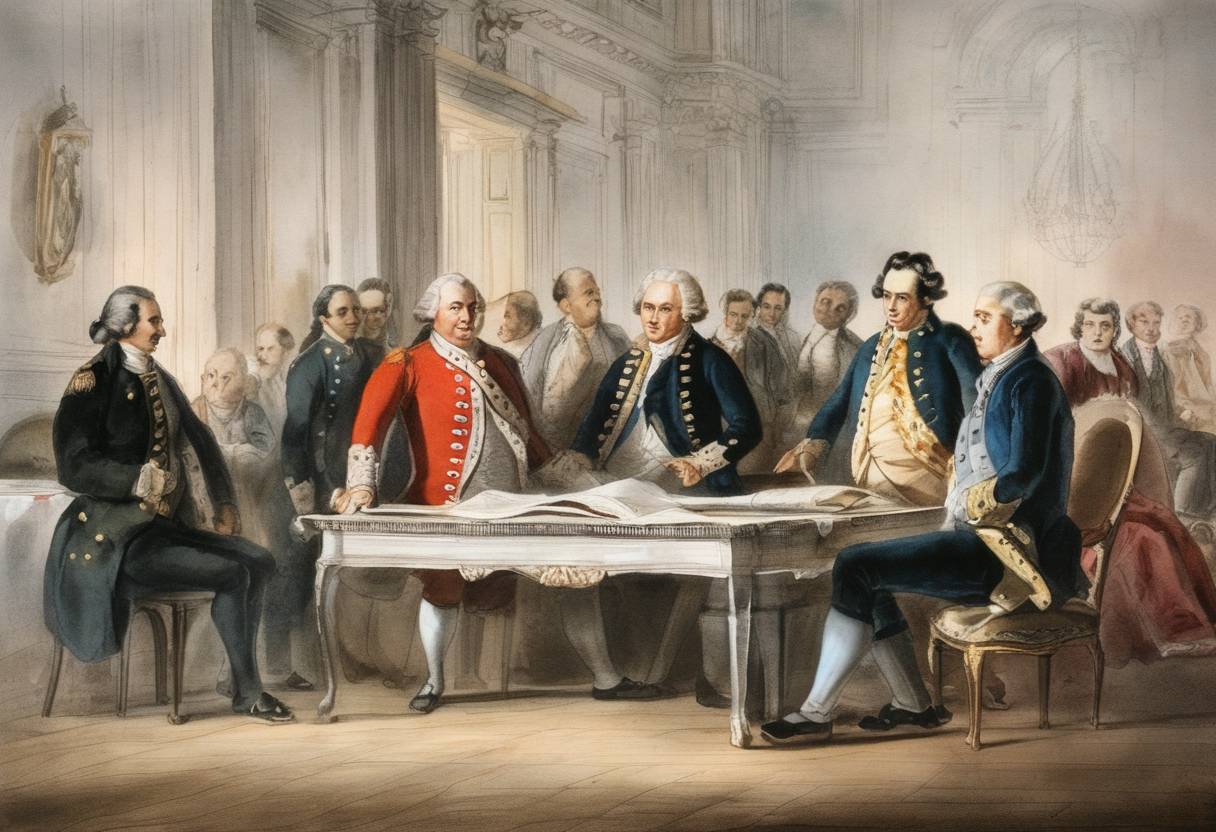
The Treaty of Aranjuez, signed on April 12, 1779, not November 18, 1776, was a significant diplomatic agreement during the period of the American War of Independence. This treaty was crucial in shaping the alliances and the course of the conflict between the European powers and their role in the American Revolution. However, no specific treaty between the United States and Spain was signed on November 18, 1776.
The background of the Treaty of Aranjuez involves the broader geopolitical competition between European colonial powers. By the late 18th century, Britain’s imperial dominance was challenged by the combined interests of France and Spain, who sought to reclaim or acquire territories lost in prior conflicts and limit British influence globally.
Alliance Formation: The Treaty of Aranjuez established a military alliance between France and Spain against Great Britain, with Spain agreeing to join the war efforts initiated by France.
Spanish Objectives: Spain aimed to recover territories such as Gibraltar, Minorca, Florida, and areas in the Caribbean that had been lost to the British in previous conflicts.
Support for the American Cause: While the treaty primarily aimed to support France, it indirectly aided the American colonies in their fight for independence by expanding the conflict front for Britain, thereby taxing its military resources.
The alliance created by the Treaty of Aranjuez led to Spain’s entry into the American Revolutionary War in 1779, further complicating the British military strategy. Spain’s involvement brought about significant naval engagements and sieges, most notably the prolonged siege of Gibraltar.
Siege of Gibraltar: One of the notable military objectives for Spain during the war, though the siege itself did not succeed, it did strain British resources.
Global Impact: The treaty and subsequent Spanish involvement expanded the war beyond North America, affecting battles worldwide in regions such as the Mediterranean, the Caribbean, and other colonial territories.
Spain’s engagement helped in stretching British resources more thinly across various fronts, indirectly benefiting the American colonies in their struggle against British rule. The actions and alliances crafted under such treaties indicate the intricate interplay of European powers and their colonial agendas during the American Revolutionary War.
While the date of significance remains April 12, 1779, in relation to the Treaty of Aranjuez, the misconception of a treaty on November 18, 1776, may reflect improper attributions or confusions within historical records. For accurate historical events, it’s pivotal to reference the specific treaties, dates, and contexts as recorded in historical documents.
Source: en.wikipedia.org