The Webster–Ashburton Treaty: August 9, 1842
1842 · Washington, D.C., United States
The Webster–Ashburton Treaty was signed, resolving border issues between the United States and British North America (now Canada).
April 16, 1818
The United States Senate ratified the Rush-Bagot Treaty between the United States and the United Kingdom, which limited naval armaments on the Great Lakes and Lake Champlain after the War of 1812.
Washington, D.C., United States | United States Senate
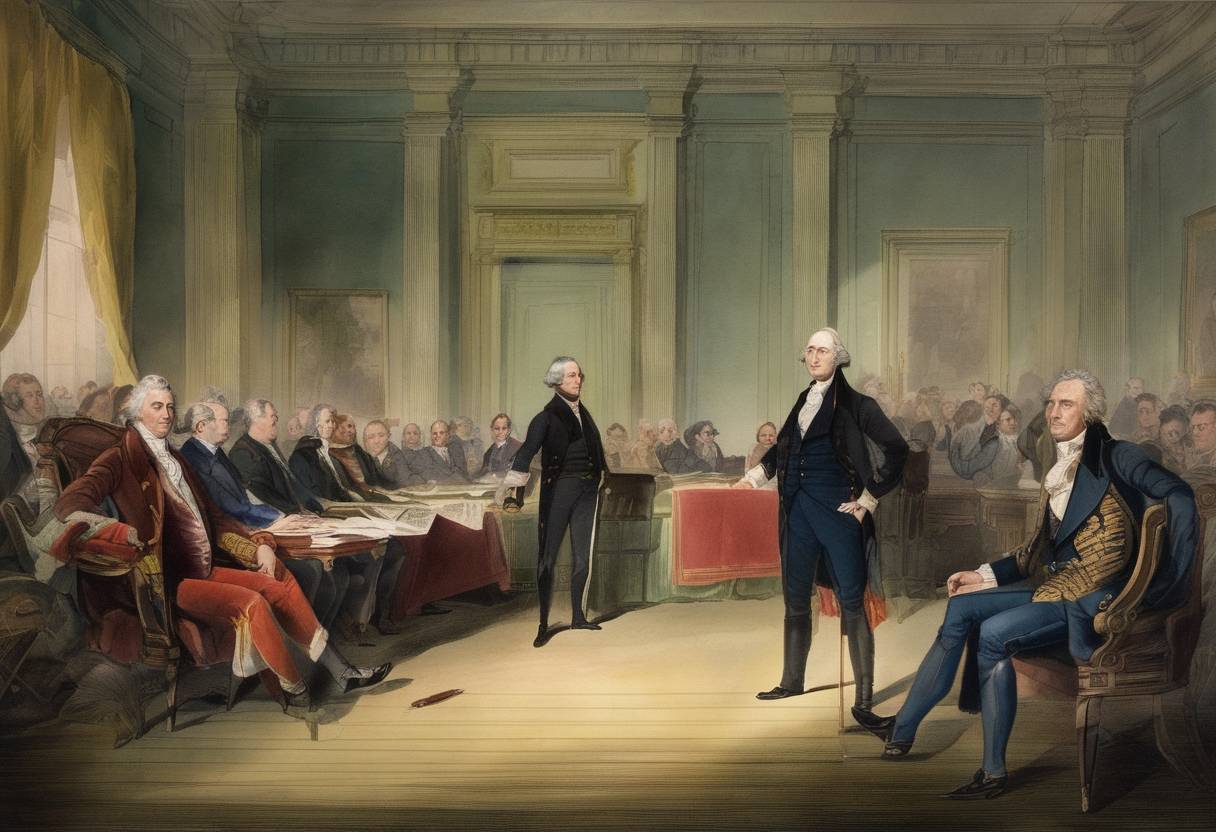
On April 16, 1818, the United States Senate ratified the Rush-Bagot Treaty, a significant diplomatic agreement between the United States and the United Kingdom. This treaty was instrumental in fostering a peaceful relationship between the two nations following the War of 1812.
The War of 1812, fought between the United States and the British Empire, resulted in several conflicts along the Great Lakes and frontier regions. Despite the end of hostilities with the Treaty of Ghent in 1814, tensions persisted, particularly concerning military strength and naval presence on the Great Lakes and Lake Champlain.
In the post-war context, both nations recognized the mutual benefit of reducing military expenditures and the potential for further conflict due to militarization along their borders.
The Rush-Bagot Agreement, named after its negotiators—Richard Rush, acting U.S. Secretary of State, and Sir Charles Bagot, the British Minister to the United States—was framed to address these concerns. The agreement primarily stipulated:
Limitation on Naval Armaments: Both nations agreed to significantly limit their naval presence on the Great Lakes. Each country was allowed one military vessel on Lake Ontario and Lake Champlain and two on the upper Great Lakes, with each vessel restricted to a single 18-pound cannon.
Disarmament and Demilitarization: The treaty marked progressive disarmament and demilitarization of the U.S.-Canada border, a strategic move to foster long-term peace and cooperation.
The ratification by the U.S. Senate on April 16, 1818, formalized the agreement, placing the treaty into effect and initiating one of the earliest efforts in history to limit arms in a particular region. It laid groundwork for the world’s longest unfortified border and deepened the spirit of peace and cooperation between the United States and Canada, a tradition that endures to this day.
The Rush-Bagot Treaty set a historic precedent in international relations by demonstrating the potential of diplomatic engagement over military confrontation. It served as a model for future arms reduction treaties and marked a turning point in U.S.-British—later U.S.-Canadian—relations, ensuring peace in the North American region for centuries to come.
In the years following its ratification, minor clarifications and adjustments were made, but the essence of the Rush-Bagot Treaty remains intact. The principles of limited armament and the peaceful settlement of disputes have continued to guide the relationship between the neighboring countries. The treaty’s success is frequently cited as an example of effective diplomacy in international conflict resolution.
Source: www.britannica.com