Emperor Shōmu's Ascension to the Throne of Japan
724 · Nara, Japan
Emperor Shōmu ascended to the throne of Japan, marking the beginning of his reign.
February 20, 0675
Emperor Tenmu institutes the Divine Wind Festival (Toshigami Matsuri) in Japan, intended to honor the deities and ensure good fortune for the upcoming year.
Nara, Japan | Imperial Court of Japan
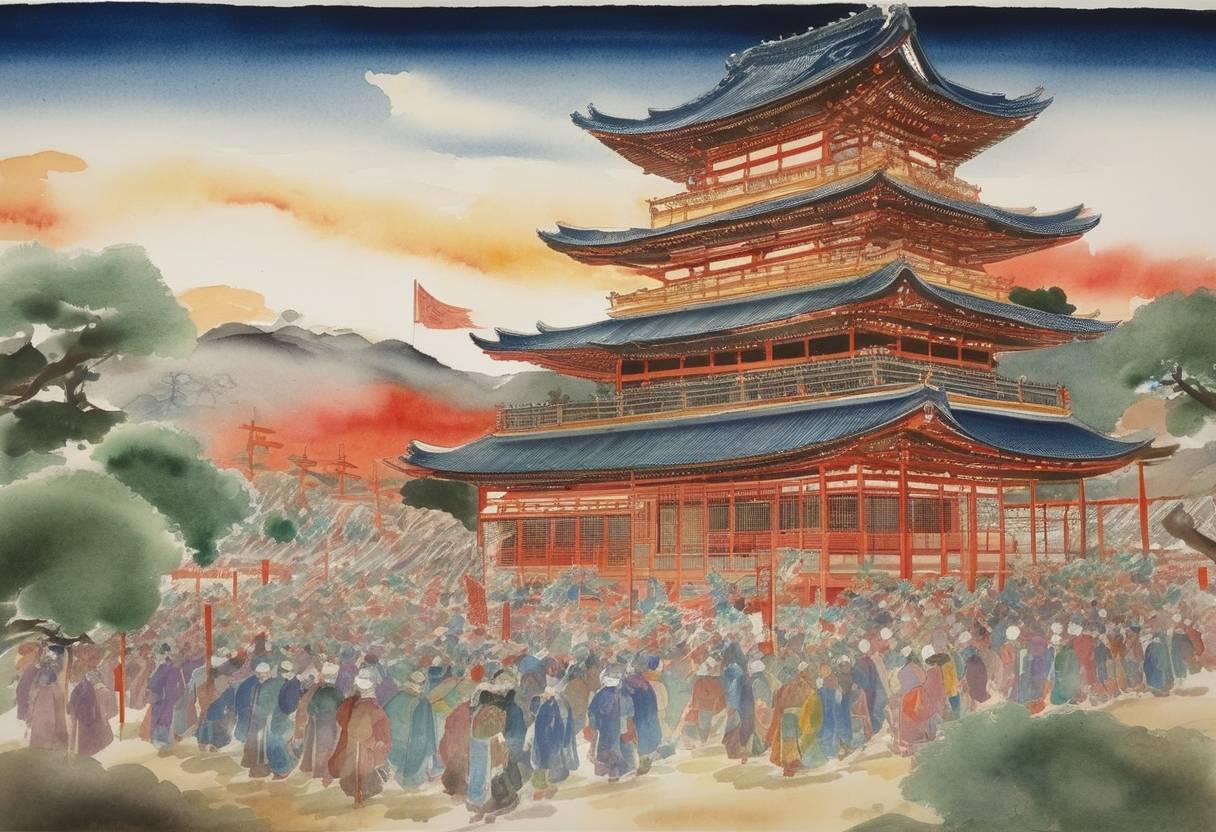
On February 20, 675, Emperor Tenmu of Japan instituted the Divine Wind Festival, known locally as the Toshigami Matsuri. This event was intended to honor the deities, specifically those believed to influence the winds and weather, to ensure good fortune and prosperity for the upcoming year.
Emperor Tenmu ascended to the throne in 673 after a tumultuous succession struggle known as the Jinshin War. He was instrumental in consolidating power and establishing reforms to strengthen the central authority. Part of his strategy included the reinforcement of state Shinto practices, which tied political authority with religious piety.
The Toshigami Matsuri was introduced as part of Emperor Tenmu’s broader effort to centralize religious rites and integrate them into the official state framework. The festival was not only a spiritual ceremony but also a political tool to bind the populace and nobility in shared cultural and religious observance.
The institution of the Toshigami Matsuri had long-lasting effects on the cultural and religious landscape of Japan. It exemplified the integration of Shinto practices within the political sphere, a theme that remained significant throughout Japanese history. The festival itself became a traditional celebration, influencing various local festivals dedicated to Toshigami, the deity associated with time and the New Year.
Emperor Tenmu’s establishment of the Divine Wind Festival on February 20, 675, is a reflection of the profound intertwining of spiritual observance and governance in ancient Japan. It highlights the emperor’s role not only as a political leader but as a custodian of religious traditions, ensuring the welfare and unity of his people through shared rituals and beliefs.
Source: en.wikipedia.org