Consecration of St. Peter's Basilica
1626 · Vatican City, Vatican City
St. Peter's Basilica in Vatican City was consecrated by Pope Urban VIII.
March 5, 1616
Nicolaus Copernicus's book 'De revolutionibus orbium coelestium' (On the Revolutions of the Heavenly Spheres) is placed on the Index of Forbidden Books by the Catholic Church.
Vatican City, Vatican City | Catholic Church
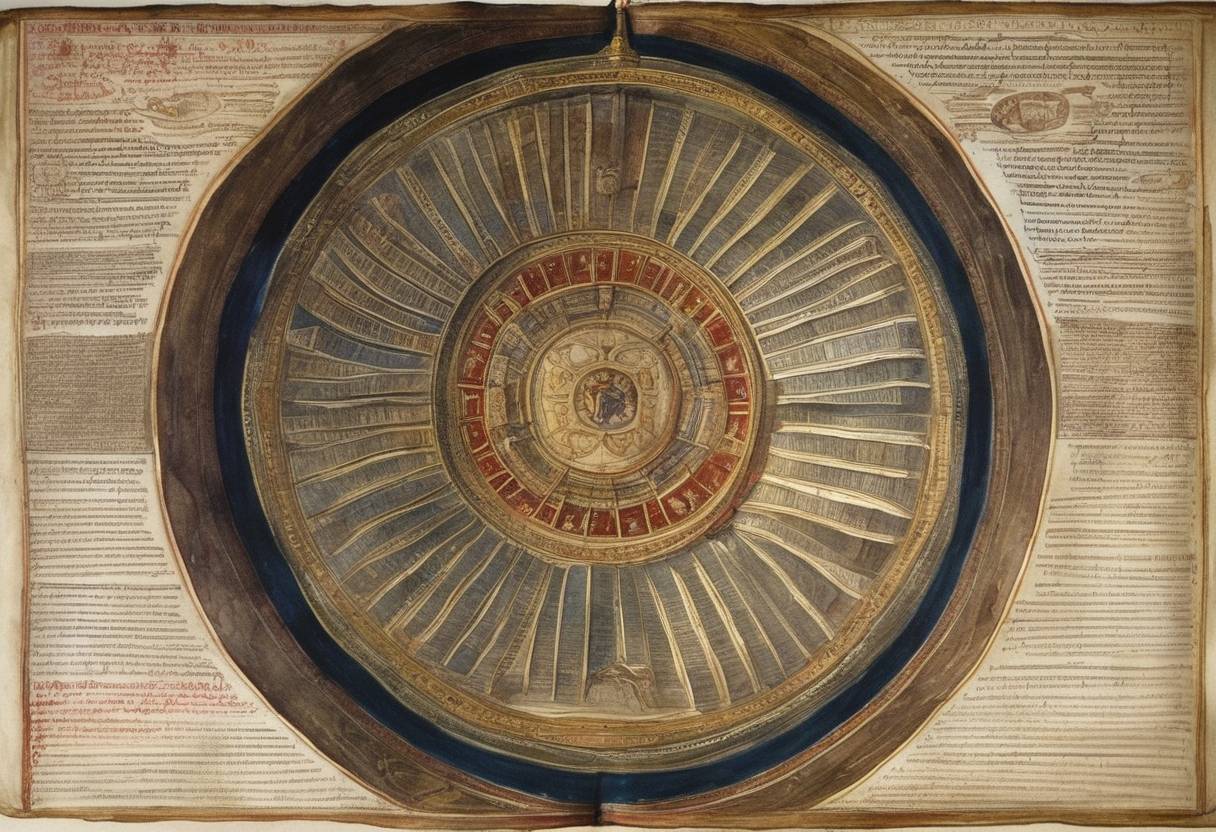
On March 5, 1616, the Catholic Church placed Nicolaus Copernicus’s seminal work, De revolutionibus orbium coelestium (“On the Revolutions of the Heavenly Spheres”), on the Index of Forbidden Books. This decision marked a significant clash between emerging scientific ideas and established religious doctrine during the early 17th century.
Published in 1543, the year of Copernicus’s death, the book proposes a heliocentric model of the universe, where the Earth and other planets orbit the Sun. This challenged the long-standing geocentric model, which held that the Earth was the center of the universe, a view widely accepted by the Church and rooted in Ptolemaic astronomy.
Copernicus’s ideas laid the foundation for modern astronomy and were later supported and expanded by astronomers like Johannes Kepler and Galileo Galilei. Their work continued to affirm the heliocentric theory, prompting increasing tension with the Church that upheld the geocentric view as orthodox.
The Church’s decision to ban Copernicus’s work arose from a broader conflict over the interpretation of the natural world through scientific inquiry versus theological doctrine. The heliocentric theory appeared to contradict certain scriptural interpretations, which the Church argued could undermine religious orthodoxy and authority.
In 1616, coinciding with the trial of Galileo Galilei, the Church pronounced its judgment on the Copernican theory, declaring it “formally heretical” because it appeared to contradict the Holy Scriptures. While De revolutionibus was not outright banned, it was suspended until corrected, meaning certain sections discussing heliocentrism needed to be either removed or altered to avoid conflict with Church teachings.
The inclusion of De revolutionibus on the Index of Forbidden Books marked a period of restricted scientific discourse within the Catholic domain, though Copernicus’s ideas continued to circulate and influence. The book’s eventual correction and the persistence of heliocentric theory in scientific inquiry exemplify the tension between innovation and established belief systems.
By the late 17th century, the heliocentric model gained wider acceptance, aligning with evidence provided by further astronomical research. The Church eventually lifted the restrictions on Copernicus’s work, reflecting the gradual reconciliation of science and doctrine.
The historical placement of De revolutionibus on the Index highlights the complex interplay between science and religion and underscores the enduring impact of Copernicus’s ideas on shaping the course of scientific progress.
Source: en.wikipedia.org