Construction of the Dome of Santa Maria del Fiore
1420 · Florence, Italy
Construction of the dome of Santa Maria del Fiore in Florence began, designed by Filippo Brunelleschi, marking a significant development in Renaissance architecture.
July 17, 1048
The construction of the Cattedrale di San Pietro in Mantua is completed, showcasing Romanesque architecture. This cathedral, later undergoing several transformations, serves as a prominent religious building and a testament to the era's architectural style.
Mantua, Italy | Catholic Church
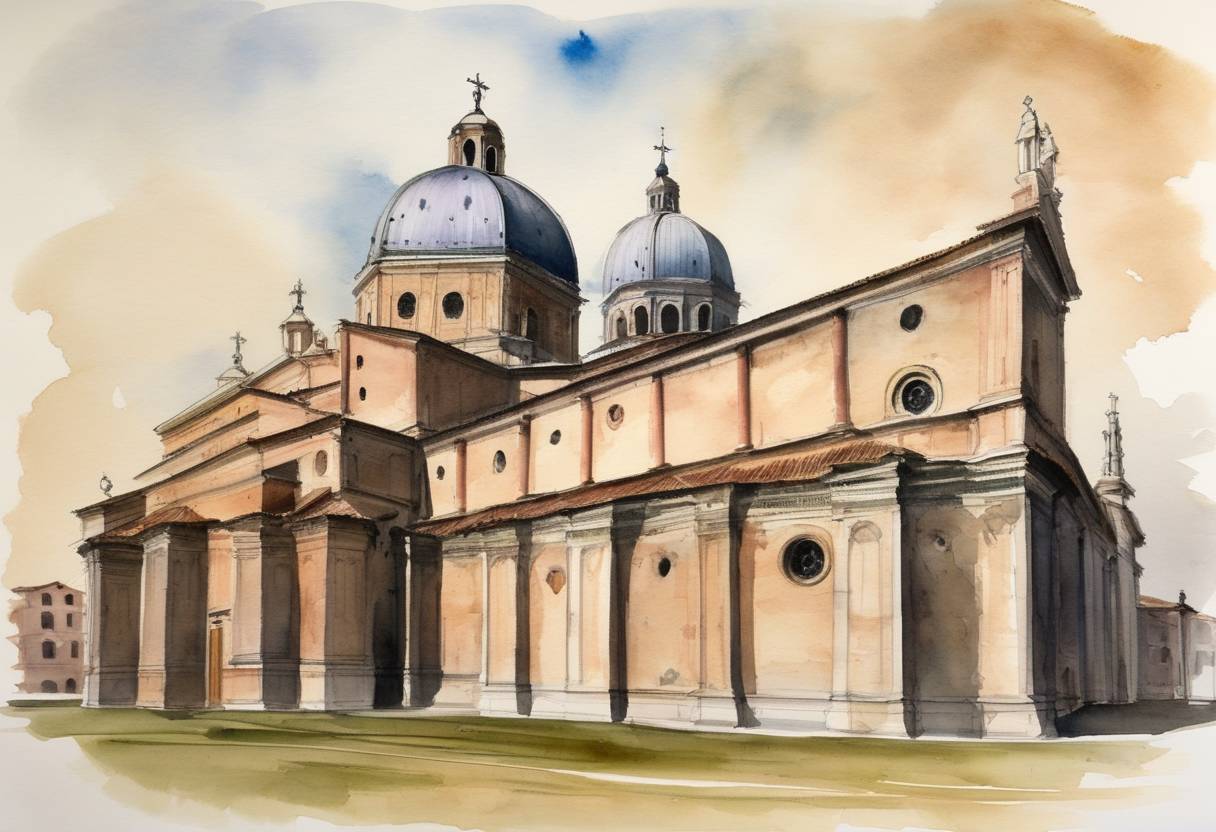
On July 17, 1048, the construction of the original Cattedrale di San Pietro in Mantua, Italy, was completed. This significant edifice was an exemplar of the Romanesque architectural style that dominated church constructions across Europe during this period. The completion of this cathedral marked a key moment in the history of Mantua, as the city sought to assert its religious and cultural importance in medieval Italy.
The Romanesque style is characterized by its massive quality, thick walls, rounded arches, sturdy piers, large towers, and decorative arcading. The design of the Cattedrale di San Pietro likely featured these elements, which were typical of the era:
The construction of the Cattedrale di San Pietro must be understood against the backdrop of 11th century Europe, an era of ecclesiastical expansion and architectural innovation. During this period, the Catholic Church was not only a spiritual authority but also a patron of architecture and the arts. Many cathedrals, like San Pietro, were constructed as part of a broader movement to physically manifest faith and demonstrate the Church’s influence.
The Cattedrale di San Pietro has undergone several transformations and reconstructions over the centuries. Each renovation reflects changing architectural tastes and technological advances:
The completion of the Cattedrale di San Pietro served as a testament to the rich cultural and religious life in Mantua during the Middle Ages. As a center of worship and a communal gathering place, it played a crucial role in the spiritual lives of its congregation. Moreover, its architectural style provides insight into the broader trends of medieval Europe, contributing to our understanding of this pivotal historical period.
The Cattedrale di San Pietro remains a symbol of Mantua’s historical and cultural legacy, illustrating the city’s past while continuing to serve as a place of worship in the present.
Source: www.cattedraledimantova.it