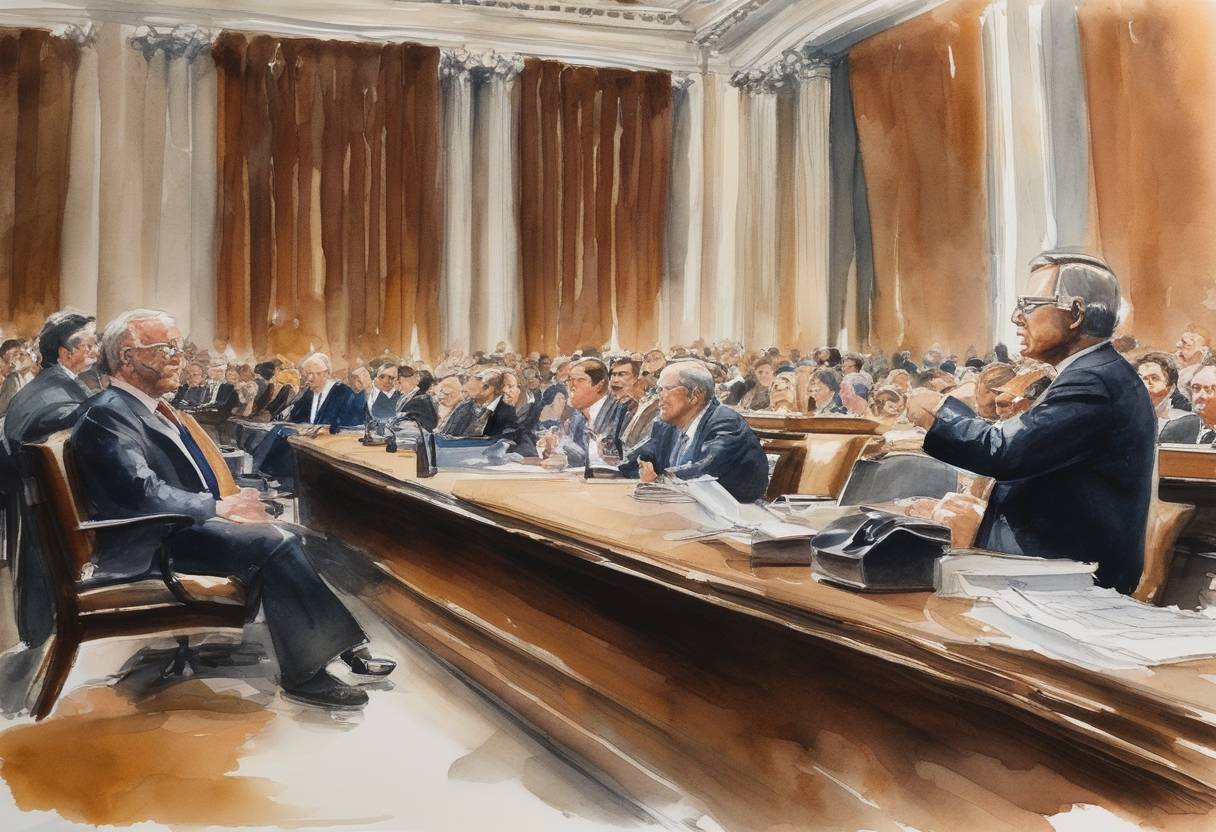
John Dean’s Testimony in the Watergate Scandal
On June 20, 1973, John Dean, former White House Counsel to President Richard Nixon, delivered a critical testimony before the Senate Watergate Committee. His appearance marked a turning point in the Watergate scandal, which had been unraveling over the previous year.
Context
The Watergate scandal began with a break-in at the Democratic National Committee headquarters at the Watergate office complex in Washington, D.C., on June 17, 1972. The subsequent investigation revealed a broader campaign of political espionage and sabotage conducted on behalf of Nixon’s re-election effort. As the investigation intensified, attention turned to the extent of the involvement of high-level administration officials, including President Nixon.
Key Testimony Highlights
Involvement in the Cover-up: John Dean provided detailed accounts of the efforts undertaken by Nixon and his aides to obstruct the investigation into the Watergate break-in. Dean testified that there had been a continuous attempt to cover up the involvement of the White House in these activities.
Direct Conversations with Nixon: Dean stated he had several meetings with Nixon, in which discussions about the Watergate cover-up took place. He famously declared he had warned Nixon that there was a “cancer on the presidency” that was growing.
Financial Implications: Dean expounded on efforts to use hush money to thwart the investigation. During his testimony, he provided specifics about payments intended to buy the silence of the Watergate burglars.
Impact
Dean’s testimony was pivotal because it directly implicated Nixon in the cover-up and challenged the narrative that senior White House officials were unaware of the illegal activities. His revelations contributed significantly to the mounting pressure on Nixon, eventually leading to the release of the White House tapes. These recordings would further incriminate Nixon, revealing that he indeed had a substantial role in the Watergate cover-up.
Aftermath
Dean’s testimony was a crucial piece in the Watergate investigation that ultimately led to several indictments and convictions of Nixon’s associates. It set the stage for Nixon’s eventual resignation on August 8, 1974, initially marking the first and only time a U.S. president resigned from office. Dean himself would be convicted of obstruction of justice, although he served a reduced sentence in exchange for his cooperation with the investigation.
John Dean’s testimony on June 20, 1973, remains a seminal moment in American political history, highlighting issues of power, abuse, and the enduring importance of democratic institutions and accountability.