Premiere of Giuseppe Verdi's Opera 'La Traviata'
1853 · Venice, Italy
Giuseppe Verdi's opera 'La Traviata' premiered at La Fenice opera house.
January 27, 1851
The opera 'Rigoletto' by Giuseppe Verdi premieres at La Fenice, Venice.
Venice, Italy | La Fenice
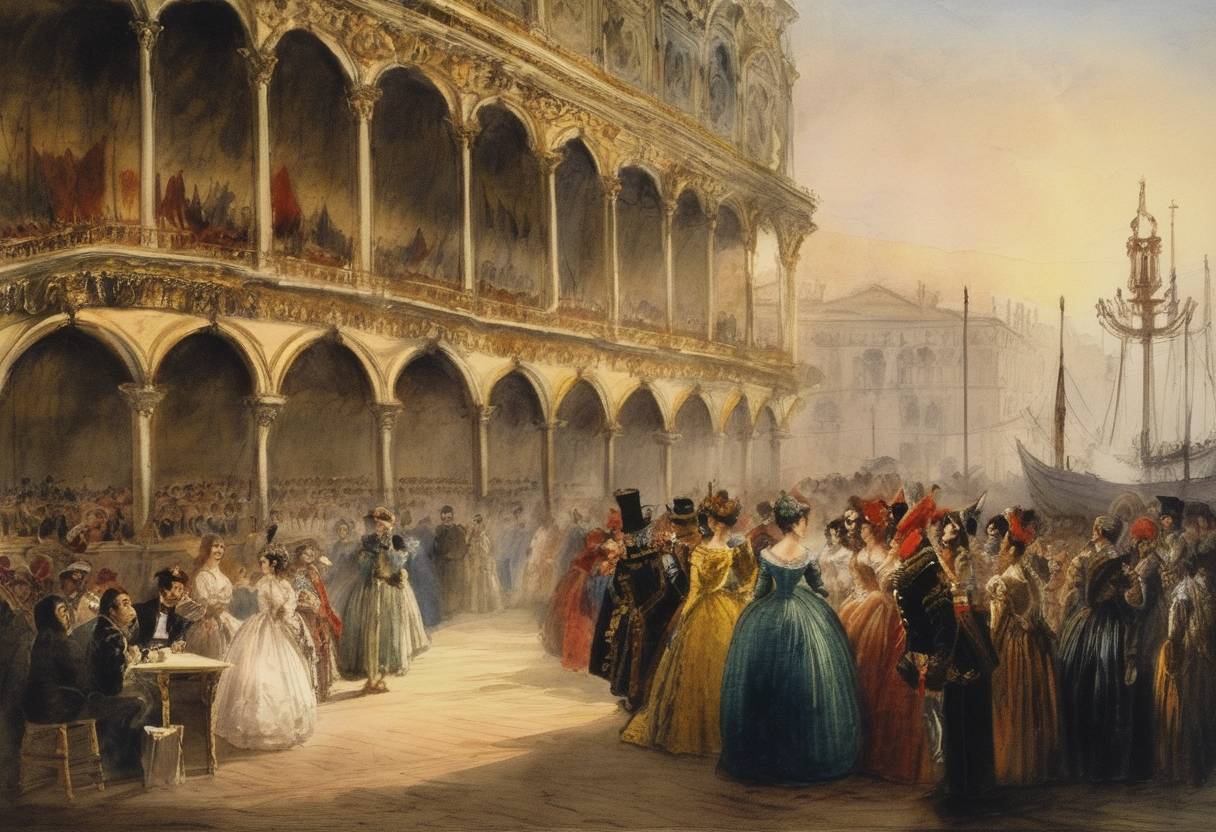
On March 11, 1851, the opera “Rigoletto,” composed by Giuseppe Verdi, had its premiere at the renowned Teatro La Fenice in Venice, Italy. This work, which has since become one of the staples of the operatic repertoire, is a dramatic tale of passion, betrayal, and tragedy.
Verdi, by the mid-19th century, was already an established composer with operas like “Nabucco” and “Macbeth” garnering success. Following the mixed reception of his earlier opera “Stiffelio,” Verdi sought a powerful new subject for his next work. He found it in the play “Le Roi s’amuse” (“The King Amuses Himself”) by French author Victor Hugo, which was originally written as a biting commentary on the monarchy.
Verdi faced considerable challenges in adapting the contentious play, due to its politically sensitive nature. The censors in the Austrian-controlled northern Italy, where Venice was situated, required changes to the setting and character names to mitigate potential controversy. The original king’s character was transformed into the Duke of Mantua, and the jester, Triboulet, became Rigoletto. Despite these changes, the opera retained the core themes of corruption and the complexities of the human condition.
Verdi collaborated with librettist Francesco Maria Piave, who adeptly navigated the censors’ demands while preserving the dramatic intensity of the story.
On its premiere, “Rigoletto” was met with extraordinary acclaim from both the audience and critics. The opera’s striking blend of bold melodies, dramatic intensity, and deep character study resonated profoundly with viewers. Some of its arias, particularly “La donna è mobile,” became instantly popular, renowned for their memorable melodies and emotional depth.
“Rigoletto” has since achieved iconic status in the opera world, frequently performed in opera houses globally. It is noted for its masterful orchestration, compelling characters, and its innovative use of the voice to convey complex psychological states.
Verdi’s success with “Rigoletto” solidified his reputation as a leading composer of Italian opera and set the stage for further masterpieces, such as “Il Trovatore” and “La Traviata.” The opera’s themes remain timeless, exploring issues of power, morality, and the consequences of vengeance.
Source: en.wikipedia.org