1536 · London, England
King Henry VIII of England dissolves the monasteries and confiscates their assets.
October 30, 1534
English Parliament passes the Act of Supremacy, establishing King Henry VIII as the Supreme Head of the Church of England.
London, England | English Parliament
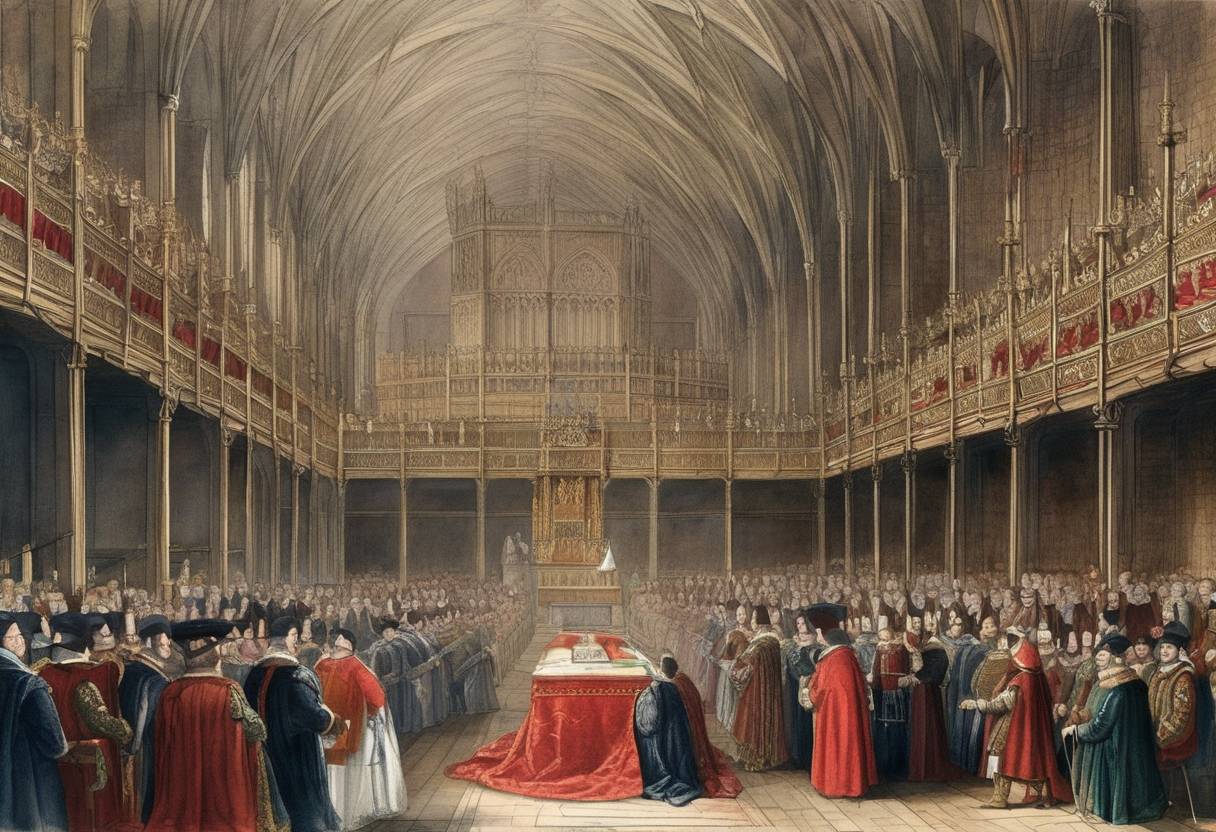
On October 30, 1534, the English Parliament passed the Act of Supremacy, a pivotal moment in English history that established King Henry VIII as the Supreme Head of the Church of England. This legislative act marked a definitive break from the Papal authority of the Roman Catholic Church, effectively initiating the English Reformation.
The roots of the Act of Supremacy lie in King Henry VIII’s desire to annul his marriage to Catherine of Aragon. The Pope’s refusal to grant the annulment prompted Henry to assert his control over ecclesiastical matters in England. By the early 1530s, Henry’s quest for religious and political sovereignty was further fueled by the influence of reformists and the burgeoning Protestant Reformation spreading across Europe.
The Act declared that:
This legislation fundamentally altered the religious landscape of England by spearheading a reformation that replaced Roman Catholicism with Anglicanism as the state religion. It granted the monarchy unprecedented religious authority, including the ability to appoint bishops, direct church doctrine, and manage the wealth and assets previously controlled by the Catholic Church.
The immediate consequence was the severance of all ties between the Church of England and the Vatican. This act was instrumental in advancing Henry’s marital and dynastic ambitions, allowing him to marry Anne Boleyn in his quest for a male heir.
In the broader historical context, the Act of Supremacy set the stage for the establishment of Protestant churches across England and led to significant religious upheaval, including the dissolution of monasteries and the redistribution of their wealth. It also initiated a turbulent period characterized by shifts between Protestant and Catholic monarchs, which influenced English politics and society for over a century.
The Act of Supremacy is regarded as a foundational moment in the English Reformation. It underscored the emergence of a national church that was still recognizably Christian, yet distinct from Roman Catholicism. By reshaping the religious and political landscape of England, this act not only impacted the governance of the church but also contributed to the formation of modern statehood and its relationship with religion.
In summary, the passage of the Act of Supremacy on October 30, 1534, was a transformative event in both religious and political history, paving the way for the establishment of the Church of England and the religious independence of the English monarchy from the Catholic Church.
Source: www.britannica.com