The First Siemensstadtbahn: An Early Commuter Train in Berlin
1854 · Berlin, Germany
The First Siemenststadtbahn, an early commuter train in Berlin, Germany, began operations.
May 3, 1880
The first electric streetcar, built by Werner von Siemens, begins operating in Berlin, Germany, signaling a major advancement in urban transportation technology.
Berlin, Germany | Siemens & Halske
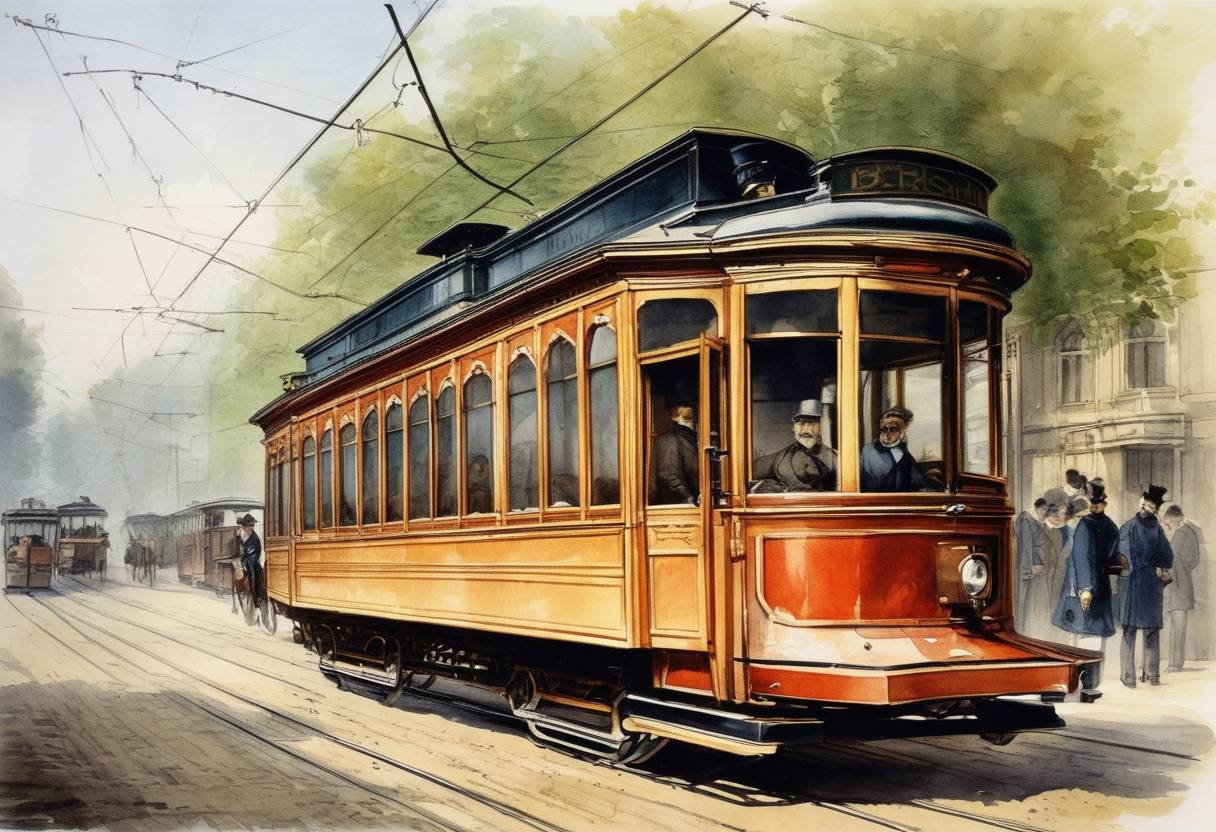
On May 3, 1880, the first electric streetcar commenced service in Berlin, Germany, marking a pivotal development in the evolution of urban transportation. This innovative vehicle was engineered by Werner von Siemens, a distinguished inventor and industrialist whose work laid the foundation for modern electrical engineering.
Werner von Siemens was a German pioneer in the development of electrical technology. His numerous contributions to the field include the perfection of the dynamo and prominent advancements in telegraphy. By the late 19th century, Siemens was focused on harnessing electricity as a means to revolutionize transportation.
The concept of electric streetcars emerged at a time when cities were seeking efficient and clean alternatives to horse-drawn carriages and steam-powered vehicles. Siemens leveraged his knowledge of electric current to design a vehicle that could operate on urban tracks using electrical power.
The electric streetcar debuted by running in public view, drawing attention to its quiet operation and proficiency in navigating urban environments. This initial run was significant for proving the feasibility of electric vehicles in urban settings.
The success of the Berlin electric streetcar initiated the gradual shift from horse-drawn to electrically-powered vehicles in public transit. It heralded an era of expanded urbanization, as electric streetcars enabled cities to grow and connect more outlying regions efficiently.
The demonstration of electric streetcar technology in Berlin inspired transportation systems around the world to adopt electric traction. Within a few decades, electric streetcars and eventually subways transformed public transportation infrastructures globally.
The inauguration of the first electric streetcar in Berlin on May 3, 1880, was an event of monumental importance in transportation history. It showcased the potential of electric power, setting the stage for the widespread electrification of public transit and reinforcing the legacy of Werner von Siemens as a visionary pioneer in electrical engineering.
Source: en.wikipedia.org