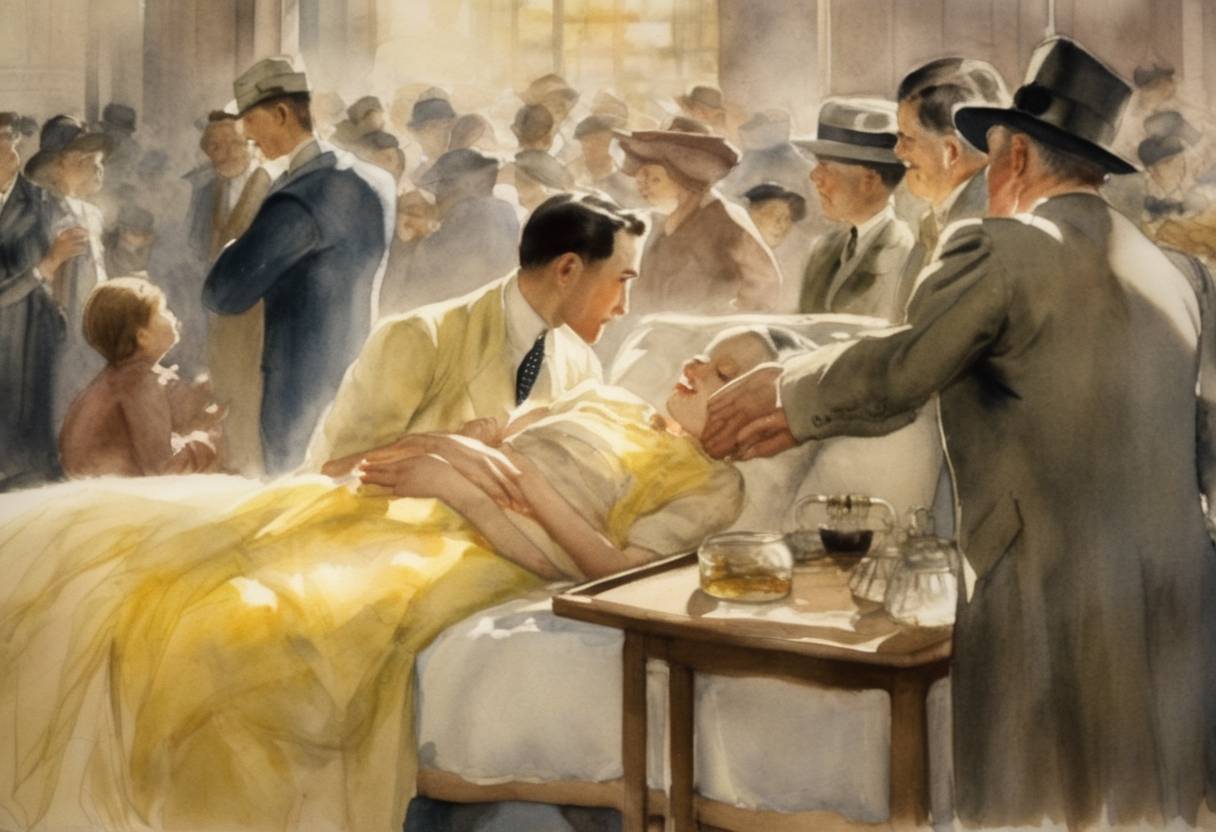
The Announcement of a Yellow Fever Vaccine: April 28, 1932
On April 28, 1932, the Rockefeller Foundation announced the development of a vaccine for yellow fever, representing a remarkable achievement in the field of public health and epidemiology. This breakthrough was a result of extensive research and collaboration that had significant implications for controlling a disease that had caused widespread mortality and suffering, particularly in tropical and subtropical regions.
Background
Yellow fever is a viral hemorrhagic disease transmitted by mosquitoes. It was historically a major health challenge, with devastating outbreaks reported in Africa and the Americas. The disease’s complex epidemiology and vector transmission made it a difficult target for medical science in the early 20th century.
Key Developments Leading to the Vaccine
The road to the yellow fever vaccine involved several pivotal moments:
Isolation of the Virus: Yellow fever’s etiologic agent was successfully isolated in 1927 by researchers Adrian Stokes, Hideyo Noguchi, and others. This crucial step enabled subsequent vaccine development efforts.
Experimental Work: At the Rockefeller Foundation, Max Theiler, a South African-born virologist, was instrumental in attenuating the virus. Theiler used tissue-culture techniques and adapted the virus to mice, weakening it to elicit immunity without causing illness.
The Announcement
The Rockefeller Foundation’s announcement of the vaccine on April 28, 1932, was a watershed moment that offered hope in combating a persistent global health threat. The vaccine, known later as the 17D strain, was shown to be both safe and effective, marking it as a milestone in immunology and tropical medicine.
Impact and Significance
Public Health Advancements: The introduction of the yellow fever vaccine dramatically reduced the incidence of the disease in many regions where the virus was endemic. Mass immunization campaigns greatly curbed epidemics and saved countless lives.
Nobel Prize Award: Max Theiler’s contributions to the yellow fever vaccine earned him the Nobel Prize in Physiology or Medicine in 1951, underscoring the global recognition of his work and its impact.
Legacy: The development of the yellow fever vaccine laid groundwork for future vaccines targeting other mosquito-borne diseases. It also highlighted the importance of research foundations and international collaboration in addressing infectious diseases.
The announcement of the yellow fever vaccine by the Rockefeller Foundation remains a landmark event in medical history, showcasing the power of scientific innovation in improving global health outcomes.