May 14, 2010

Space Shuttle Atlantis launched on its final planned mission, STS-132, to the International Space Station.


Cape Canaveral, United States | NASA
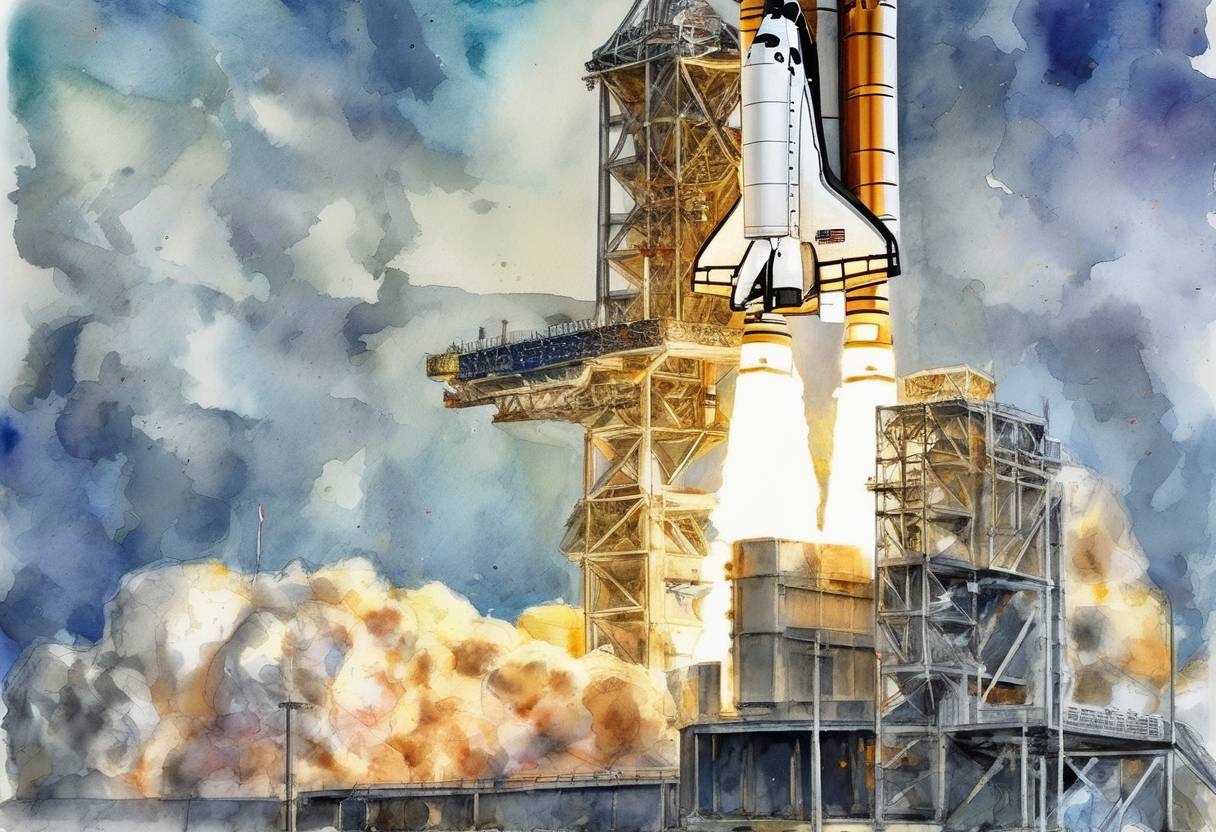
Watercolor painting based depiction of Space Shuttle Atlantis launched on its final planned mission, STS-132, to the International Space Station. (2010)

Space Shuttle Atlantis: Final Planned Mission STS-132

Overview

On May 14, 2010, the Space Shuttle Atlantis embarked on its final planned mission, designated STS-132, to the International Space Station (ISS). This mission marked the 32nd flight of Atlantis and was part of NASA’s Space Shuttle program, which aimed to support the construction and maintenance of the ISS.

Mission Objectives

The primary objectives of STS-132 included:

  • Delivery of the Russian Mini-Research Module-1 (MRM-1): Also known as Rassvet, this module was intended to provide additional docking ports and cargo storage for the ISS.
  • Installation and Maintenance Tasks: The mission included several spacewalks to install new equipment and perform maintenance on the ISS.
  • Scientific Research: The crew conducted experiments and transferred scientific equipment to the ISS to support ongoing research.

Crew

The STS-132 mission was crewed by six astronauts:

  1. Kenneth T. Ham (Commander)
  2. Dominic A. Antonelli (Pilot)
  3. Garrett E. Reisman (Mission Specialist)
  4. Michael T. Good (Mission Specialist)
  5. Piers J. Sellers (Mission Specialist)
  6. Stephen G. Bowen (Mission Specialist)

Key Events

  • Launch: Atlantis launched from Kennedy Space Center in Florida at 2:20 PM EDT on May 14, 2010.
  • Docking with the ISS: The shuttle successfully docked with the ISS on May 16, 2010.
  • Spacewalks: The mission included three spacewalks, during which astronauts installed a spare antenna and replaced batteries on the ISS.
  • Undocking and Return: Atlantis undocked from the ISS on May 23, 2010, and returned to Earth, landing at Kennedy Space Center on May 26, 2010.

Historical Significance

  • End of an Era: Although initially planned as Atlantis’s final mission, the shuttle flew once more on STS-135 in July 2011, which was the final mission of the Space Shuttle program.
  • Contributions to the ISS: The successful delivery and installation of the MRM-1 module enhanced the capabilities of the ISS, supporting international collaboration and scientific research.

Aftermath

The STS-132 mission contributed to the completion of the ISS and demonstrated the continued importance of international partnerships in space exploration. The Space Shuttle program concluded in 2011, transitioning NASA’s focus to new spacecraft and exploration initiatives, including the Artemis program aimed at returning humans to the Moon.

Atlantis is now on display at the Kennedy Space Center Visitor Complex, serving as a testament to the achievements of the Space Shuttle program and its role in advancing human spaceflight.

Source: www.nasa.gov