1969 · A Shau Valley, Vietnam
The Battle of Hamburger Hill during the Vietnam War ended after ten days of intense fighting, with U.S. and South Vietnamese forces capturing the heavily fortified hill from North Vietnamese troops.
March 16, 1968
The My Lai Massacre occurs during the Vietnam War, where American soldiers kill hundreds of unarmed Vietnamese civilians in the hamlet of My Lai.
My Lai, Vietnam | United States Army
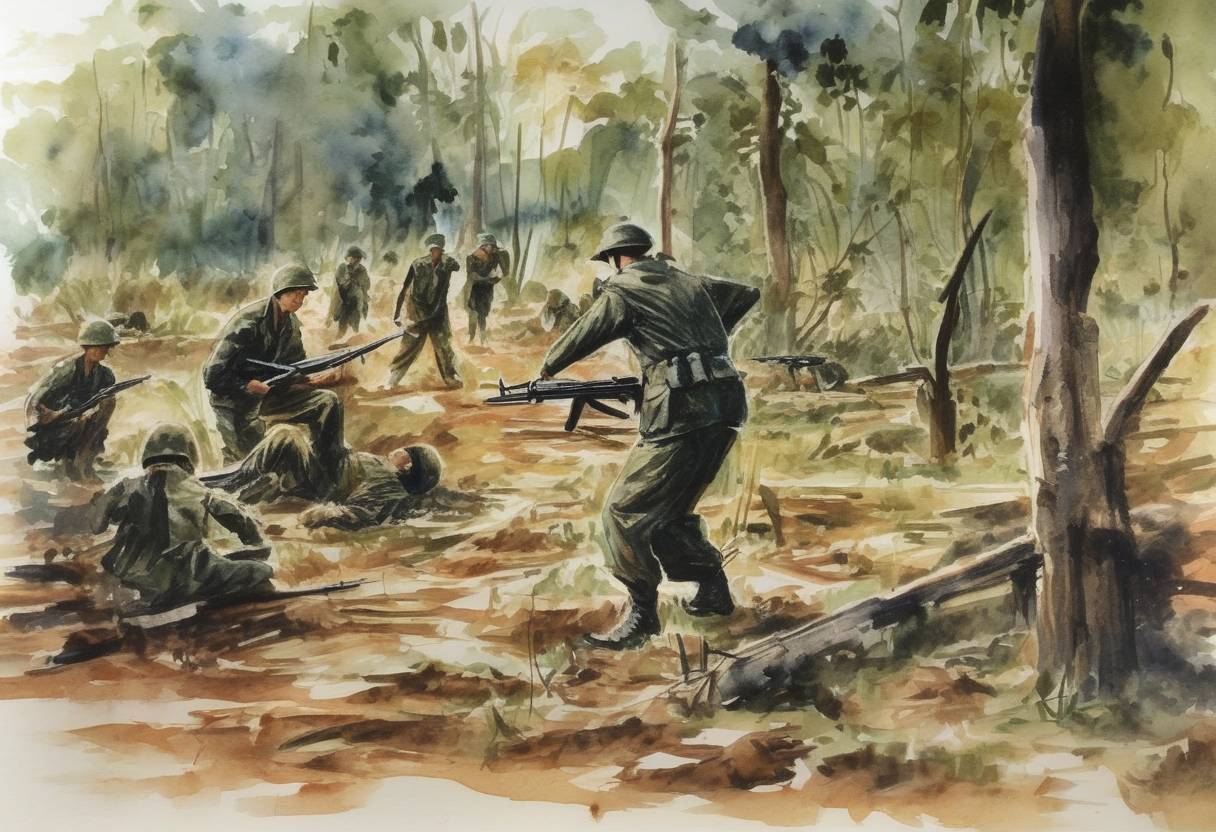
The My Lai Massacre occurred during the Vietnam War, a protracted conflict between North Vietnam, supported by its communist allies, and South Vietnam, backed by the United States and other anti-communist nations. The war was marked by guerrilla warfare, complex political dynamics, and significant civilian casualties.
On March 16, 1968, a company of American soldiers from Charlie Company, 1st Battalion, 20th Infantry Regiment, 11th Brigade, 23rd Infantry Division, entered the hamlet of My Lai in Quang Ngai Province, South Vietnam. The soldiers were on a search-and-destroy mission, intended to root out Viet Cong fighters believed to be hiding in the area.
Initially, the massacre was covered up by the U.S. Army, with reports falsely claiming a successful engagement with enemy forces. However, the truth began to emerge due to the efforts of a few individuals:
The revelation of the My Lai Massacre had profound effects both in the United States and internationally:
The My Lai Massacre remains one of the most infamous incidents of the Vietnam War, symbolizing the war’s moral complexities and the devastating impact on civilians. It highlighted the need for accountability in military operations and contributed to the broader discourse on human rights and the laws of war.
Source: en.wikipedia.org