August 2, 1964

The Gulf of Tonkin incident occurred, involving a confrontation between North Vietnamese and United States naval forces, leading to the escalation of U.S. involvement in the Vietnam War.


Gulf of Tonkin, Vietnam | United States Navy
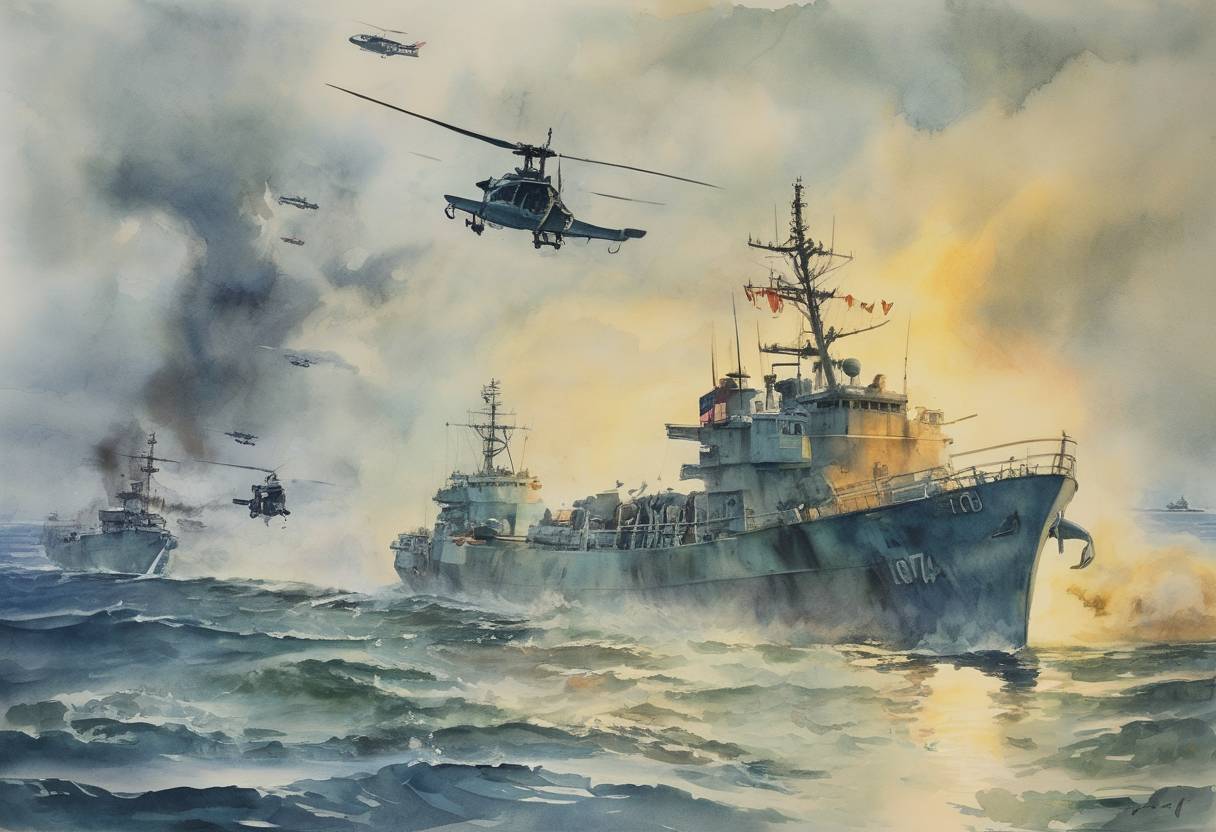
Watercolor painting based depiction of The Gulf of Tonkin incident occurred, involving a confrontation between North Vietnamese and United States naval forces, leading to the escalation of U.S. involvement in the Vietnam War. (1964)

The Gulf of Tonkin Incident: August 2, 1964

The Gulf of Tonkin Incident was a pivotal moment in the escalation of U.S. involvement in the Vietnam War. It involved a confrontation between North Vietnamese and United States naval forces, which significantly influenced American military and political strategy in Southeast Asia.

Background

By the early 1960s, the United States had been increasingly involved in Vietnam, supporting the South Vietnamese government against the communist North Vietnamese and the Viet Cong. The U.S. aimed to prevent the spread of communism in Southeast Asia, adhering to the “domino theory” that suggested if one country fell to communism, others in the region would follow.

The Incident

August 2, 1964

  • Location: The incident occurred in the Gulf of Tonkin, off the coast of North Vietnam.
  • Involved Parties: The U.S. destroyer USS Maddox was conducting a signals intelligence patrol as part of “Operation Desoto Patrols,” which were designed to collect intelligence on North Vietnamese coastal defenses.
  • Confrontation: On August 2, the USS Maddox reported being attacked by three North Vietnamese Navy torpedo boats. The Maddox fired warning shots, and the North Vietnamese boats launched torpedoes and machine-gun fire. The Maddox, with the assistance of aircraft from the nearby aircraft carrier USS Ticonderoga, returned fire, damaging two of the North Vietnamese boats and leaving one dead in the water.

August 4, 1964

  • Second Incident: A second alleged attack was reported by the USS Maddox and the USS Turner Joy. However, this attack has been the subject of much controversy and debate, with later reports suggesting that it may not have occurred or was misinterpreted due to poor weather and over-eager sonar operators.

Aftermath and Significance

  • Gulf of Tonkin Resolution: In response to these incidents, President Lyndon B. Johnson sought and obtained the Gulf of Tonkin Resolution from Congress on August 7, 1964. This resolution granted the president broad powers to use military force in Vietnam without a formal declaration of war.
  • Escalation of U.S. Involvement: The resolution marked a significant escalation in U.S. military involvement in Vietnam, leading to the deployment of combat troops and a sustained bombing campaign known as “Operation Rolling Thunder.”
  • Historical Debate: The Gulf of Tonkin Incident has been scrutinized for its role in escalating the Vietnam War. Declassified documents and later analyses have raised questions about the accuracy of the reports and the motivations behind the U.S. government’s response.

Broader Historical Impact

The Gulf of Tonkin Incident and the subsequent resolution set the stage for a deepening American commitment to the Vietnam War, which would last until 1975 and have profound effects on U.S. domestic and foreign policy. The incident is often cited as a cautionary tale about the risks of military escalation based on uncertain intelligence and the importance of congressional oversight in matters of war.