The New Madrid Earthquake of December 16, 1811
1811 · New Madrid, United States
The New Madrid earthquake strikes the Mississippi River Valley, one of the largest earthquakes in the United States.
May 19, 1780
The New England Dark Day occurred, an unusual darkening of the day sky over New England and parts of Canada.
New England, United States | N/A
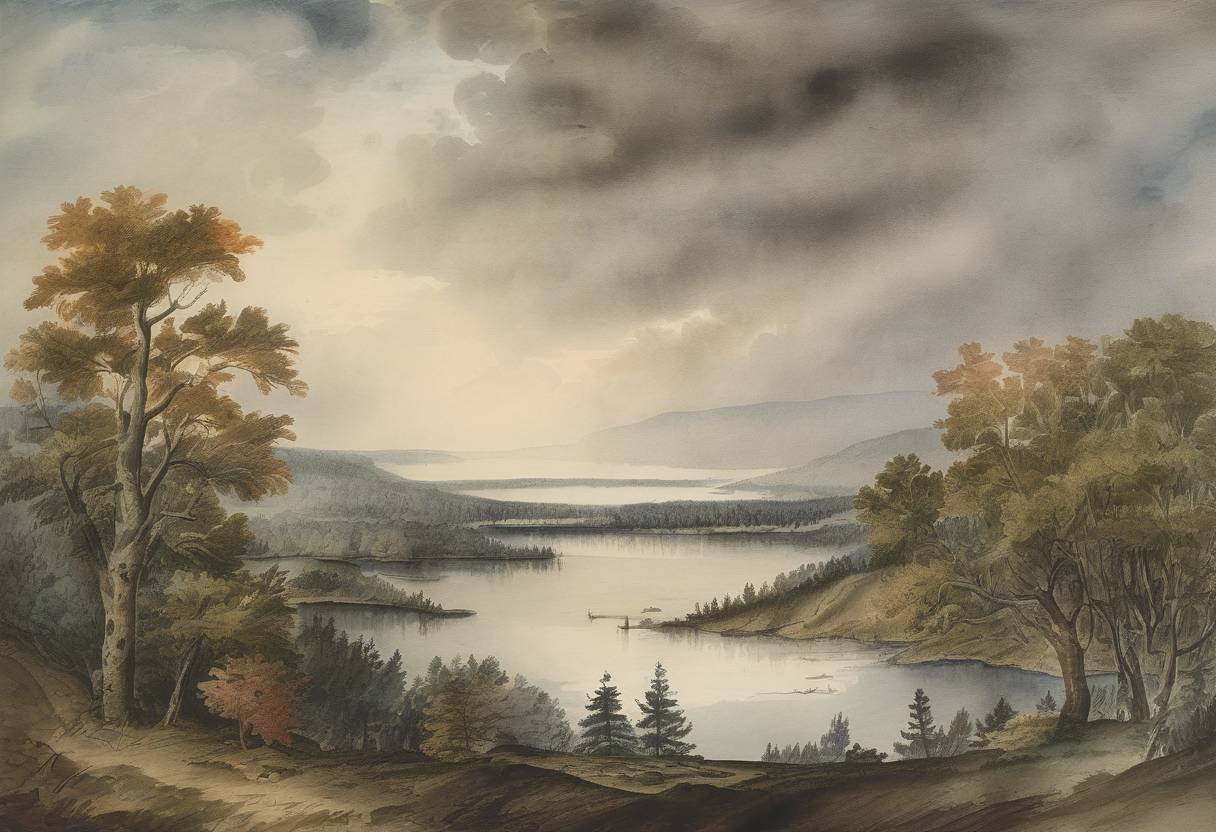
The New England Dark Day refers to an unusual and mysterious event that occurred on May 19, 1780, when the skies over New England and parts of Canada darkened significantly during the daytime. This phenomenon has intrigued historians and scientists alike, as it was one of the most notable instances of unexplained darkness in the region’s history.
Geographical Impact: The darkness was reported across a wide area, including parts of New England (comprising states like Massachusetts, New Hampshire, and Connecticut) and extending into Canadian territories.
Timeframe: The darkness began in the late morning and persisted through the afternoon, with some areas experiencing darkness until the middle of the night.
Nature of the Darkness: Witnesses described the sky as being so dark that candles were required to see indoors, and outdoor activities were severely disrupted. The darkness was accompanied by a reddish hue in the sky and a sooty smell in the air.
While the exact cause of the New England Dark Day was not immediately understood, modern scientific analysis suggests several contributing factors:
Wildfires: It is widely believed that massive forest fires, possibly in the Algonquin Provincial Park area of Ontario, Canada, produced thick smoke that was carried by prevailing winds over New England. The smoke, combined with fog and cloud cover, likely contributed to the darkness.
Atmospheric Conditions: The presence of a dense cloud cover and fog, along with the smoke, would have exacerbated the dimming effect, creating an almost night-like atmosphere during the day.
Public Reaction: The event caused widespread alarm and speculation. Many people interpreted it as a sign of divine intervention or an omen, reflecting the religious and superstitious beliefs prevalent at the time.
Scientific Inquiry: The Dark Day spurred interest in scientific explanations for natural phenomena, contributing to the early development of meteorology and atmospheric science.
Cultural Impact: The event was documented in numerous diaries and newspapers of the time, becoming a part of New England folklore. It also inspired literary references, including in works by poets and authors who sought to capture the eerie and unsettling nature of the day.
In the years following the Dark Day, increased understanding of atmospheric science and natural events such as wildfires helped demystify such occurrences. The New England Dark Day remains a fascinating historical event, illustrating the interplay between natural phenomena and human perception.
Overall, the New England Dark Day of May 19, 1780, stands as a testament to the power of nature and its ability to influence human society and thought, leaving a lasting legacy in the annals of American history.
Source: en.wikipedia.org