The Russo-Georgian War: August 7, 2008
2008 · Tskhinvali, Georgia
The Russo-Georgian War began when Georgia launched a military operation to regain control over the breakaway region of South Ossetia, leading to a military response from Russia.
July 3, 2005
The national flag of Georgia was hoisted on the South Ossetian administrative border, marking a significant moment in the ongoing territorial dispute between Georgia and the breakaway region of South Ossetia.
Tskhinvali, Georgia | Government of Georgia
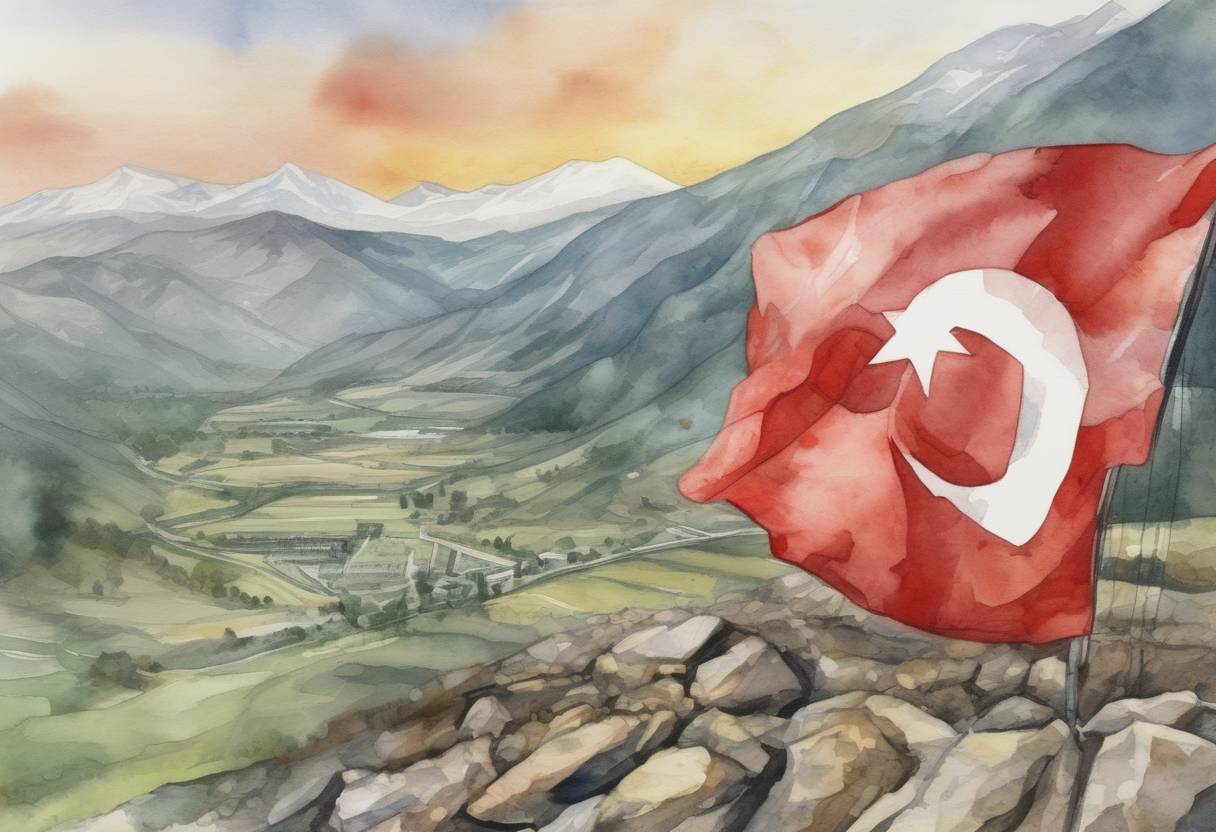
On July 3, 2005, a significant event unfolded in the ongoing territorial dispute between Georgia and the breakaway region of South Ossetia. The national flag of Georgia was hoisted on the administrative border of South Ossetia, marking a symbolic assertion of Georgian sovereignty over the contested area.
The conflict between Georgia and South Ossetia has deep historical roots, with tensions escalating during the dissolution of the Soviet Union. South Ossetia, a region in the South Caucasus, declared independence from Georgia in the early 1990s, leading to a violent conflict. Despite a ceasefire brokered in 1992, the region remained a point of contention, with periodic flare-ups of violence and diplomatic standoffs.
The hoisting of the Georgian flag on July 3, 2005, was a deliberate act by the Georgian government to reaffirm its claim over South Ossetia. This move came amidst heightened tensions and was part of a broader strategy by then-Georgian President Mikheil Saakashvili to reassert control over the breakaway regions of South Ossetia and Abkhazia.
Georgian Perspective: The act was seen as a demonstration of national unity and territorial integrity. It was part of Saakashvili’s efforts to strengthen Georgia’s sovereignty and push for the reintegration of the separatist regions.
South Ossetian and Russian Response: The move was met with condemnation from South Ossetian authorities and their Russian allies. It was perceived as a provocation that could destabilize the fragile peace in the region.
International Community: The international response was mixed, with some countries supporting Georgia’s territorial claims while others urged restraint and dialogue to prevent further escalation.
The hoisting of the Georgian flag in 2005 was emblematic of the complex and often volatile relationship between Georgia and its breakaway regions. It underscored the challenges of post-Soviet state-building and the geopolitical tensions in the Caucasus region.
The tensions between Georgia and South Ossetia continued to simmer, eventually culminating in the Russo-Georgian War of August 2008. This conflict resulted in Russia recognizing South Ossetia and Abkhazia as independent states, further complicating the situation and solidifying the division.
The events of July 3, 2005, highlight the enduring struggle for territorial integrity and national identity in Georgia. The hoisting of the Georgian flag on the South Ossetian border remains a poignant reminder of the unresolved conflicts in the Caucasus and the broader geopolitical dynamics at play.
Source: www.bbc.com