The New Madrid Earthquake of December 16, 1811
1811 · New Madrid, United States
The New Madrid earthquake strikes the Mississippi River Valley, one of the largest earthquakes in the United States.
February 7, 1812
The strongest in a series of earthquakes struck New Madrid, Missouri, estimated to be around magnitude 7.5 to 8.0, part of the New Madrid Seismic Zone.
New Madrid, United States | New Madrid Seismic Zone
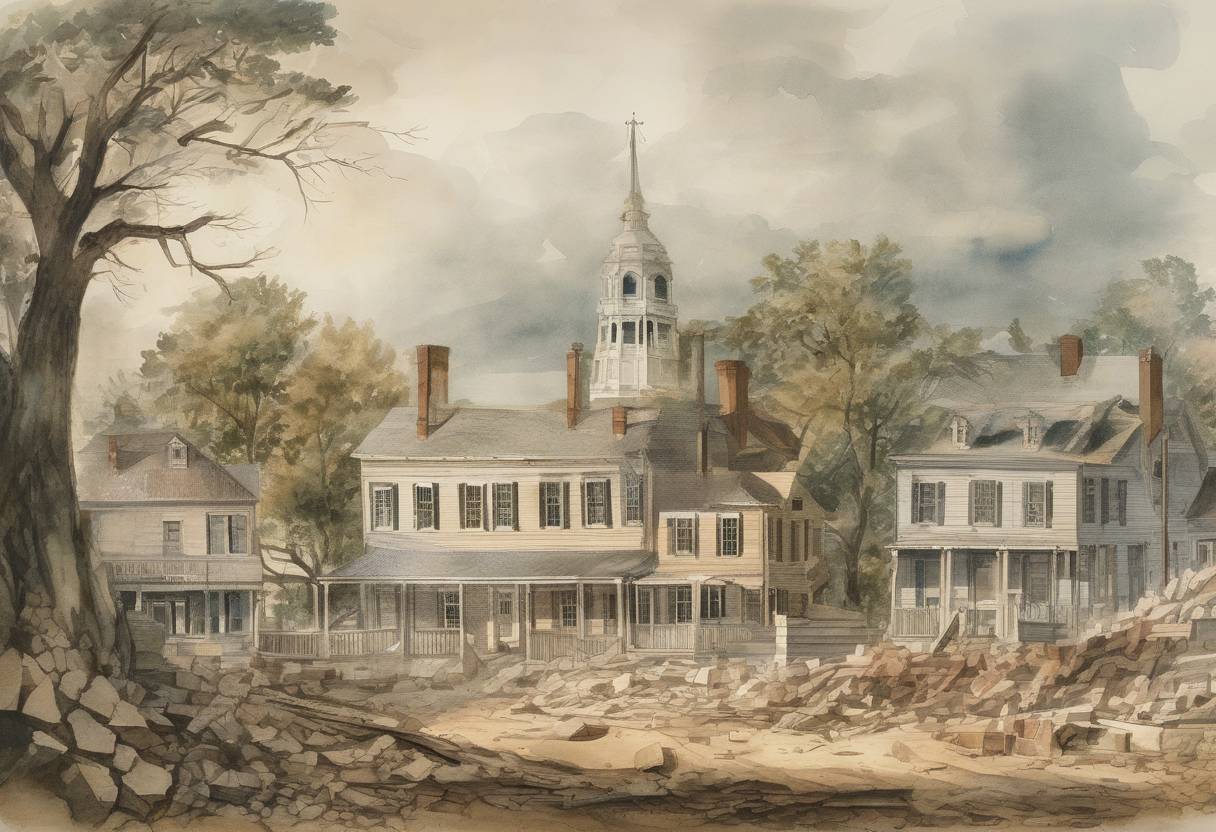
On February 7, 1812, the strongest earthquake in a series of seismic events struck the New Madrid Seismic Zone, with its epicenter near New Madrid, Missouri. This earthquake is estimated to have had a magnitude between 7.5 and 8.0, making it one of the most powerful earthquakes in the contiguous United States.
The New Madrid Seismic Zone is a major seismic zone and a prolific source of intraplate earthquakes in the southern and midwestern United States. The series of earthquakes that occurred between December 1811 and February 1812 are among the most significant in U.S. history. The region, at the time, was sparsely populated, which limited the loss of life, but the quakes were felt over a vast area, reportedly as far away as the East Coast.
First Earthquake (December 16, 1811): The seismic activity began with a major earthquake on December 16, 1811, estimated at a magnitude of 7.2–8.2. This event was followed by a series of aftershocks.
Second Major Earthquake (January 23, 1812): Another significant earthquake occurred on January 23, 1812, with a magnitude estimated between 7.0 and 7.8.
Continued Aftershocks: The region experienced numerous aftershocks between these major events, contributing to widespread fear and damage.
The New Madrid earthquakes of 1811-1812 underscore the dynamic and unpredictable nature of the Earth’s geology. They serve as a reminder of the potential for significant seismic activity in areas not typically associated with earthquakes, influencing both scientific understanding and public policy regarding earthquake preparedness and response.
These events remain a pivotal chapter in the history of natural disasters in the United States, illustrating the profound impact of seismic activity on human societies and the environment.
Source: en.wikipedia.org