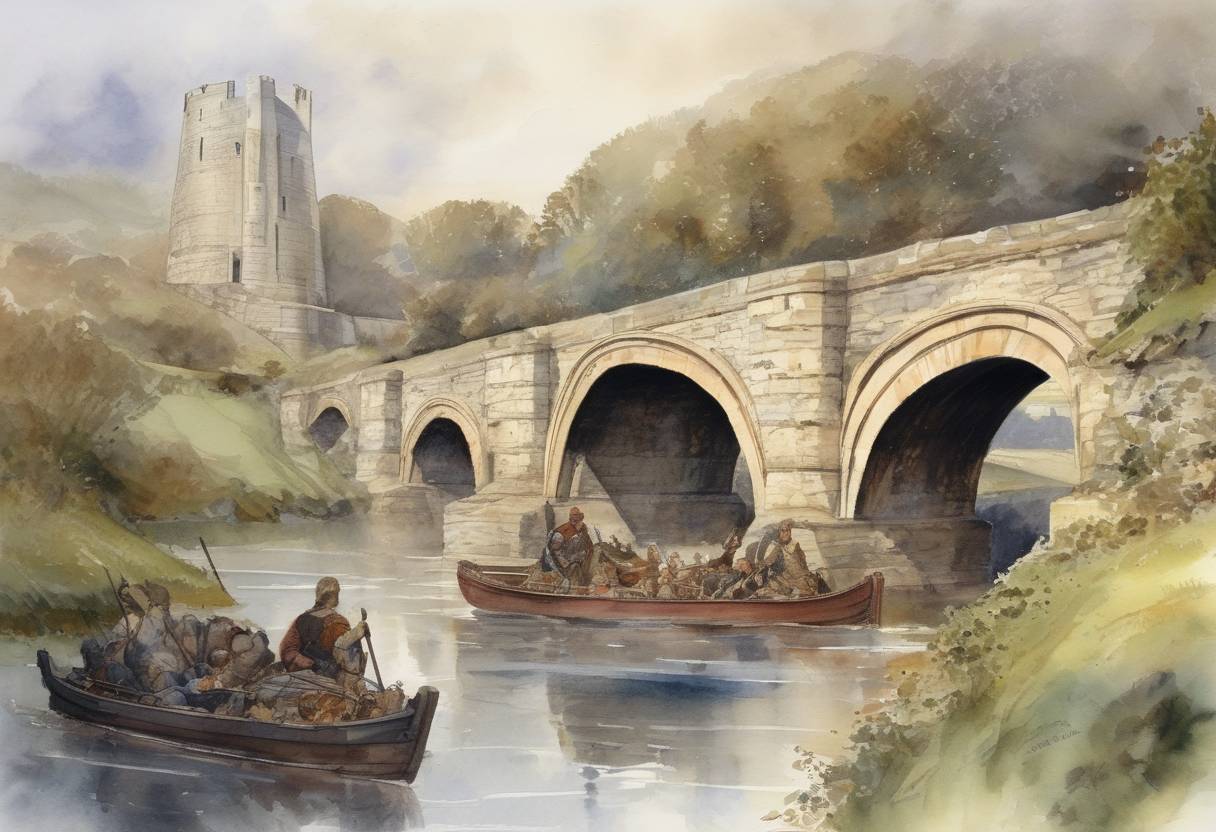
Æthelstan and the Submission at Eamont Bridge - June 12, 927
On June 12, 927, a pivotal event in the history of England’s unification occurred when Æthelstan, King of the Anglo-Saxons, secured the submission of Constantine II of Scotland and other northern rulers at Eamont Bridge. This event marked a significant step towards the consolidation of Æthelstan’s power and the unification of England.
Context and Background
Æthelstan, who reigned from 924 to 939, was the grandson of Alfred the Great and the son of Edward the Elder. His reign is often noted for its military successes and efforts to unify the various Anglo-Saxon and Celtic kingdoms of Britain. By 927, Æthelstan had already established himself as a formidable ruler, having consolidated control over much of England.
The early 10th century was a period of fragmentation in Britain, with various kingdoms and territories often in conflict. The Kingdom of Wessex, under Æthelstan’s leadership, sought to extend its influence over the entire island, a vision that had been pursued by his predecessors.
The Gathering at Eamont Bridge
The meeting at Eamont Bridge, near Penrith in present-day Cumbria, was a significant diplomatic achievement for Æthelstan. It brought together several key rulers of the British Isles, including:
- Constantine II of Scotland: The King of Alba (Scotland), who had previously been a rival to Æthelstan’s ambitions.
- Owain of Strathclyde: The ruler of the Kingdom of Strathclyde, a region in what is now southern Scotland and northern England.
- Ealdred of Bamburgh: A ruler in the northern part of Northumbria.
At this assembly, these rulers acknowledged Æthelstan’s overlordship, effectively recognizing him as the preeminent king in Britain. This submission was not merely symbolic; it represented a shift in the balance of power, with Æthelstan emerging as a dominant force.
Significance and Aftermath
The submission at Eamont Bridge was a crucial step towards the unification of England. It demonstrated Æthelstan’s ability to exert influence beyond the traditional boundaries of Wessex and Mercia, bringing together disparate regions under a single ruler. This event laid the groundwork for a more unified English kingdom, which would continue to evolve in the subsequent decades.
Æthelstan’s reign is often credited with fostering a sense of English identity and laying the foundations for the future Kingdom of England. His ability to secure the submission of northern rulers without resorting to prolonged military campaigns showcased his diplomatic acumen and strategic vision.
In the years following the meeting at Eamont Bridge, Æthelstan continued to strengthen his rule, engaging in further military campaigns and diplomatic efforts to consolidate his power. His reign is remembered as a formative period in the history of England, setting the stage for the eventual unification of the country.
In summary, the submission at Eamont Bridge on June 12, 927, was a landmark event in the history of England, marking a significant step towards the unification of the kingdom under Æthelstan’s leadership.