The Siege of Boston Begins: April 20, 1775
1775 · Boston, United States
The Siege of Boston begins during the American Revolutionary War, following the battles of Lexington and Concord.
April 19, 1775
The Battles of Lexington and Concord mark the beginning of the American Revolutionary War.
Lexington and Concord, United States | Continental Army
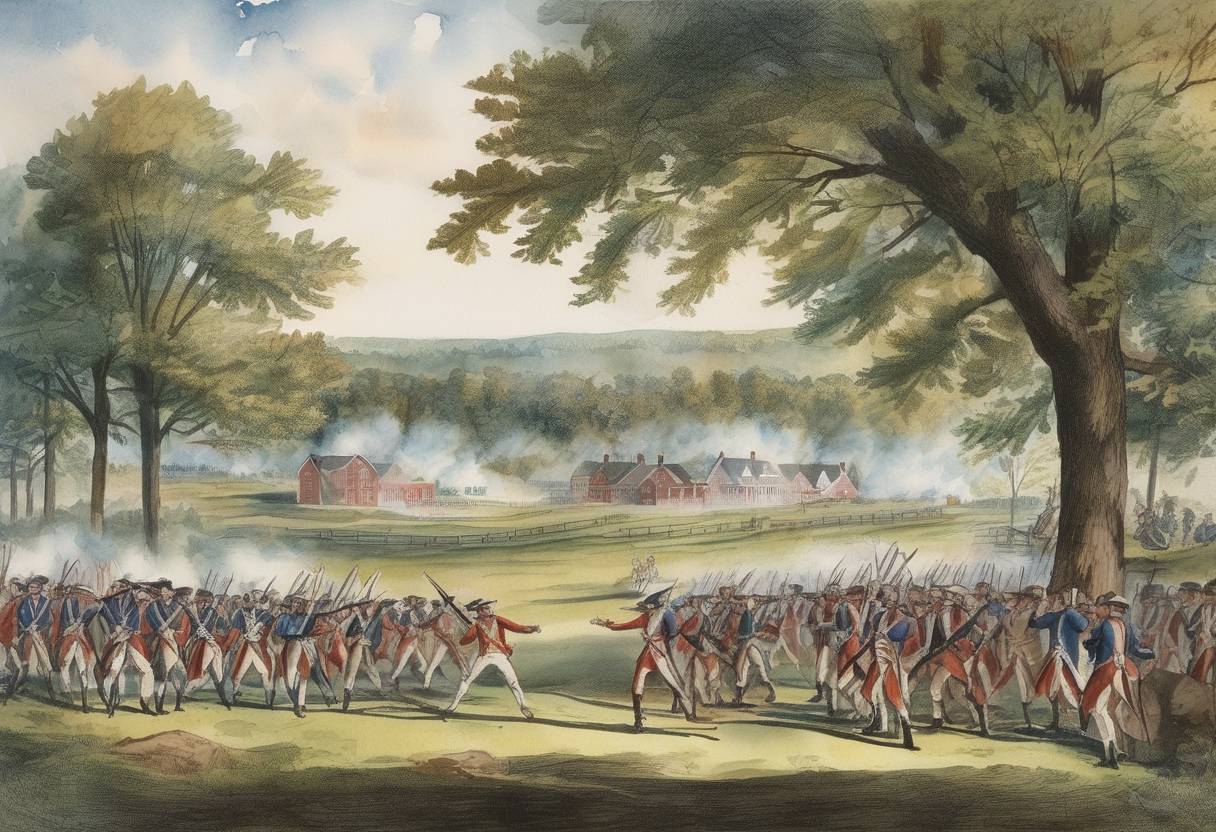
The Battles of Lexington and Concord, fought on April 19, 1775, are widely recognized as the opening engagements of the American Revolutionary War. These battles marked the beginning of the armed conflict between the Kingdom of Great Britain and its thirteen colonies in America.
The tensions between the American colonies and the British government had been escalating for years due to issues such as taxation without representation, the imposition of the Intolerable Acts, and the presence of British troops in the colonies. The colonies had formed the First Continental Congress in 1774 to address these grievances, but diplomatic efforts failed to resolve the growing discontent.
British Objectives: The British, under the command of General Thomas Gage, aimed to seize and destroy military supplies stored by the Massachusetts militia in Concord. They also intended to capture prominent colonial leaders Samuel Adams and John Hancock, who were believed to be in Lexington.
Paul Revere’s Ride: On the night of April 18, 1775, Paul Revere, along with William Dawes and Samuel Prescott, rode from Boston to warn the colonial militias of the approaching British forces. Their famous “midnight ride” helped mobilize the colonial militias.
Concord Engagement: After the encounter at Lexington, the British troops marched on to Concord. They found few military supplies, as most had been relocated by the colonists. At the North Bridge in Concord, a larger force of colonial militiamen engaged the British, forcing them to retreat.
The British Retreat: As the British retreated towards Boston, they were continuously harassed by growing numbers of colonial militiamen. This guerrilla-style warfare inflicted significant casualties on the British forces.
Casualties: The British suffered approximately 273 casualties, including killed, wounded, and missing soldiers. The colonial forces incurred around 95 casualties.
Impact: The battles galvanized colonial resistance and marked the transition from political tension to armed rebellion. They demonstrated the willingness and ability of the colonial militias to stand against the British military.
Broader Significance: These initial conflicts set the stage for the Siege of Boston and the broader Revolutionary War. They also inspired increased support for the colonial cause, both domestically and internationally.
The Battles of Lexington and Concord remain pivotal moments in American history, symbolizing the fight for independence and the beginning of a new nation.
Source: en.wikipedia.org