Operation Linebacker II: The Commencement on December 18, 1972
1972 · Hanoi, Vietnam
The United States begins Operation Linebacker II, a massive bombing campaign against North Vietnam during the Vietnam War.
February 23, 2008
The United States Air Force's B-2 Spirit stealth bomber crashes on Guam, marking the first crash of a B-2 bomber.
Andersen Air Force Base, United States (Guam) | United States Air Force
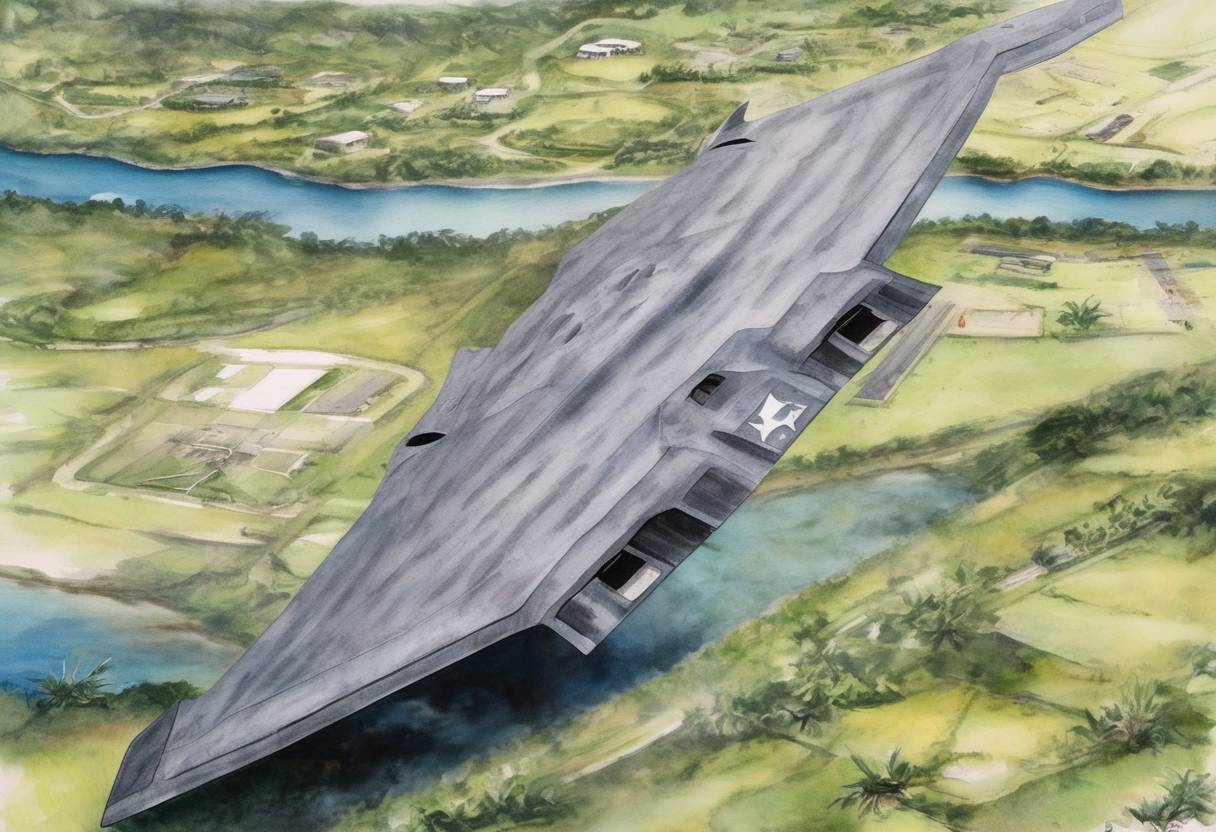
On February 23, 2008, a significant event in military aviation history occurred when a United States Air Force B-2 Spirit stealth bomber crashed on the island of Guam. This incident marked the first-ever crash of a B-2 bomber, a key asset in the U.S. strategic bomber fleet.
The B-2 Spirit, developed by Northrop Grumman, is a long-range, stealth bomber capable of delivering both conventional and nuclear munitions. Known for its distinctive flying wing design, the B-2 is engineered to penetrate dense anti-aircraft defenses and is a critical component of the United States’ strategic deterrence capabilities. The aircraft first entered service in the 1990s, and only 21 were built due to their high cost and advanced technology.
The crash occurred shortly after takeoff from Andersen Air Force Base. Both pilots ejected safely and survived the incident without serious injuries. The aircraft, however, was completely destroyed, resulting in a loss valued at approximately $1.4 billion, making it one of the most expensive aviation accidents in history.
An investigation by the Air Force revealed that the crash was caused by moisture in the aircraft’s sensors, which led to incorrect data being fed into the flight control computers. This resulted in a sudden and uncontrollable pitch-up during takeoff, ultimately causing the aircraft to stall and crash.
The crash underscored the challenges and risks associated with operating advanced military technology. It highlighted the importance of rigorous maintenance and the need for continuous updates to ensure the safety and effectiveness of high-tech weaponry. The incident also served as a reminder of the significant financial and strategic investments involved in maintaining a cutting-edge military force.
In conclusion, the crash of the B-2 Spirit on Guam was a notable event in military aviation history, emphasizing both the capabilities and vulnerabilities of modern stealth technology.
Source: www.af.mil