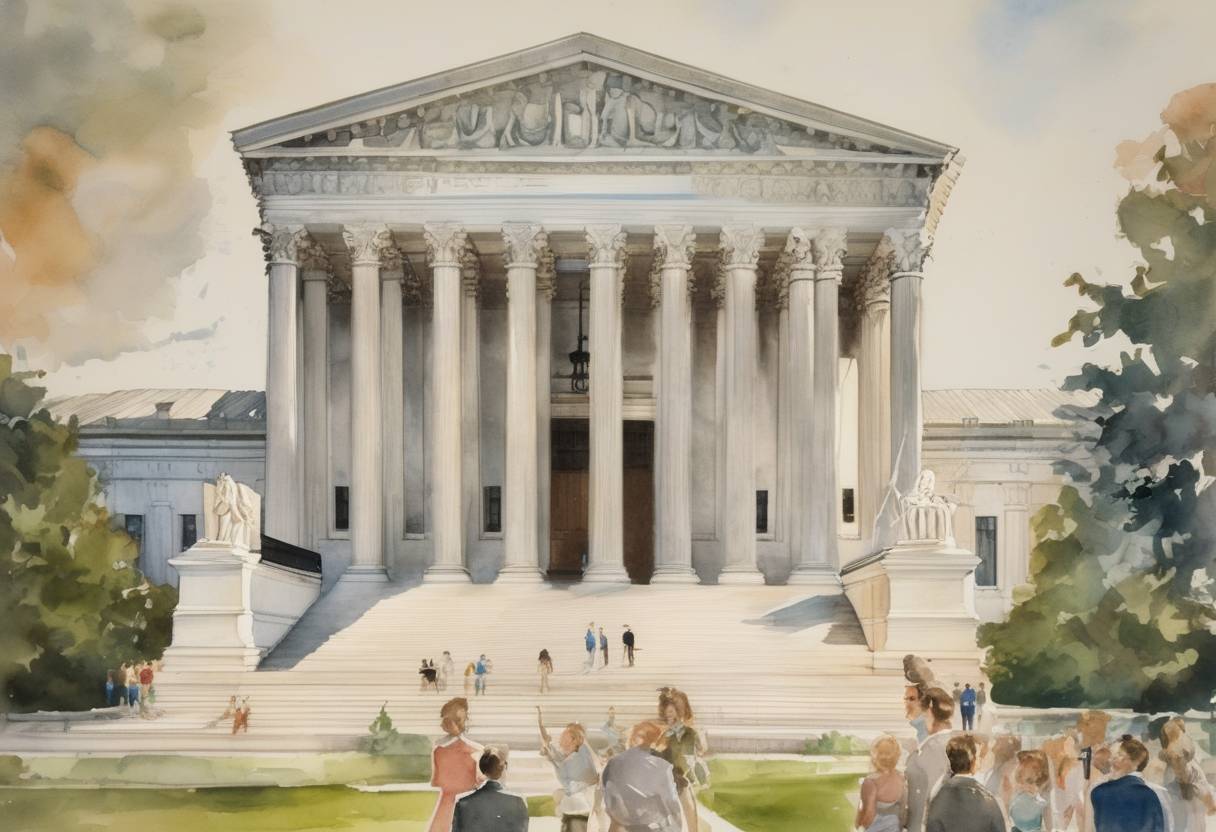
Griswold v. Connecticut: A Landmark Decision
On June 7, 1965, the Supreme Court of the United States delivered a pivotal decision in the case of Griswold v. Connecticut. This ruling established a significant precedent in American constitutional law by recognizing a right to privacy, particularly concerning the use of contraceptives by married couples.
Background
The case arose from a Connecticut law enacted in 1879, which prohibited the use of any drug, medicinal article, or instrument for the purpose of preventing conception. Estelle Griswold, the Executive Director of the Planned Parenthood League of Connecticut, and Dr. C. Lee Buxton, a physician and professor at Yale Medical School, were arrested and fined for providing contraceptive advice to married couples, in violation of this law.
The Legal Journey
Griswold and Buxton challenged the constitutionality of the Connecticut statute, arguing that it violated the rights of marital privacy. The case eventually reached the Supreme Court, which had to consider whether the Constitution implicitly protected the right of marital privacy against state restrictions on a couple’s ability to be counseled in the use of contraceptives.
The Supreme Court’s Decision
In a 7-2 decision, the Supreme Court ruled in favor of Griswold and Buxton. Justice William O. Douglas delivered the majority opinion, asserting that while the Constitution does not explicitly mention a right to privacy, various guarantees within the Bill of Rights create “penumbras,” or zones, that establish a right to privacy. Specifically, the Court pointed to the First, Third, Fourth, and Ninth Amendments as collectively implying this right.
Douglas famously stated that the Connecticut statute was unconstitutional because it violated the “right to marital privacy” and that the state had no justifiable reason to intrude into the private lives of married couples.
Dissenting Opinions
Justices Hugo Black and Potter Stewart dissented. Justice Black argued that the right to privacy was too vague and not explicitly found in the Constitution, while Justice Stewart referred to the Connecticut law as “uncommonly silly” but believed it was not the Court’s role to strike it down.
Broader Historical Significance
The decision in Griswold v. Connecticut was a foundational moment in the development of privacy rights in the United States. It laid the groundwork for future landmark cases, including Roe v. Wade (1973), which extended privacy rights to a woman’s decision to have an abortion, and Lawrence v. Texas (2003), which struck down laws criminalizing homosexual conduct.
The ruling underscored the evolving interpretation of the Constitution in response to changing societal values and set a precedent for the protection of individual liberties against state interference.
Conclusion
Griswold v. Connecticut remains a cornerstone case in American legal history, illustrating the dynamic nature of constitutional interpretation and the ongoing dialogue between law and society regarding the scope of personal freedoms.