Brink's-Mat Robbery at Heathrow Airport - November 26, 1983
1983 · London, United Kingdom
A Brinks Mat robbery at Heathrow Airport results in the theft of gold bullion worth nearly £26 million.
August 8, 1963
The Great Train Robbery took place in England, where a gang of 15 robbers stole £2.6 million from a Royal Mail train heading from Glasgow to London.
Ledburn, United Kingdom | Royal Mail
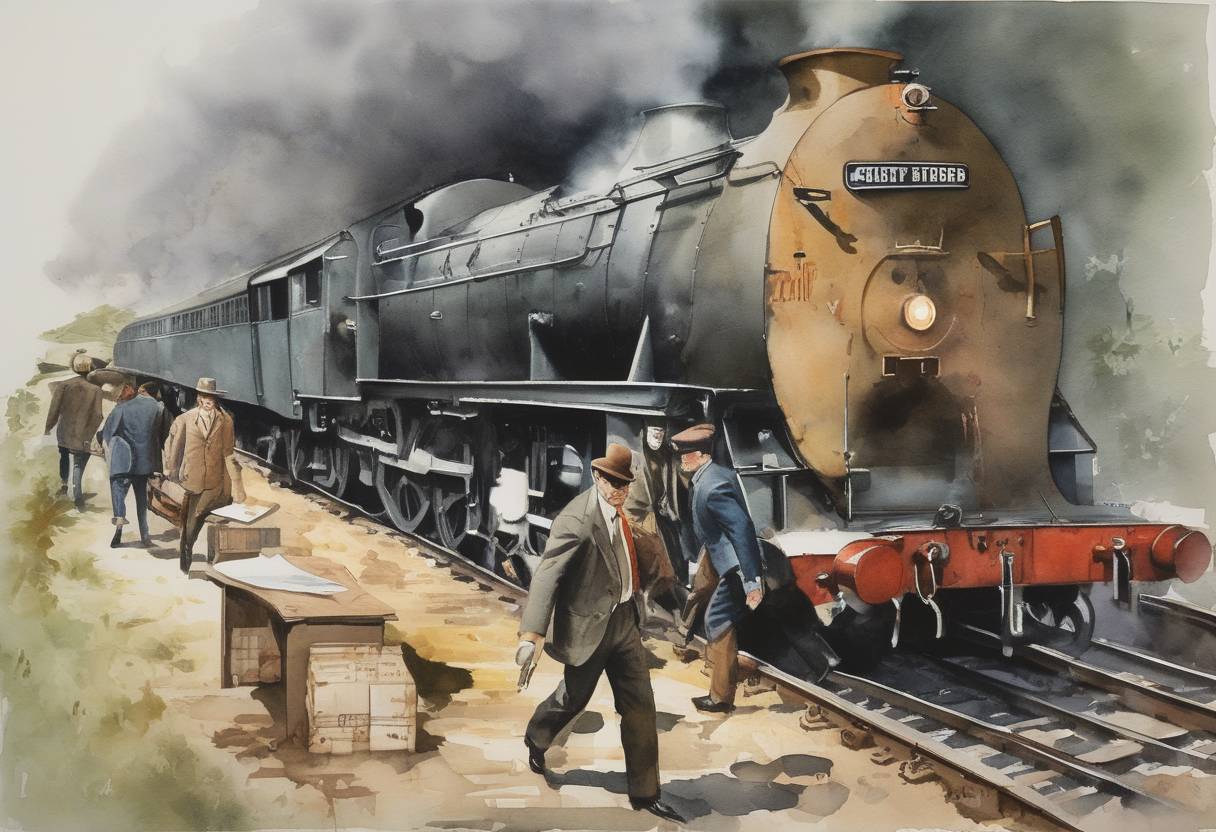
On August 8, 1963, one of the most audacious and infamous heists in British history took place: The Great Train Robbery. A gang of 15 robbers executed a meticulously planned operation to steal £2.6 million from a Royal Mail train traveling from Glasgow to London. This event not only captured the public’s imagination but also highlighted vulnerabilities in the security of valuable cargo transport.
The robbery was the result of careful planning and insider information. The gang, led by Bruce Reynolds, included a mix of seasoned criminals and individuals with specific skills, such as a retired train driver. They had insider knowledge about the train’s schedule and the fact that it would be carrying a large amount of cash, primarily due to the bank holiday in Scotland.
The robbery took place in the early hours of August 8, near Bridego Bridge in Ledburn, Buckinghamshire. The gang tampered with the railway signals to stop the train. Once the train halted, they overpowered the driver, Jack Mills, who was struck on the head and later required medical attention.
The robbers then detached the engine and the first two carriages, which contained the High-Value Packages (HVP) coach, and drove them a short distance to Bridego Bridge. There, they unloaded 120 sacks of money, totaling £2.6 million (equivalent to approximately £53 million today).
The gang fled to a farmhouse in Leatherslade, where they divided the loot and attempted to lay low. However, the police quickly launched a massive manhunt. Due to a combination of forensic evidence, informants, and police work, many of the gang members were eventually captured.
The trial of the robbers was one of the longest and most publicized in British history. Several members of the gang received lengthy prison sentences. Notably, Ronnie Biggs, one of the robbers, escaped from prison in 1965 and remained at large for many years, becoming a notorious figure in the process.
The Great Train Robbery had a lasting impact on British society and law enforcement. It exposed significant security flaws in the transportation of valuable goods and led to changes in how such cargo was protected. The event also became a cultural touchstone, inspiring numerous books, films, and documentaries.
The robbery remains a fascinating chapter in the annals of crime, illustrating both the audacity of the criminals involved and the challenges faced by law enforcement in bringing them to justice.
Source: www.britannica.com