1969 · NASA Jet Propulsion Laboratory, United States
The Mariner 7 spacecraft made its closest flyby of Mars, contributing significant data about the planet's surface and atmosphere and marking a pivotal moment in the exploration of Mars.
July 14, 1965
The Mariner 4 spacecraft successfully performed the first flyby of Mars, sending back the first close-up images of the planet.
Pasadena, United States | NASA
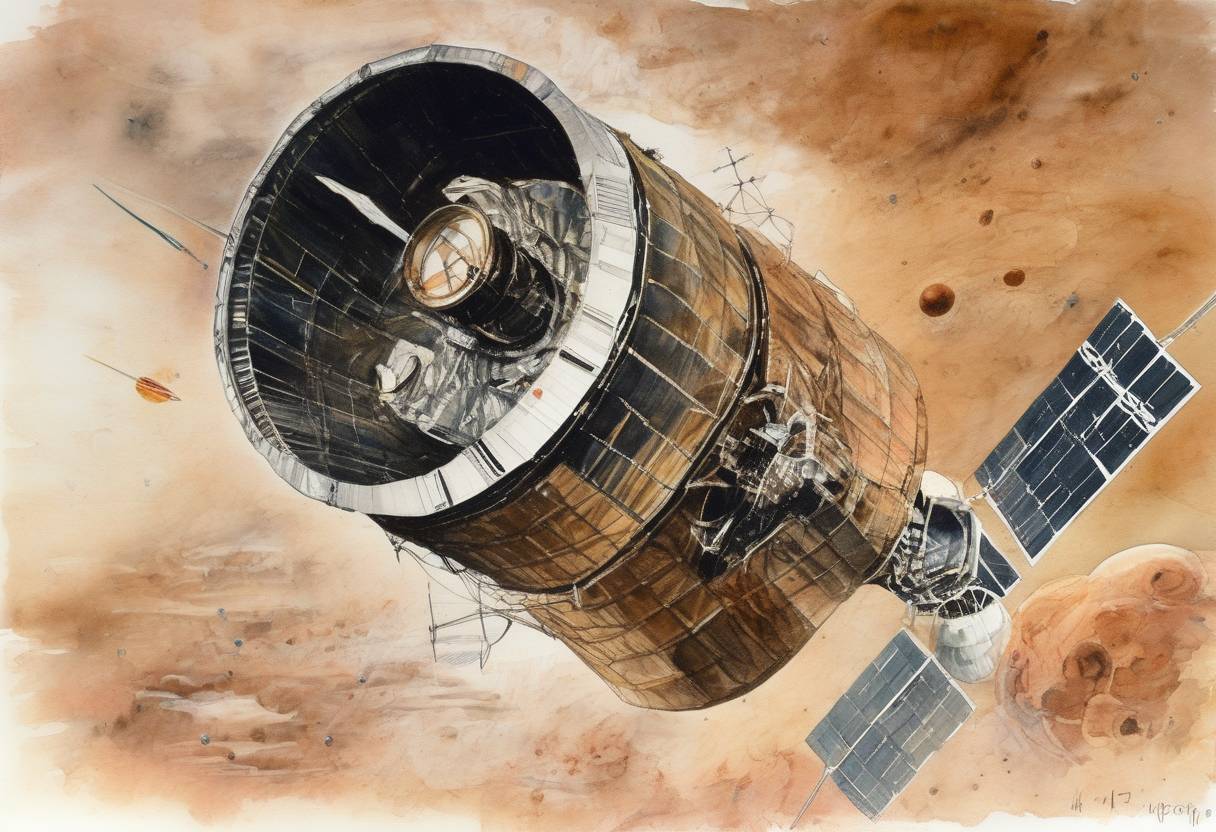
On July 14, 1965, NASA’s Mariner 4 spacecraft achieved a groundbreaking milestone in space exploration by performing the first successful flyby of Mars. This mission marked a significant leap forward in our understanding of the Red Planet and laid the groundwork for future Mars exploration.
The Mariner program was initiated by NASA in the early 1960s with the goal of exploring the inner planets of our solar system. Mariner 4 was the fourth in a series of spacecraft designed to investigate Mars, following the unsuccessful attempts of its predecessors. Launched on November 28, 1964, from Cape Canaveral, Florida, Mariner 4 embarked on an eight-month journey to Mars.
On July 14, 1965, Mariner 4 passed within approximately 9,846 kilometers (6,118 miles) of Mars. During the flyby, the spacecraft captured 21 images of the Martian surface, which were transmitted back to Earth over the following days. These images were the first close-up photographs ever taken of another planet.
The success of Mariner 4 had profound implications for planetary science and space exploration:
Mariner 4’s flyby of Mars remains a landmark event in the history of space exploration, symbolizing humanity’s enduring quest to explore and understand the cosmos.
Source: en.wikipedia.org