The United States Declares War on Austria-Hungary: December 7, 1917
1917 · Washington D.C., United States
The United States declares war on Austria-Hungary during World War I.
April 2, 1917
President Woodrow Wilson asks the U.S. Congress for a declaration of war against Germany, leading the United States into World War I.
Washington D.C., United States | United States Congress
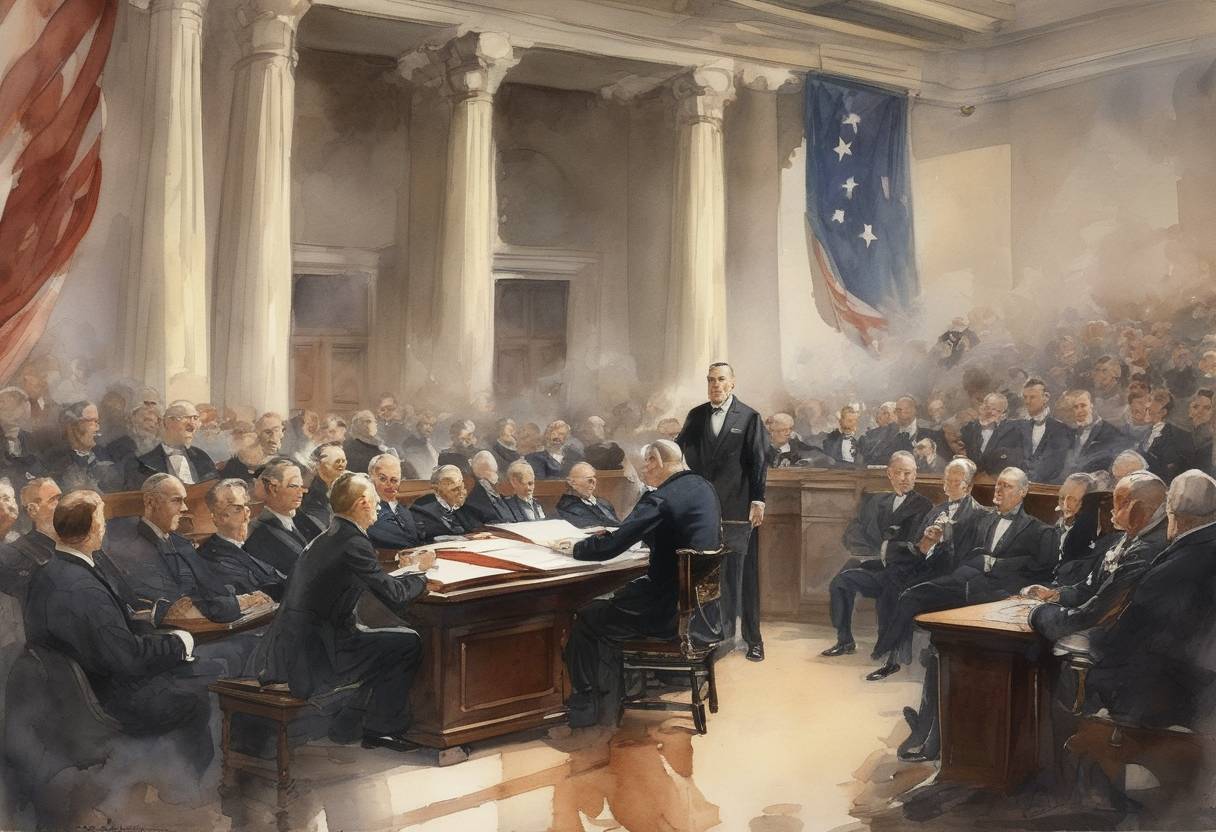
On April 2, 1917, President Woodrow Wilson delivered a momentous address to a joint session of the United States Congress, requesting a declaration of war against Germany. This pivotal moment marked the United States’ entry into World War I, a conflict that had been raging in Europe since 1914.
Neutrality Policy: Since the outbreak of World War I, the United States had maintained a policy of neutrality. President Wilson had been re-elected in 1916 under the slogan “He kept us out of war,” reflecting the public’s desire to avoid entanglement in European conflicts.
Unrestricted Submarine Warfare: A significant factor leading to the U.S. decision to enter the war was Germany’s resumption of unrestricted submarine warfare in January 1917. German U-boats targeted military and civilian vessels, including those of neutral countries, threatening American lives and commerce.
The Zimmermann Telegram: In February 1917, British intelligence intercepted and disclosed the Zimmermann Telegram, a secret communication from the German Empire to Mexico. The telegram proposed a military alliance against the United States, promising Mexico the territories of Texas, New Mexico, and Arizona in return for joining the war on the side of the Central Powers.
In his address, President Wilson articulated the reasons for seeking a declaration of war, emphasizing the need to protect democracy and maintain international law. Key points from his speech included:
Moral Imperative: Wilson framed the conflict as a struggle between democracy and autocracy, asserting that “the world must be made safe for democracy.”
Defense of Rights: He highlighted the repeated violations of American rights and the threat posed by German aggression, particularly through unrestricted submarine warfare.
Call to Action: Wilson called for a united national effort, stating, “We have no selfish ends to serve. We desire no conquest, no dominion. We seek no indemnities for ourselves, no material compensation for the sacrifices we shall freely make.”
Congressional Approval: On April 6, 1917, Congress overwhelmingly approved the declaration of war, with the Senate voting 82 to 6 and the House of Representatives 373 to 50 in favor.
Mobilization and Impact: The United States began mobilizing its military and economic resources, significantly contributing to the Allied Powers’ eventual victory. American troops, known as the American Expeditionary Forces, played a crucial role in several key battles on the Western Front.
Legacy: Wilson’s decision to enter World War I marked a turning point in U.S. foreign policy, signaling a shift from isolationism to a more active role in global affairs. The war’s end saw Wilson advocating for the League of Nations, although the U.S. Senate ultimately rejected joining the organization.
President Wilson’s request for a declaration of war against Germany was a defining moment in American history, reshaping the nation’s role on the world stage and setting the stage for significant geopolitical changes in the 20th century.
Source: www.history.com