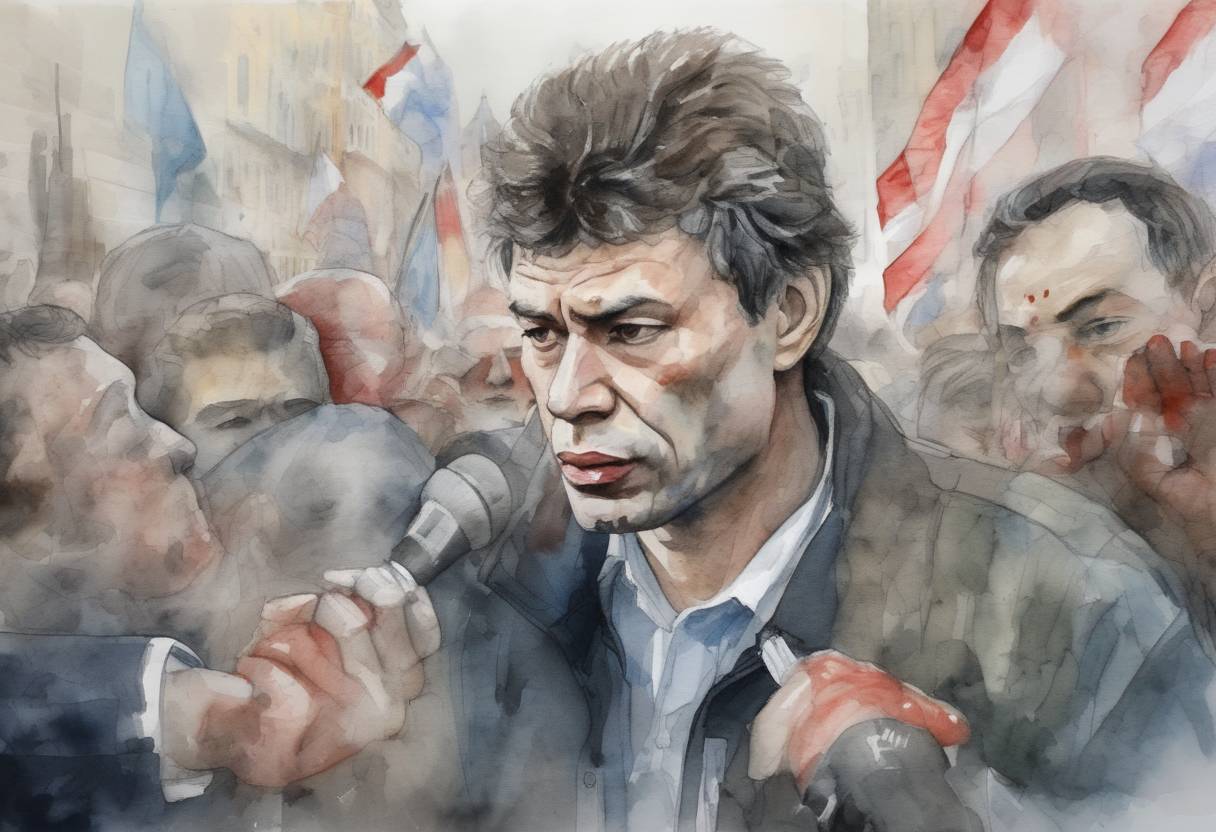
Assassination of Boris Nemtsov
On February 28, 2015, Boris Nemtsov, a prominent Russian opposition politician and former Deputy Prime Minister, was assassinated in Moscow. This event sent shockwaves through Russia and the international community, prompting widespread condemnation and protests.
Background
Boris Nemtsov was a significant figure in Russian politics, known for his reformist views and vocal criticism of President Vladimir Putin’s government. He served as Deputy Prime Minister under President Boris Yeltsin in the 1990s and later became an outspoken opposition leader. Nemtsov was a co-chair of the political party RPR-PARNAS and a leading figure in the Russian opposition movement.
The Assassination
- Date and Location: Nemtsov was shot dead on the night of February 27, 2015, as he walked across the Bolshoy Moskvoretsky Bridge, near the Kremlin in Moscow.
- Circumstances: He was shot four times in the back by an unknown assailant from a passing car. Nemtsov was accompanied by his girlfriend, Ukrainian model Anna Duritskaya, who was unharmed in the attack.
- Immediate Reactions: The assassination occurred just days before Nemtsov was to lead a major opposition rally against the Russian government’s policies, particularly its involvement in the Ukraine conflict.
International and Domestic Reactions
- Condemnation: The murder was condemned by leaders and organizations worldwide, including the United States, the European Union, and the United Nations. Many called for a thorough and transparent investigation.
- Protests: In Russia, tens of thousands of people participated in a march in Moscow to honor Nemtsov and protest against his killing. The march, initially planned as an opposition rally, became a memorial procession.
Investigation and Aftermath
- Investigation: Russian authorities launched an investigation, and several suspects were arrested in the following weeks. In 2017, five Chechen men were convicted of carrying out the murder, but questions remained about who ordered the assassination.
- Legacy: Nemtsov’s death highlighted the risks faced by opposition figures in Russia and became a symbol of the struggle for political freedom and transparency. His assassination is often cited as a turning point in Russian politics, underscoring the increasing dangers for those opposing the government.
Broader Historical Significance
The assassination of Boris Nemtsov underscored the tense political climate in Russia and the challenges faced by opposition leaders. It also drew attention to issues of political repression and the state of democracy in Russia, influencing both domestic and international discourse on Russian politics.
Nemtsov’s legacy continues to inspire activists and opposition figures in Russia and beyond, serving as a reminder of the ongoing struggle for political reform and human rights.