Joseph Jenkins Roberts Sworn in as First President of Liberia
1848 · Monrovia, Liberia
Joseph Jenkins Roberts was sworn in as the first president of Liberia, marking the country's independence.
August 26, 1847
Liberia celebrates its first official election after becoming independent earlier that year, voting for its first president, Joseph Jenkins Roberts.
Monrovia, Liberia | Liberian government
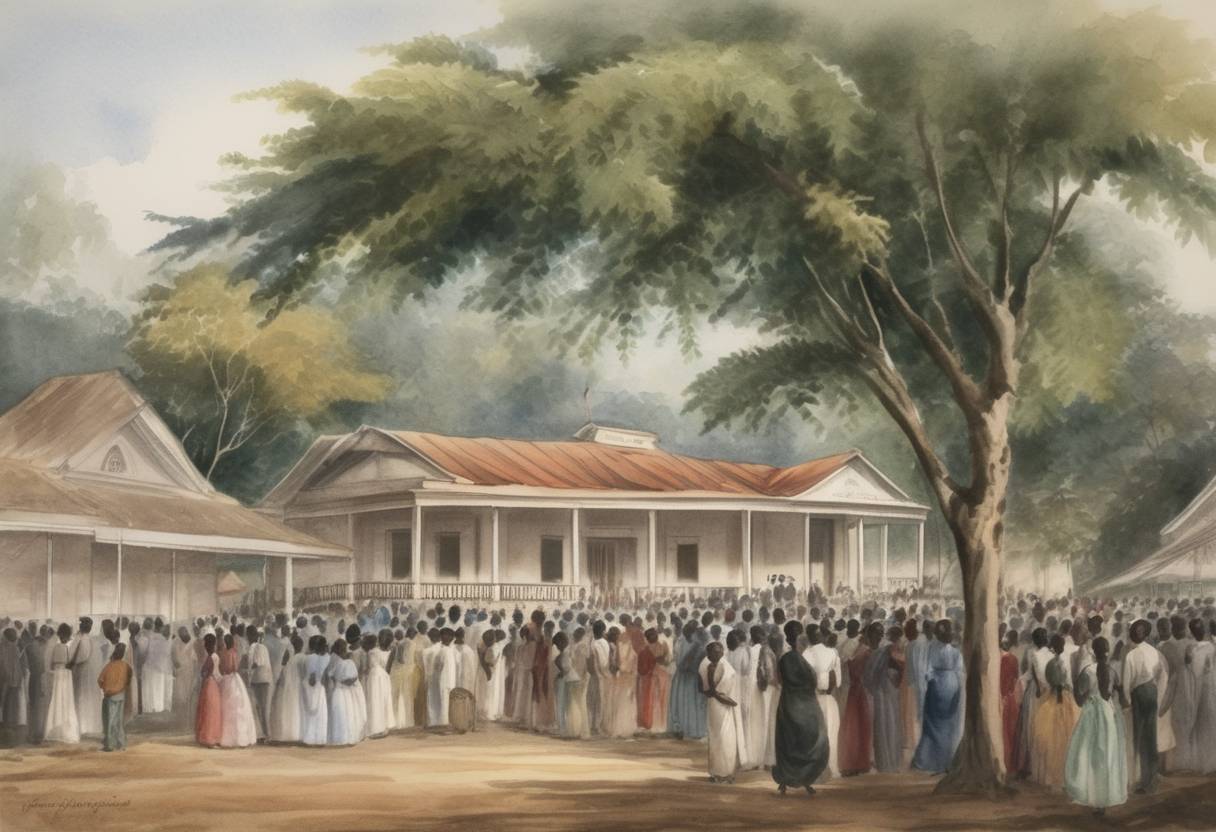
On August 26, 1847, Liberia held its first official presidential election following its declaration of independence from the American Colonization Society earlier that year, on July 26, 1847. This significant event marked the birth of Africa’s first republic to proclaim independence, as well as the beginning of its democratic governance.
Liberia was established in the early 19th century by the American Colonization Society (ACS), an organization that aimed to resettle free African Americans in Africa. Over the ensuing decades, many settlers, known as Americo-Liberians, migrated to the region then known as the Grain Coast. The founding of Monrovia in 1822, named after U.S. President James Monroe, played a pivotal role in establishing a foothold for these settlers.
The movement towards independence was driven by both internal and external factors. The settlers’ desire for self-governance, combined with pressure from the indigenous populations and the strategic interests of European powers in the region, accelerated Liberia’s journey toward sovereignty.
In July 1847, a constitutional convention took place in Monrovia, leading to the Declaration of Independence and the framing of a constitution based closely on that of the United States. This laid the groundwork for the election of the nation’s first president.
Joseph Jenkins Roberts, a prominent and politically active Americo-Liberian, emerged as a leading figure in Liberia’s quest for independence. Born in Norfolk, Virginia, Roberts had migrated to Liberia in 1829 and quickly became involved in colonial administration. His leadership abilities and vision for Liberia’s future made him a key candidate in this historic election.
Roberts ran virtually unopposed and was elected Liberia’s first president. His presidency began on January 3, 1848, marking a new chapter for the nascent republic. Roberts’ administration focused on establishing diplomatic recognition, managing relations with indigenous tribes, and stabilizing the nation’s economy.
Joseph Jenkins Roberts’ election was a landmark event in African history. It set a precedent for the establishment of republican governance on the African continent and symbolized a shift towards self-rule for African-descended populations. Under Roberts’ guidance, Liberia gained recognition as a sovereign state from Britain in 1848 and from other European powers subsequently.
Roberts served as Liberia’s first president from 1848 to 1856 and was re-elected for additional terms, serving again from 1872 to 1876. His contributions to the development and international stature of Liberia have left an enduring legacy in the nation’s history.
This election not only represented a crucial step in Liberia’s national development but also signaled the possibilities of independence for other African societies under colonial rule.
Source: en.wikipedia.org