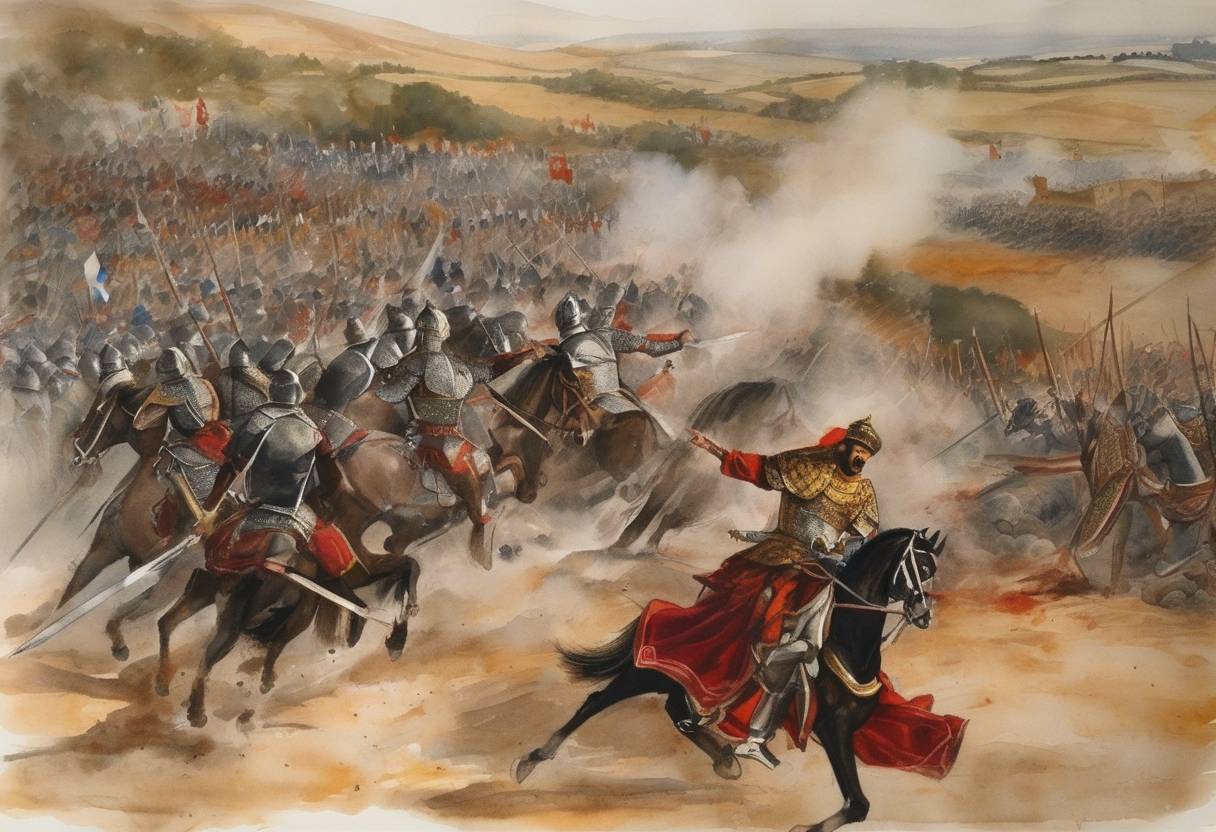
The Battle of Ourique: July 25, 1139
On July 25, 1139, the Battle of Ourique marked a pivotal moment in Portuguese history, as Afonso I of Portugal achieved a crucial victory over the Moorish forces. This victory solidified Afonso I’s leadership and paved the way for the recognition of Portuguese independence.
Background
Portugal, during the early 12th century, was part of the wider Iberian Reconquista, the Christian effort to reclaim territory from Muslim rule. Afonso Henriques, later known as Afonso I, had been asserting his authority over contested lands, building alliances, and strengthening his military might.
The Battle
Taking place near the town of Ourique, in the Alentejo region, the battle saw Afonso I lead his troops against the forces of the Almoravid Moors. Despite being heavily outnumbered, Afonso’s forces managed to secure a decisive victory. This success was attributed to his strategic leadership and the morale of his troops.
Proclamation as King
Following the victory, Afonso I was proclaimed King of Portugal by his soldiers. According to legend, a divine vision inspired him, cementing his role as a ruler chosen by both his people and God. Though the exact details of the battle and its divine elements are sometimes debated by historians, its impact is unchallenged.
Significance
The Battle of Ourique is considered a foundational event in the history of Portugal. It emboldened Afonso I to further consolidate territories and seek autonomy from the Kingdom of León. Though the formal recognition of Portuguese independence by León would only come in 1179 with the Papal Bull “Manifestis Probatum,” the battle laid the groundwork for an emerging national identity.
This victory in 1139 was a significant stepping stone in Afonso’s path toward legitimizing the sovereignty and independence of Portugal, marking the beginning of its status as a distinct kingdom in the Iberian Peninsula.