The Battle of Alma: September 20, 1854
1854 · Alma River, Crimea
The Battle of Alma took place during the Crimean War, marking the first major engagement between the allied British, French, and Ottoman forces against the Russian Empire.
October 4, 1853
The Crimean War began, marked by the declaration of war on Russia by the Ottoman Empire, following disputes over holy sites in Palestine and Russian expansionism.
Istanbul, Ottoman Empire | Ottoman Empire
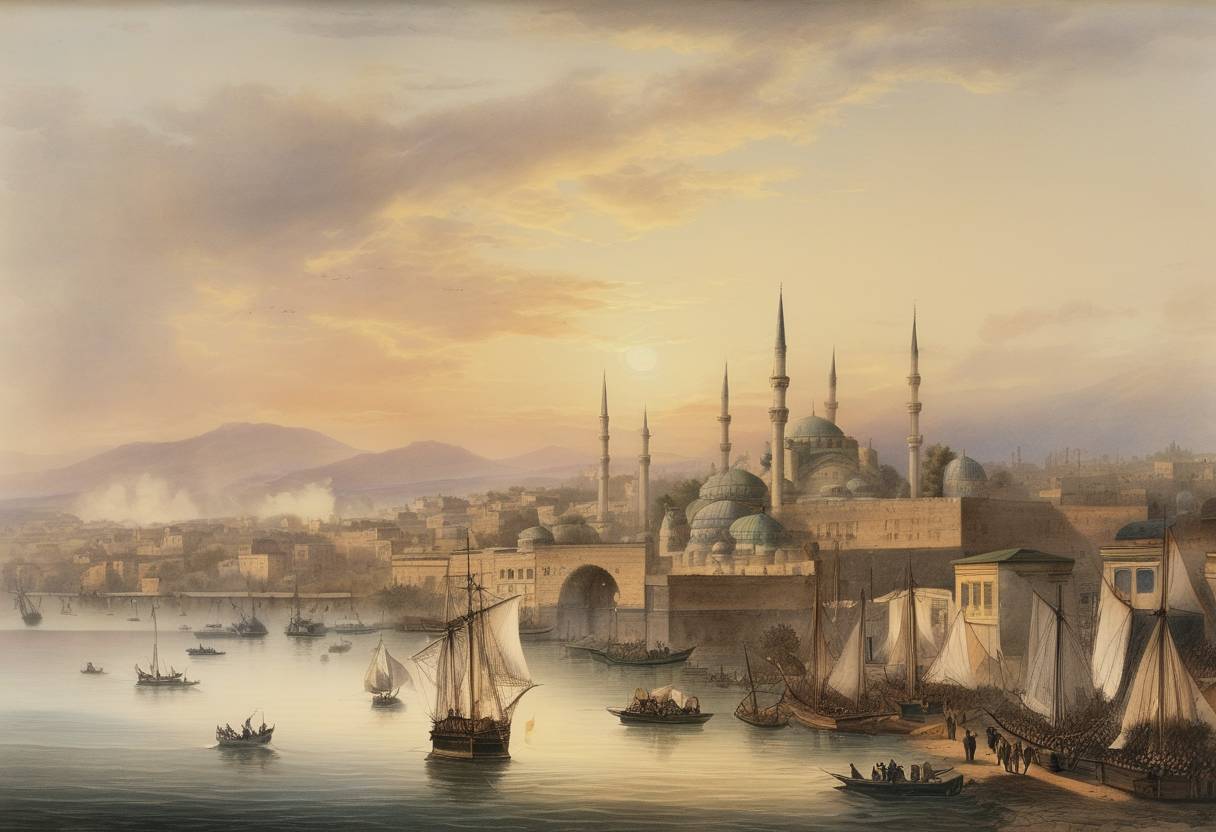
On October 4, 1853, the Ottoman Empire declared war on Russia, marking the beginning of the Crimean War, a pivotal conflict in 19th-century European history. This declaration was rooted in longstanding territorial disputes and exacerbated by religious tensions over holy sites in Palestine.
The immediate catalyst for war was the dispute over the rights of Christian minorities in the Holy Land, then under Ottoman control. Russia, championing the rights of Orthodox Christians, demanded increased influence and protectorate authority over them. France, however, supported the Roman Catholics’ existing rights, heightening the discord.
These disputes were compounded by Russia’s broader ambitions in the region. Under Tsar Nicholas I, Russia sought to extend its influence further south, threatening the balance of power and the integrity of the Ottoman Empire, which was often referred to as the “Sick Man of Europe.”
The Straits Question: Control over the key water routes such as the Bosphorus and the Dardanelles was strategically crucial for Russia’s naval ambitions. The Ottomans, supported by Britain and France, were keen to prevent Russian access.
Religious Disputes: Tensions heightened when Russia sent Prince Menshikov to Constantinople with demands regarding Christian sites, claims which the Sultan Abdulmejid I found unacceptable.
Russian Invasion of the Danubian Principalities: In July 1853, Russia occupied the Ottoman vassal states of Moldavia and Wallachia, further escalating tensions and prompting responses from the Ottoman Empire.
Failed Negotiations: Diplomatic efforts to resolve these conflicts, facilitated by European powers like Britain and Austria, failed to reach a satisfactory resolution, leading to the Ottoman declaration of war.
The beginning of the Crimean War marked a significant realignment of European international relations, resulting in an alliance of the Ottoman Empire, Britain, France, and Sardinia against Russia. The war itself was infamous for its bloody battles, brutal conditions, and notable events such as the Charge of the Light Brigade and the emergence of modern nursing practices led by Florence Nightingale.
With the Treaty of Paris in 1856, the war concluded, resulting in a temporary cessation of Russian expansion into the Danubian Principalities and a redefinition of power balances in Eastern Europe. The conflict exposed the weaknesses of the Russian military and catalyzed reforms that would later modernize the Russian state.
The war and its origins reflected the complex interplay of religion, national ambition, and international diplomacy, making it a critical study in understanding the geopolitics of the era.
Source: www.britannica.com