Tower Subway: The World's First Underground Tube Railway
1870 · London, United Kingdom
Tower Subway, the world's first underground tube railway, opened in London, marking a significant development in urban transportation.
December 10, 1868
The first traffic lights were installed outside the Houses of Parliament in London. The lights resembled railway signals with semaphore arms and were illuminated at night by red and green gas lamps.
London, United Kingdom | British Government
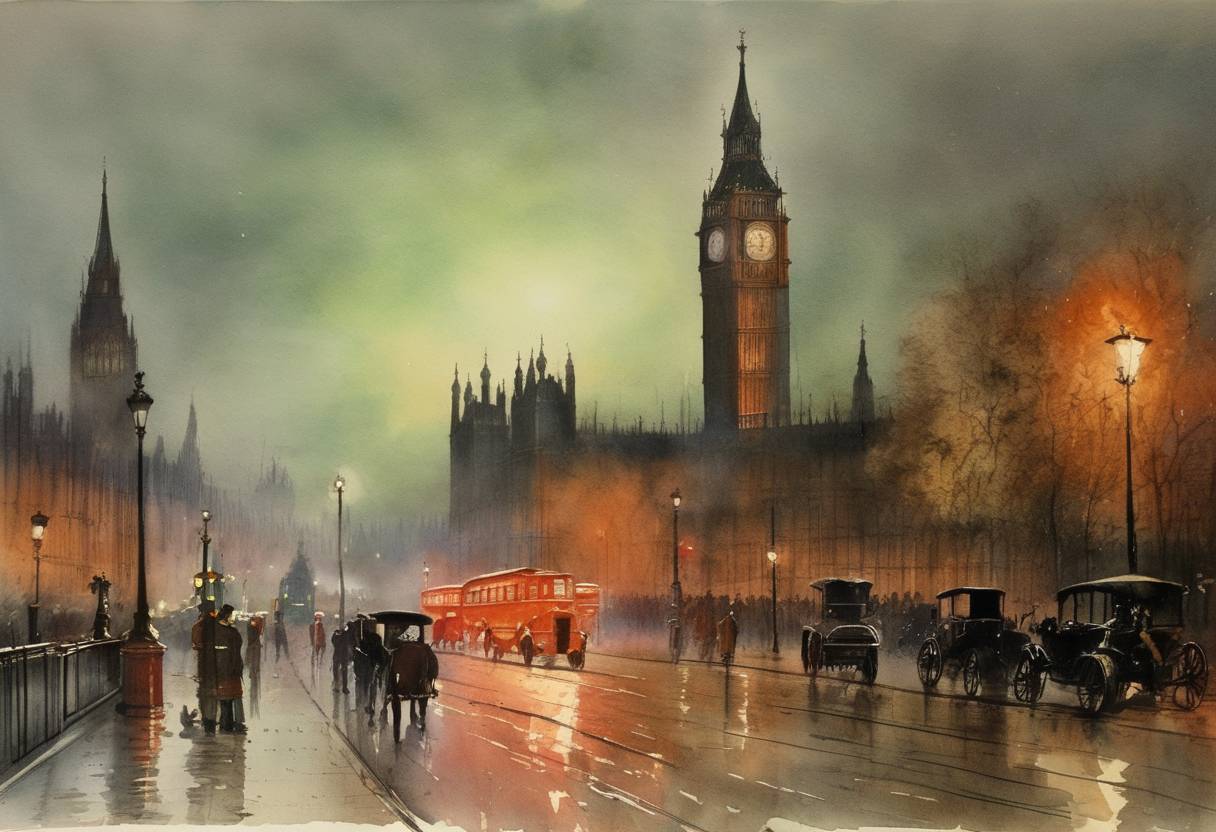
On December 10, 1868, the world saw the installation of the first traffic lights outside the Houses of Parliament in London, an event marking a significant innovation in urban traffic management. These pioneering traffic control devices were designed by the railway engineer J.P. Knight, reflecting the growing need to manage increasingly congested city streets.
The traffic lights installed on this day were reminiscent of railway signals, utilizing semaphore arms for daytime signaling. These semaphore arms could be raised or lowered to convey ‘Stop’ or ‘Caution’ to vehicles and horse-drawn carriages. At night, the system incorporated red and green gas lamps, making it visible even in the dark. The gas illumination system was required due to the absence of electric lighting, which was not yet in widespread use.
These traffic lights were initially implemented to direct the chaotic movement of horse-drawn carriages and pedestrians. With London being a bustling epicenter, the control of traffic was becoming increasingly necessary to prevent accidents and enhance the flow of the myriad of city travelers.
Although the system itself was rudimentary by contemporary standards, this innovation laid the groundwork for modern traffic light systems. It represented an essential step in the evolution of urban infrastructure, highlighting the adaptation of technology to address the challenges posed by rapid urban development.
Despite its innovative nature, J.P. Knight’s system faced significant challenges. The use of gas lamps posed safety risks, and on January 2, 1869, less than a month after its installation, the traffic lights exploded due to a leakage in the gas lines, injuring a policeman who was operating them. This incident prompted the removal of the traffic lights, and the idea was temporarily shelved.
While the initial experiment was short-lived, the concept left a lasting impression on urban planning and infrastructure, inspiring later developments in traffic control systems around the world. The fundamental idea persisted and was revisited with technological advancements, ultimately leading to the electric traffic lights we know today.
Source: en.wikipedia.org