The Death of Edward the Confessor and the Succession Crisis of 1066
1066 · London, England
Edward the Confessor, King of England, died. His death led to a succession crisis that culminated in the Norman Conquest of England later that year.
September 15, 1052
Edward the Confessor orders the arrest of Earl Godwin for refusing to obey royal orders, which eventually leads to Godwin's exile from England.
London, England | Kingdom of England
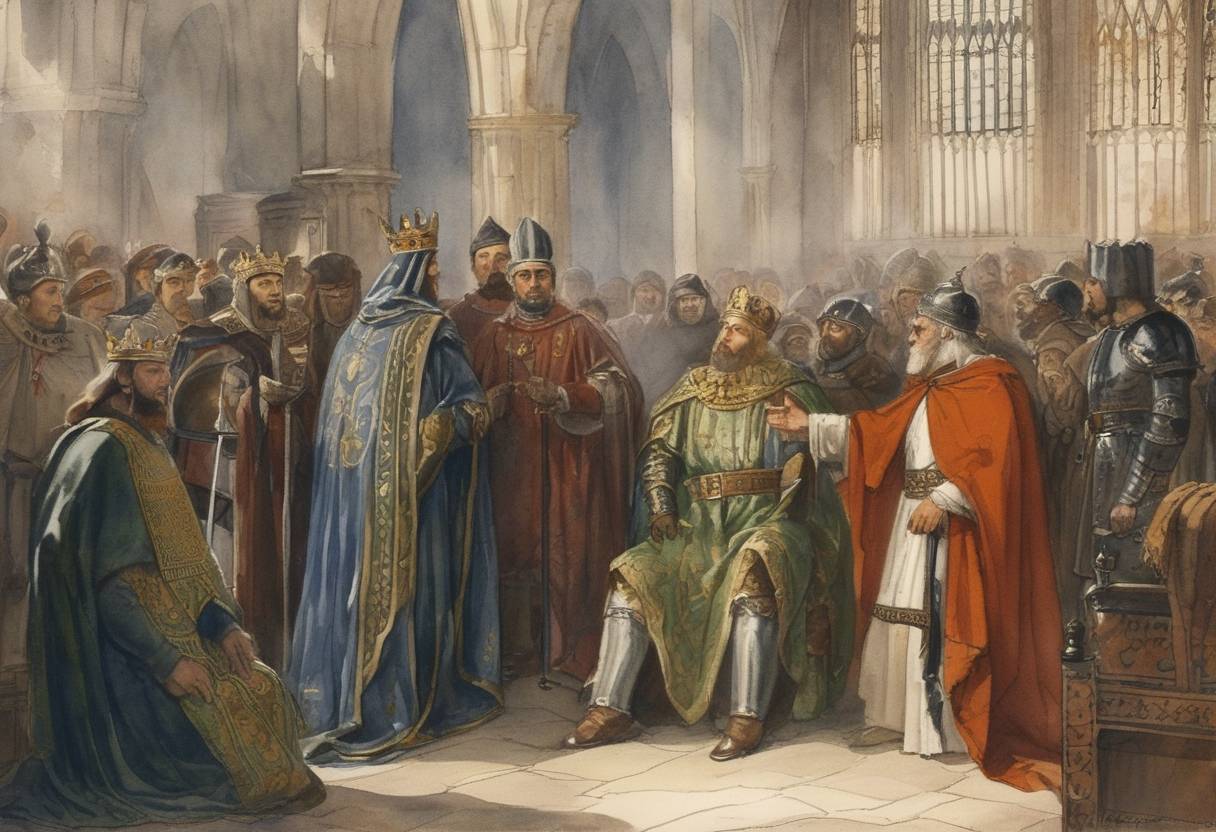
On September 15, 1052, a significant event in the turbulent Anglo-Saxon era unfolded when King Edward the Confessor took decisive action against one of his most powerful nobles, Earl Godwin of Wessex. This clash stemmed from political tensions and power struggles that permeated Edward’s reign.
Edward the Confessor, who became King of England in 1042, faced constant challenges consolidating his power among England’s formidable nobility. Among the most influential of these men was Earl Godwin, who held extensive lands and influence across the kingdom. The relationship between Edward and Godwin was fraught with tension, largely due to Godwin’s substantial power base and his family’s connections, which included ties to the Danish royal line.
The conflict that culminated on September 15, 1052, can trace its roots back to an earlier incident in 1051, when a violent misunderstanding resulted in the murder of some Norman retainers in Dover, allegedly provoked by Godwin’s sons. King Edward, possibly influenced by his Norman sympathies and advisors, demanded Godwin punish the offenders, which Godwin refused, leading to escalating tensions.
By September 15, 1052, Edward had resolved to arrest Earl Godwin for his defiance. Under mounting pressure from Edward and his court, Godwin and his sons fled into exile rather than risk arrest and possibly execution. This marked a turning point, as Godwin retreated to Flanders while his sons dispersed to Ireland and other European territories, temporarily diminishing their domestic influence.
Edward leveraged this moment to reassert his authority. With Godwin out of the picture, Edward strengthened his position by filling key offices with figures loyal to him, many of whom were Normans, increasing Norman influence in the English court.
The events surrounding Godwin’s exile significantly impacted the socio-political landscape of 11th-century England. It highlighted the fragility and complexity of monarchical power during this period and foreshadowed the larger conflicts between Anglo-Saxons and Normans that would follow.
The exile was, however, short-lived. By the end of 1052, Godwin had negotiated his return, arriving with a strong force and leveraging his familial and political connections. The king was compelled to restore Godwin’s titles and lands, suggesting the limitations of Edward’s power against entrenched noble interests.
This episode exemplified the volatile nature of medieval English politics, where noble influence often rivaled royal authority. Godwin’s political maneuvering and the subsequent Norman Conquest of 1066 underscored the enduring tensions between native English nobility and emerging Norman influence, shaping the future trajectory of England’s governance and class structure.
Source: en.wikipedia.org