Ngô Đình Diệm Declares Himself Premier of South Vietnam
1955 · Saigon, South Vietnam
Ngô Đình Diệm declared himself Premier of South Vietnam, marking the beginning of his authoritarian rule which would last until his assassination in 1963.
December 21, 1788
Nguyễn Huệ proclaims himself Emperor Quang Trung of Vietnam.
Phú Xuân (now Hue), Vietnam | Tây Sơn dynasty
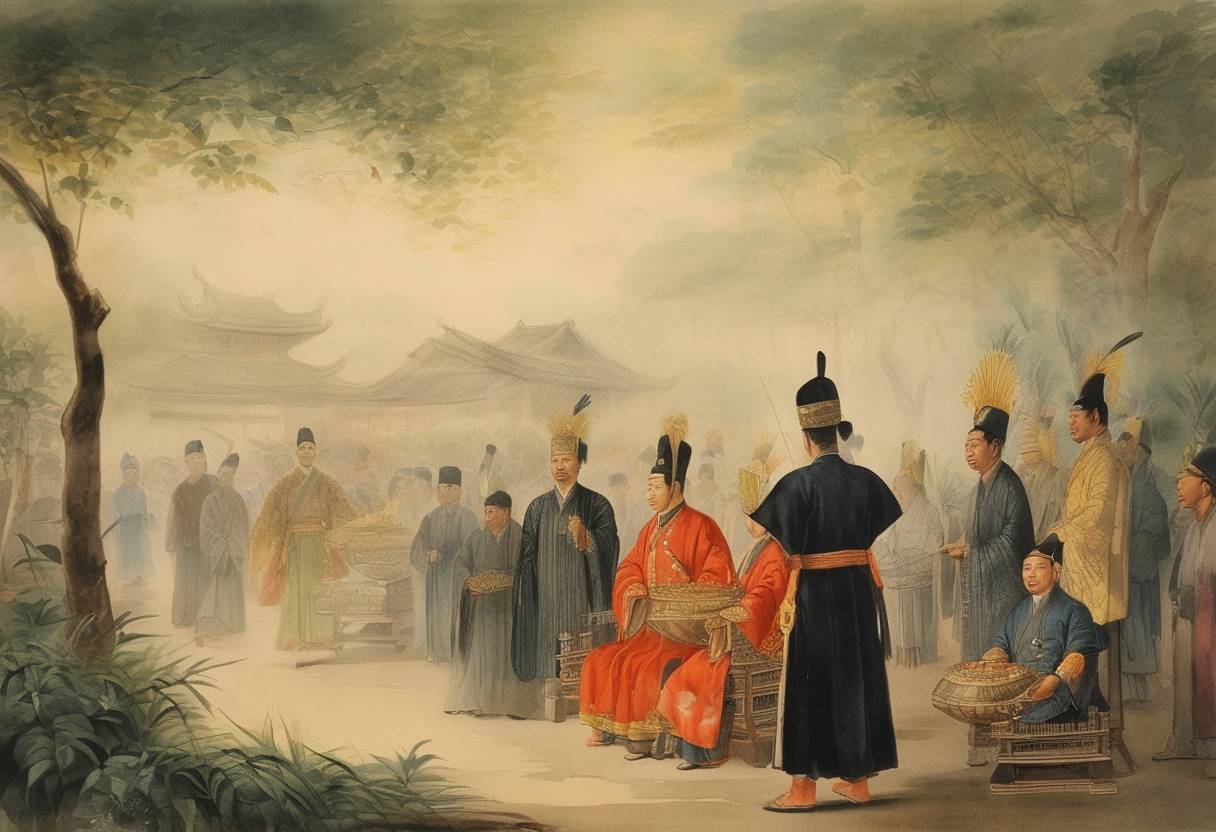
On December 21, 1788, Nguyễn Huệ, a key leader of the Tay Son rebellion, proclaimed himself Emperor Quang Trung, marking a pivotal moment in Vietnamese history. This act took place during a period of significant turmoil and transformation in Vietnam, as the nation was embroiled in civil war and external conflicts.
The late 18th century was a turbulent time for Vietnam, dominated by the Tay Son Rebellion—a revolt against the ruling Trịnh and Nguyễn lords. The rebellion began due to the widespread corruption and oppressive policies of these ruling families. The Tay Son brothers, led by Nguyễn Nhạc, Nguyễn Lữ, and Nguyễn Huệ, sought to unify and restore order in Vietnam under the banner of equality and social reform.
Nguyễn Huệ’s rise to emperorship was a testament to his strategic brilliance and leadership capabilities. The Tay Son forces initially captured significant territory, overthrowing both the Trịnh lords in the north and the Nguyễn lords in the south. However, their control was challenged by the Qing Dynasty of China, which sought to reinstate the Lê Dynasty as puppet rulers under its suzerainty.
In 1788, facing the imminent invasion of a large Qing army aimed at restoring Lê Chiêu Thống, the last Lê emperor, Nguyễn Huệ made a historic decision. On December 21, 1788, he proclaimed himself Emperor Quang Trung, preparing to confront and decisively defeat the Qing forces.
Following his proclamation, Emperor Quang Trung led a swift and effective military campaign. At the Battle of Ngọc Hồi-Đống Đa, he achieved a remarkable victory over the Chinese invaders during the 1789 Lunar New Year, solidifying his hold on the throne and marking one of the greatest military triumphs in Vietnamese history.
Emperor Quang Trung’s ascension and subsequent victory were crucial in shaping Vietnam’s national identity and autonomy. He implemented numerous reforms to consolidate the country’s division and to promote economic growth and education. His reign, although short-lived due to his untimely death in 1792, remains celebrated for its pivotal role in resisting foreign domination and unifying Vietnam.
Quang Trung’s legacy endures as a symbol of national resilience and strategic prowess, revered in Vietnam for his contributions to the country’s sovereignty and development.
Source: en.wikipedia.org