1198 · Rome, Papal States
Lotario de' Conti di Segni was elected as Pope Innocent III, one of the most influential popes of the Middle Ages, known for his role in the Fourth Crusade and the Albigensian Crusade.
September 24, 1227
Frederick II, Holy Roman Emperor, is excommunicated by Pope Gregory IX for failing to honor his crusading vow.
Rome, Papal States | Catholic Church
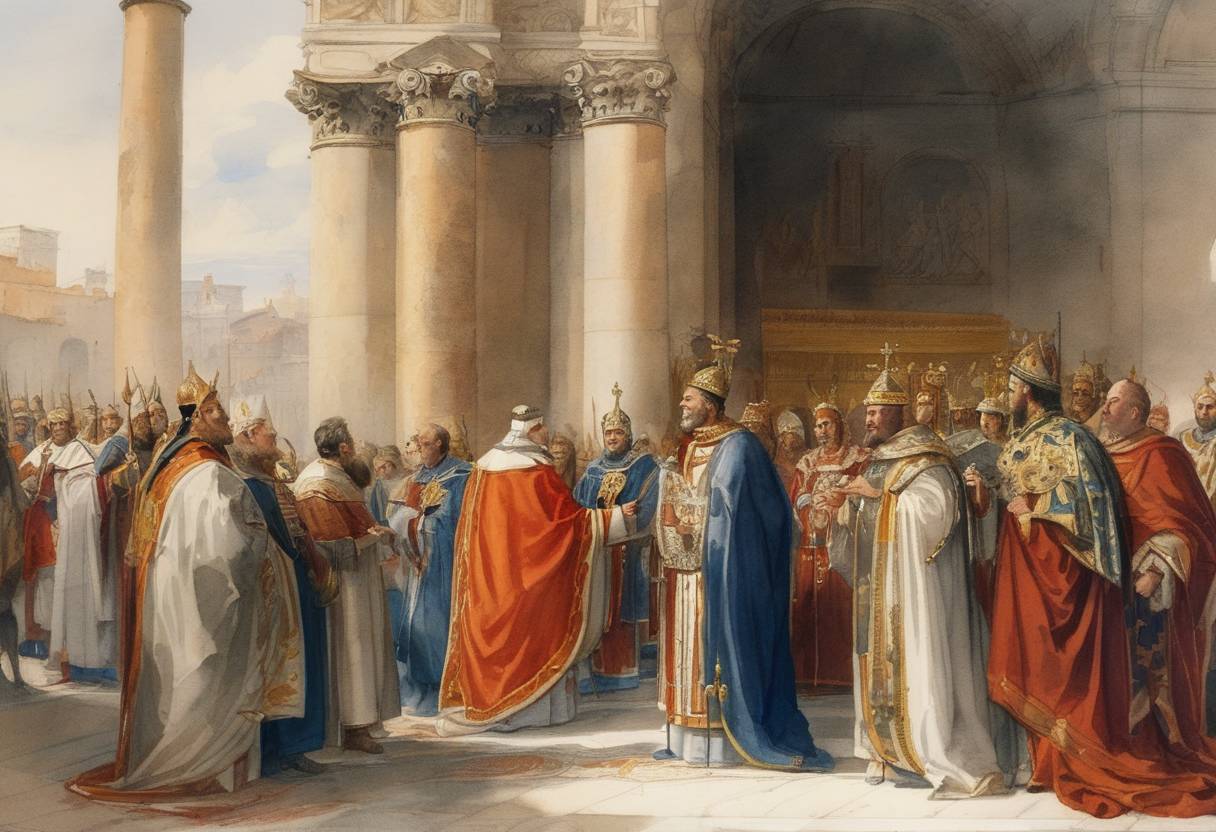
On September 24, 1227, Frederick II, the Holy Roman Emperor, faced excommunication by Pope Gregory IX. This significant event stemmed from Frederick’s failure to fulfill a vow he had made to lead a Crusade to the Holy Land, which had been a longstanding expectation for European monarchs during this era.
Frederick II, a member of the Hohenstaufen dynasty, became Holy Roman Emperor in 1220. Known for his educational pursuits, culture, and multilingual abilities, Frederick ruled a realm that extended from Germany to Sicily. His reign was characterized by his attempts to consolidate imperial authority, often bringing him into direct conflict with the papacy, which feared the centralization of power in the hands of the emperor.
During the period, the Crusades were religious military campaigns sanctioned by the Catholic Church to reclaim Jerusalem and other holy sites from Muslim control. Frederick had taken a Crusading vow in 1215 and reaffirmed it multiple times, most notably at his crowning as emperor in 1220.
The immediate events leading to Frederick’s excommunication unfolded when Frederick promised to embark on a Crusade in 1227. Arrangements were made, and a fleet was assembled in the southern Italian port of Brindisi. However, an outbreak of disease delayed his departure. The emperor fell ill himself and decided to return, postponing the campaign.
Pope Gregory IX, who had ascended to the papacy in 1227, viewed this delay as a breach of Frederick’s vow. The pope had no patience for further excuses, interpreting them as evidence of insincerity and an unwillingness to prioritize the Holy Land’s liberation. Consequently, on September 24, 1227, Pope Gregory IX excommunicated Emperor Frederick II. The pope’s action was grounded in a strategic attempt to maintain papal authority and to penalize what was seen as political obstruction by the emperor.
Frederick II’s excommunication had immediate repercussions on both his political standing and his relations with the papacy. Despite being excommunicated, Frederick embarked on the Sixth Crusade in 1228, where he successfully negotiated a treaty with the Ayyubid sultan Al-Kamil, leading to the peaceful transfer of Jerusalem, Bethlehem, and Nazareth to Christian control without battle. This diplomatic success increased Frederick’s prestige and highlighted his ability to achieve Crusader goals outside traditional militant means.
His reconciliation with the Church eventually occurred, albeit amid further conflicts. The ongoing disputes between the papacy and Frederick II continued to shape European politics, significantly affecting the balance of power between the secular and religious authorities in the Middle Ages.
The excommunication of Frederick II is a crucial moment in medieval history that underscores the tension between ecclesiastical authority and secular ambition, paving the way for further developments in both the Holy Roman Empire and the broader Western Christian world.
Source: en.wikipedia.org