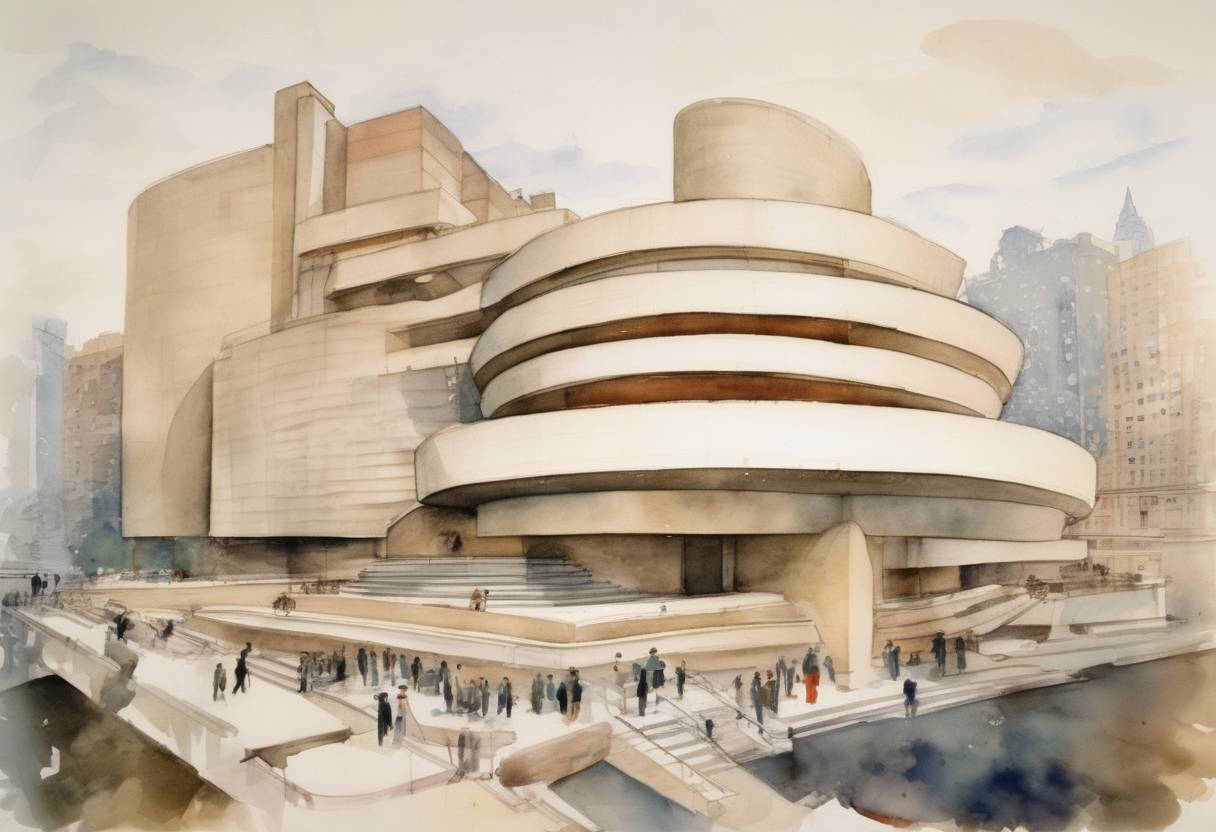
The Opening of The Solomon R. Guggenheim Museum
On October 21, 1959, the Solomon R. Guggenheim Museum, an architectural masterpiece designed by the renowned American architect Frank Lloyd Wright, opened its doors to the public in New York City. This event marked a significant moment in both the art and architecture worlds, as the museum’s design challenged conventional notions of museum architecture and became an iconic symbol of modernist design.
Background and Context
Frank Lloyd Wright: Wright was one of the most influential architects of the 20th century, known for his innovative designs and the philosophy of organic architecture, which sought harmony between human habitation and the natural world. The Guggenheim Museum was one of his final projects, and it took 16 years from commission to completion.
Solomon R. Guggenheim: A wealthy industrialist and art collector, Guggenheim began collecting modern art in the 1920s. His collection grew rapidly, and he sought to create a permanent space to house and display it. In 1937, he established the Solomon R. Guggenheim Foundation to foster the appreciation of modern art.
Commissioning the Design: In 1943, Guggenheim and his art advisor, Hilla Rebay, commissioned Wright to design the museum. They envisioned a space that would not only house art but also be a work of art itself.
Architectural Design
Innovative Structure: The Guggenheim Museum is renowned for its unique spiral design. Wright’s vision was to create a “temple of the spirit,” where visitors could experience art in a continuous flow. The building features a ramp gallery that spirals upward, allowing visitors to view artworks in a seamless, uninterrupted manner.
Challenges and Construction: The design was revolutionary and faced several challenges, including structural concerns and budget constraints. Construction began in 1956 and was completed in 1959, six months after Wright’s death.
Opening and Reception
Public Reaction: Upon its opening, the Guggenheim Museum received mixed reviews. Some critics praised its bold design and innovative approach to displaying art, while others were skeptical about its functionality as a museum space.
Artistic Significance: Despite initial criticisms, the museum quickly became a beloved landmark and an important cultural institution. It has since hosted numerous significant exhibitions and continues to be a major attraction for art lovers worldwide.
Legacy and Impact
Architectural Influence: The Guggenheim Museum is considered one of Wright’s greatest achievements and a masterpiece of modern architecture. Its design has influenced countless architects and remains a subject of study and admiration.
Cultural Importance: The museum has played a crucial role in promoting modern and contemporary art. It has expanded its collection and influence, with additional Guggenheim museums established in other cities, including Bilbao and Venice.
In summary, the opening of the Solomon R. Guggenheim Museum on October 21, 1959, was a landmark event that not only showcased Frank Lloyd Wright’s visionary architectural design but also solidified the museum’s role as a pivotal institution in the art world. Its innovative structure and commitment to modern art continue to inspire and captivate audiences globally.