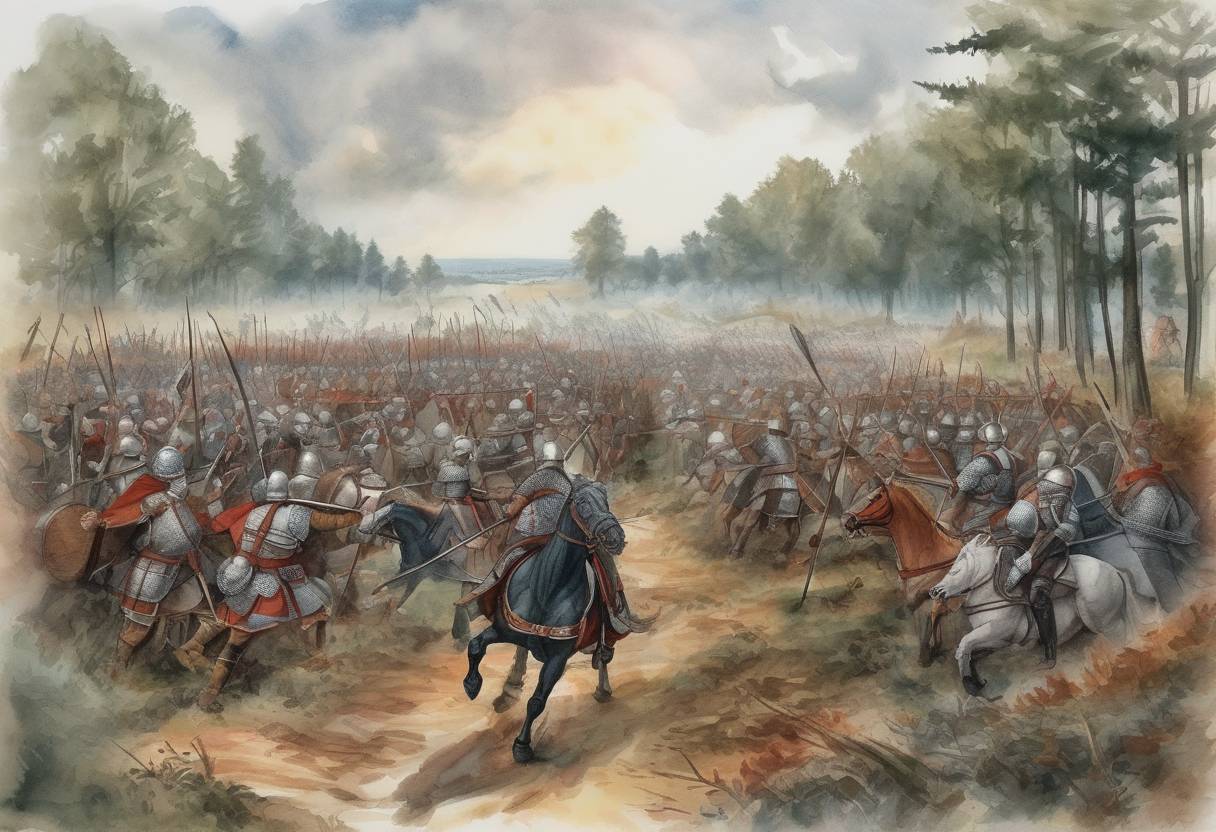
The Battle of Lüneburg Heath: December 22, 880
The Battle of Lüneburg Heath, fought on December 22, 880, was a pivotal engagement in the Carolingian efforts to repel Viking incursions into their territories. This battle saw the forces of Louis III of France successfully defeat Norse invaders, marking a significant moment in the ongoing struggle against Viking raids during the late 9th century.
Historical Context
During the 9th century, Europe faced numerous Viking raids, as Norse warriors from Scandinavia sought wealth and territory across the continent. The Carolingian Empire, under the rule of the descendants of Charlemagne, was particularly vulnerable to these incursions due to its extensive and often poorly defended borders.
Louis III, who co-ruled West Francia with his brother Carloman II, was one of the Carolingian monarchs tasked with defending the empire from these persistent threats. The Vikings had been conducting raids across the Frankish territories, exploiting the political fragmentation and internal strife within the Carolingian realm.
The Battle
The Battle of Lüneburg Heath took place in what is now northern Germany. The exact details of the battle are somewhat scarce, but it is known that Louis III led a Frankish army against a sizeable force of Norse invaders. The battle was part of a broader campaign to secure the region and push back against the Viking threat.
Louis III’s forces managed to achieve a decisive victory over the Norsemen. This success was attributed to both strategic planning and the effective mobilization of local forces, which helped to counter the mobility and ferocity of the Viking warriors.
Aftermath and Significance
The victory at Lüneburg Heath was significant for several reasons:
Strategic Reprieve: It provided a temporary reprieve from Viking raids in the region, allowing the Carolingians to consolidate their defenses and stabilize their rule.
Boost to Morale: The victory bolstered the morale of the Frankish forces and demonstrated that the Vikings could be defeated, which was crucial for maintaining the support of local nobility and the general populace.
Political Implications: For Louis III, the victory enhanced his reputation as a capable military leader, strengthening his position within the Carolingian dynasty.
Long-term Impact: While the battle did not end Viking incursions into Frankish territories, it was part of a series of engagements that gradually reduced the frequency and intensity of raids over the following decades.
The Battle of Lüneburg Heath exemplifies the challenges faced by European rulers during the Viking Age and highlights the resilience and adaptability required to defend against such formidable adversaries.