Lech Wałęsa Elected President of Poland - December 9, 1990
1990 · Warsaw, Poland
Lech Wałęsa is elected President of Poland, becoming the first democratically elected president of the country after the fall of communism.
August 18, 1989
Leading Polish opposition leader Tadeusz Mazowiecki was elected as the first non-communist Prime Minister in Eastern Europe since the end of World War II, marking a significant step in the fall of communism in Eastern Europe.
Warsaw, Poland | Polish government
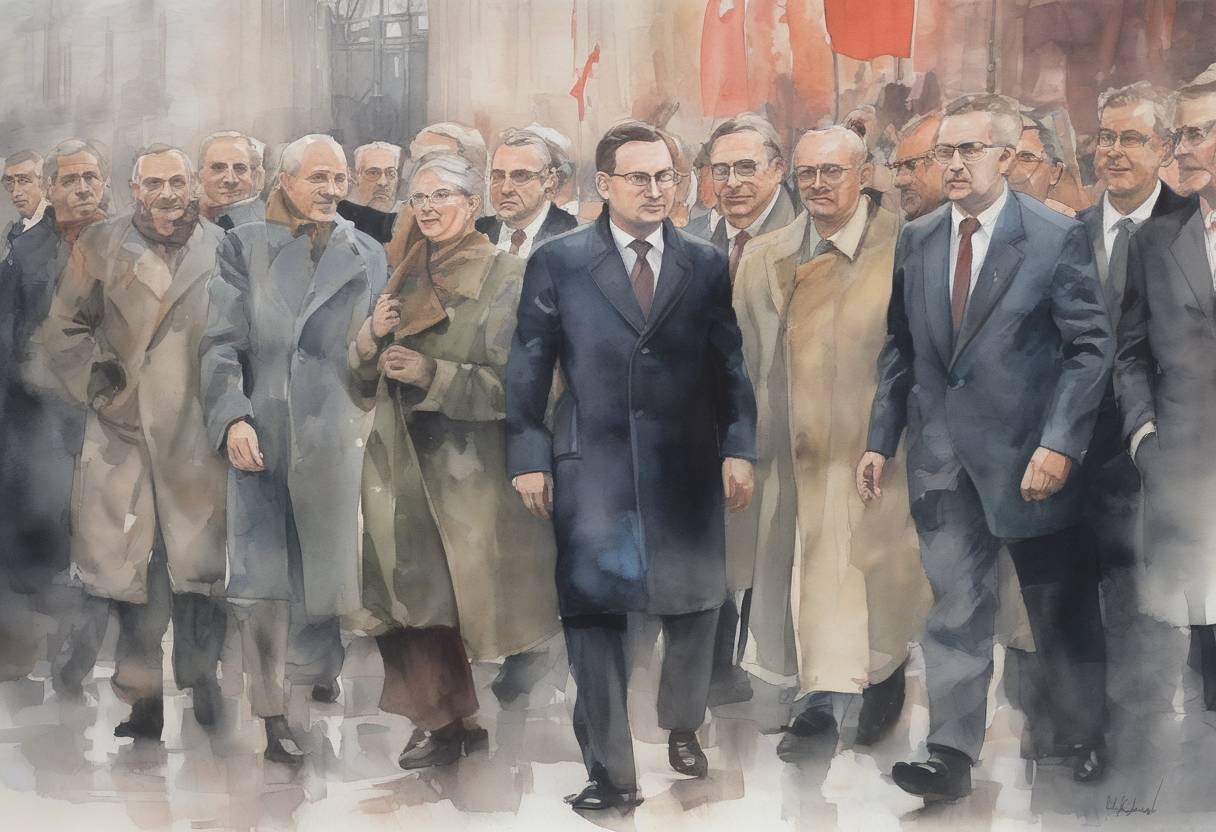
On August 18, 1989, Tadeusz Mazowiecki was elected as the Prime Minister of Poland, marking a historic moment as he became the first non-communist head of government in Eastern Europe since the end of World War II. This event was a significant milestone in the decline of communist influence across the region and a crucial step in Poland’s transition towards democracy.
Post-War Eastern Europe: After World War II, Eastern Europe fell under the influence of the Soviet Union, with communist regimes established across the region. Poland, like its neighbors, was governed by a communist party that maintained power through a combination of political repression and economic control.
Solidarity Movement: The rise of the Solidarity movement in the 1980s, led by figures like Lech Wałęsa, played a critical role in challenging the communist regime in Poland. Solidarity, initially a trade union, evolved into a broader social movement advocating for political reform and workers’ rights.
Round Table Talks: In early 1989, the Polish government, facing economic difficulties and increasing public unrest, entered into negotiations with opposition leaders, including Solidarity. These discussions, known as the Round Table Talks, resulted in agreements to hold partially free elections and legalize independent trade unions.
Election of Mazowiecki: Tadeusz Mazowiecki, a prominent intellectual and advisor to Solidarity, was elected Prime Minister by the Polish parliament. His election was facilitated by the June 1989 elections, where Solidarity won a significant number of seats, breaking the communist party’s monopoly on power.
Formation of a Coalition Government: Mazowiecki’s government was a coalition, including members of Solidarity and other opposition groups, alongside some communist party members. This coalition was necessary to ensure a smooth transition and maintain political stability.
End of Communist Rule: Mazowiecki’s election symbolized the end of communist dominance in Poland and inspired similar movements across Eastern Europe. It demonstrated the possibility of peaceful transition through negotiation and democratic processes.
Impact on Eastern Europe: The success of Poland’s transition encouraged other Eastern European countries to pursue democratic reforms. By the end of 1989, communist regimes in countries like East Germany, Czechoslovakia, and Romania had also collapsed.
Legacy: Tadeusz Mazowiecki’s leadership laid the groundwork for Poland’s integration into Western political and economic structures, including its eventual membership in the European Union and NATO.
Mazowiecki’s election as Prime Minister was not just a turning point for Poland but a catalyst for the broader wave of democratization that swept through Eastern Europe, reshaping the continent’s political landscape.
Source: en.wikipedia.org