Monty Python's Flying Circus: The First Episode
1969 · London, United Kingdom
The first episode of "Monty Python's Flying Circus" aired on BBC One, introducing the world to the influential British comedy troupe.
November 23, 1963
The BBC broadcasts the first episode of "Doctor Who," a science fiction television series that becomes a significant part of British popular culture.
London, United Kingdom | BBC
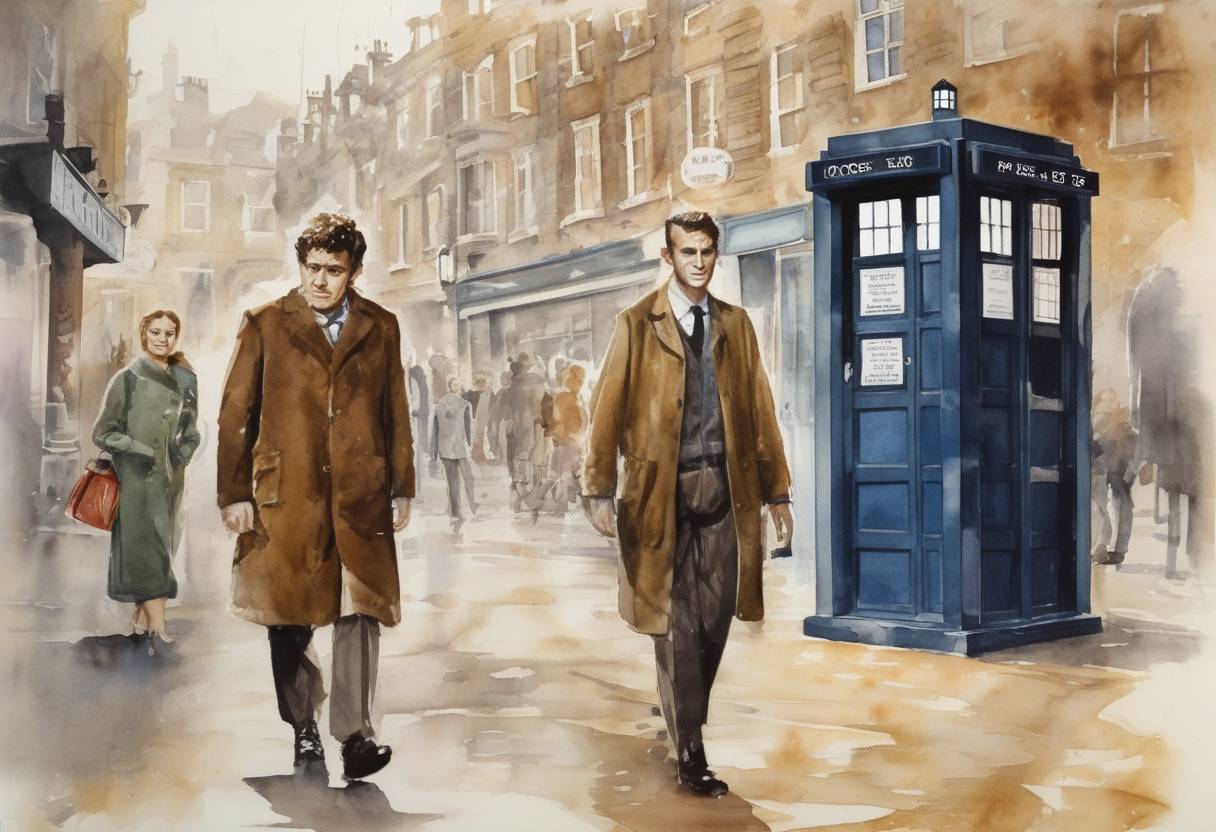
On November 23, 1963, the British Broadcasting Corporation (BBC) aired the first episode of “Doctor Who,” a science fiction television series that would become a cornerstone of British popular culture and a significant influence on the genre worldwide.
The early 1960s was a period of innovation and experimentation in television. The BBC sought to create a program that would appeal to a family audience, combining educational content with entertainment. The concept of “Doctor Who” was developed by Sydney Newman, the BBC’s Head of Drama, along with C. E. Webber and Donald Wilson. The show was designed to be a time-traveling adventure series, with the potential to explore various historical periods and futuristic settings.
The inaugural episode, titled “An Unearthly Child,” introduced audiences to the enigmatic character known as the Doctor, portrayed by William Hartnell. The Doctor is a Time Lord from the planet Gallifrey, who travels through time and space in the TARDIS, a time machine that outwardly resembles a British police box. The episode also introduced the Doctor’s first companions: his granddaughter Susan Foreman (played by Carole Ann Ford) and her schoolteachers, Ian Chesterton (William Russell) and Barbara Wright (Jacqueline Hill).
The episode begins with Ian and Barbara, curious about their mysterious student Susan, following her to a junkyard. There, they encounter the Doctor and the TARDIS. The teachers are inadvertently taken on a journey through time and space, marking the start of their adventures with the Doctor.
“Doctor Who” quickly became a cultural phenomenon. Its innovative storytelling, imaginative settings, and the iconic character of the Doctor captured the public’s imagination. The series is notable for its ability to regenerate its lead character, allowing different actors to portray the Doctor over the years. This creative decision has contributed to the show’s longevity and enduring popularity.
Despite its modest beginnings, “Doctor Who” has grown into a global franchise, with a dedicated fan base and a significant impact on popular culture. The show’s ability to reinvent itself has ensured its relevance across decades, making it a beloved institution in television history.
In summary, the first broadcast of “Doctor Who” on November 23, 1963, marked the beginning of a groundbreaking series that has left an indelible mark on both British and global popular culture.
Source: en.wikipedia.org