The Publication of "The Celebrated Jumping Frog of Calaveras County"
1865 · New York, United States
Mark Twain's short story 'The Celebrated Jumping Frog of Calaveras County' is published in the New York Saturday Press.
November 14, 1851
Herman Melville's novel 'Moby-Dick' is published in the United States.
New York, United States | Harper & Brothers
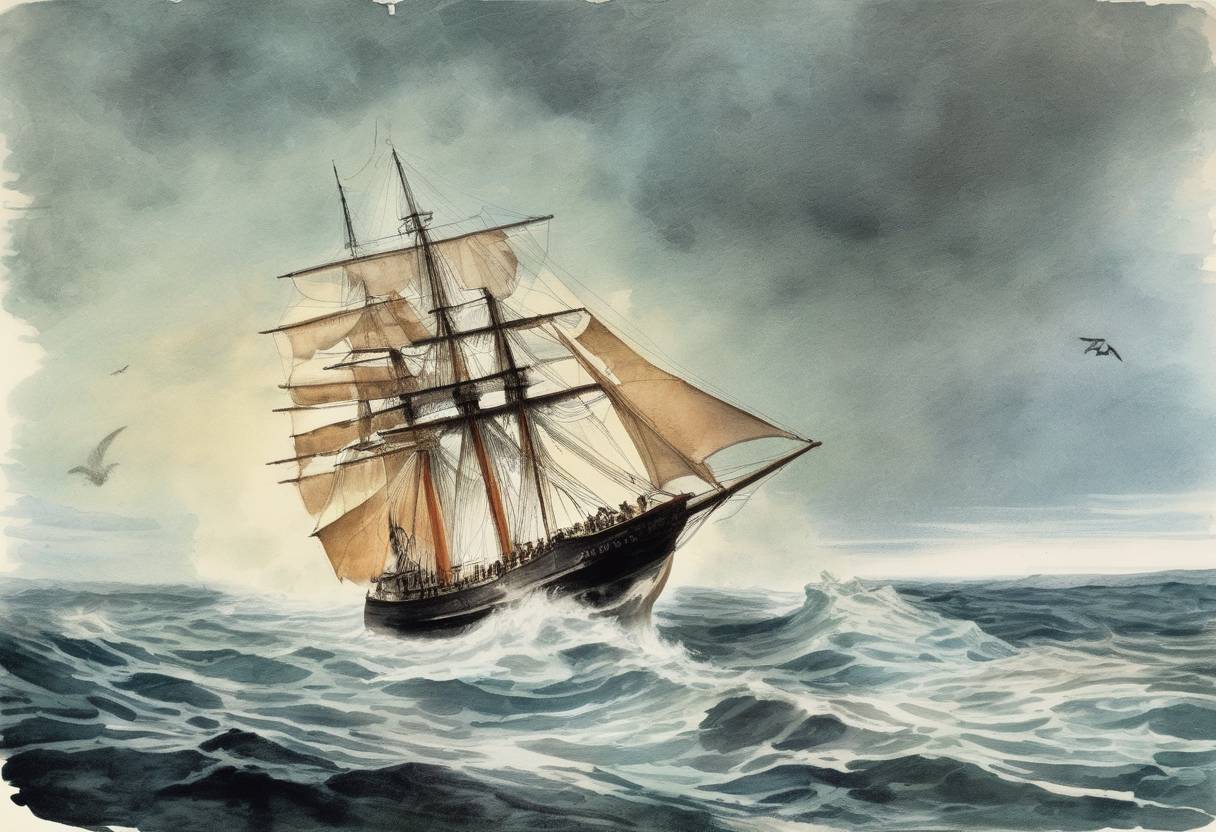
On November 14, 1851, Herman Melville’s novel Moby-Dick; or, The Whale was published in the United States. This seminal work of American literature was released by Harper & Brothers, following its earlier publication in the United Kingdom under the title The Whale in October of the same year.
Herman Melville: Born in 1819, Melville was an American novelist, short story writer, and poet. Before Moby-Dick, he had achieved some success with novels like Typee and Omoo, which were based on his experiences at sea and in the South Pacific.
Inspiration: Melville drew inspiration for Moby-Dick from his own whaling experiences aboard the whaler Acushnet in 1841, as well as from accounts of the real-life sinking of the whaleship Essex by a sperm whale in 1820. Additionally, he was influenced by the works of Nathaniel Hawthorne, to whom he dedicated the novel.
Moby-Dick follows the narrative of Ishmael, a sailor on the whaling ship Pequod, under the command of the enigmatic Captain Ahab. Ahab is obsessed with seeking revenge on Moby Dick, a giant white sperm whale that had previously destroyed his ship and severed his leg. The novel explores themes of obsession, revenge, and the struggle between man and nature.
Innovative Style: The novel is noted for its complex narrative structure, combining elements of adventure, philosophical reflection, and detailed descriptions of whaling. It employs a variety of literary styles, including Shakespearean soliloquies and encyclopedic entries on cetology.
Initial Reception: Upon its release, Moby-Dick received mixed reviews and was not commercially successful. Many contemporary readers found its style and themes challenging. It wasn’t until the 20th century that the novel was recognized as a masterpiece of American literature.
Rediscovery: In the early 20th century, literary critics and scholars began to re-evaluate Moby-Dick, leading to its recognition as a profound exploration of human nature and the American experience.
Cultural Impact: Today, Moby-Dick is considered one of the greatest American novels. It has influenced countless writers and artists and has been adapted into numerous films, plays, and other media.
Themes and Analysis: The novel’s exploration of themes such as the limits of knowledge, the nature of evil, and the existential struggles of humanity continue to resonate with readers and scholars.
In summary, the publication of Moby-Dick on November 14, 1851, marked the release of a work that would eventually become a cornerstone of American literature, celebrated for its depth, complexity, and enduring relevance.
Source: en.wikipedia.org