1839 · London, United Kingdom
The Treaty of London is signed, recognizing Belgium as an independent and neutral state.
May 30, 1913
The Treaty of London was signed, ending the First Balkan War. The treaty resulted in significant territorial changes in the Balkans, with the Ottoman Empire losing most of its European territories.
London, United Kingdom | Balkan League
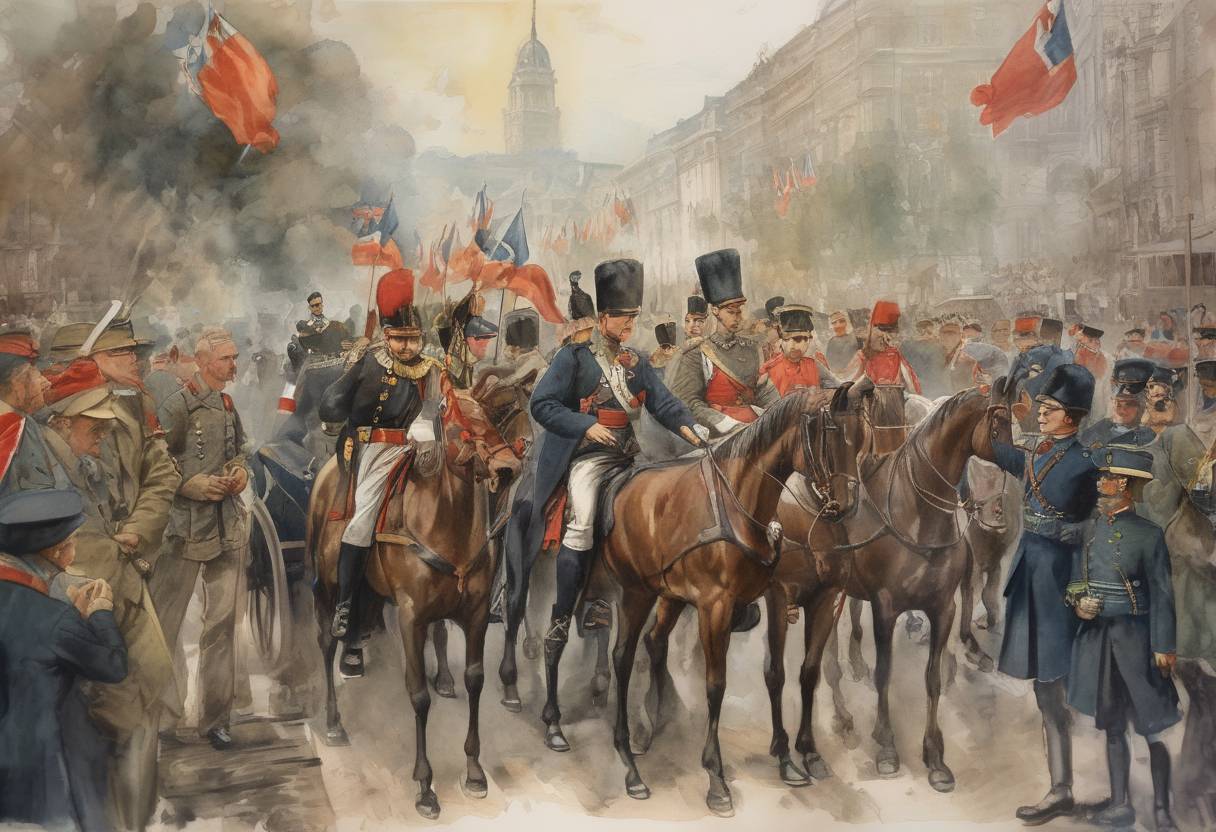
On May 30, 1913, the Treaty of London was signed, marking the conclusion of the First Balkan War. This pivotal treaty resulted in significant territorial changes in the Balkans, dramatically altering the region’s political landscape and diminishing the Ottoman Empire’s presence in Europe.
The First Balkan War began in October 1912, as the Balkan League—comprising Serbia, Montenegro, Greece, and Bulgaria—sought to seize territories from the weakening Ottoman Empire. The war was driven by nationalist aspirations and the desire to expand territorial holdings at the expense of the Ottomans, who had been struggling to maintain control over their European territories.
The Treaty of London was negotiated under the auspices of the Great Powers, who sought to stabilize the region and prevent further conflict. The main provisions of the treaty included:
Territorial Losses for the Ottoman Empire: The Ottomans ceded almost all of their European territories, retaining only a small area around Constantinople (modern-day Istanbul). This marked a significant retreat from the Balkans, where they had held sway for centuries.
Creation of Albania: The treaty recognized the independence of Albania, which had declared independence from the Ottoman Empire in November 1912. This decision was influenced by the Great Powers, particularly Austria-Hungary and Italy, who sought to prevent Serbia from gaining access to the Adriatic Sea.
Division of Territories: The treaty did not resolve all territorial disputes, particularly between the Balkan allies themselves. The division of Macedonia and other regions was left ambiguous, sowing the seeds for future conflicts.
The Treaty of London significantly reshaped the Balkans, but it did not bring lasting peace. The unresolved territorial disputes among the Balkan League members soon led to the Second Balkan War in June 1913, as Bulgaria turned against its former allies, Serbia and Greece, over the division of spoils.
The First Balkan War and the subsequent treaty highlighted the decline of the Ottoman Empire and the volatile nature of Balkan politics. The shifting borders and nationalistic fervor in the region contributed to the tensions that would eventually lead to the outbreak of World War I in 1914.
In summary, the Treaty of London was a crucial moment in Balkan history, marking the end of Ottoman dominance in the region and setting the stage for further conflicts that would have far-reaching consequences for Europe and the world.
Source: en.wikipedia.org