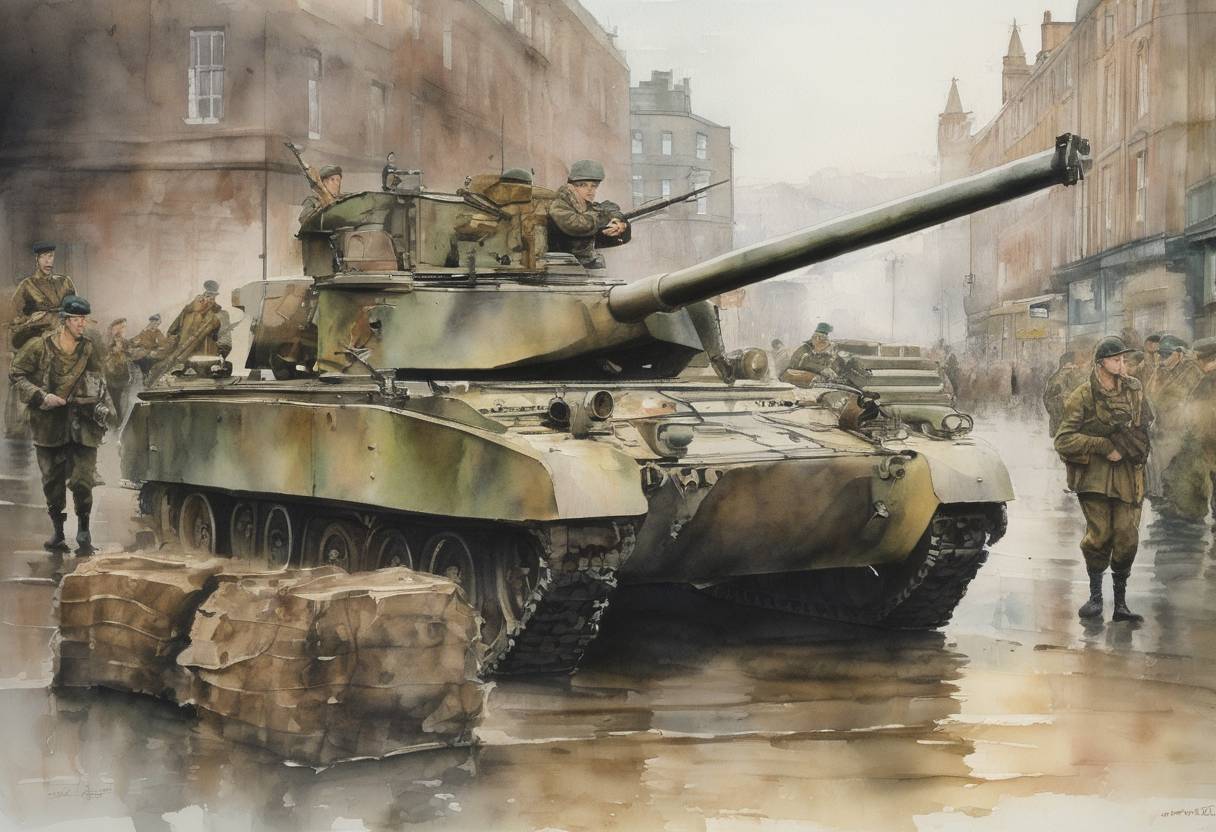
Operation Banner: The End of a 38-Year Mission
On July 31, 2007, Operation Banner, the British Army’s longest continuous operation, officially concluded in Northern Ireland. This marked the end of a military presence that had lasted for 38 years, beginning in 1969. The operation was a response to the escalating conflict known as “The Troubles,” a period of sectarian violence primarily between the Protestant unionist community, who wanted Northern Ireland to remain part of the United Kingdom, and the Catholic nationalist community, who sought unification with the Republic of Ireland.
Background and Context
The Troubles: The conflict began in the late 1960s, rooted in historical tensions between the two communities. It involved paramilitary groups, such as the Irish Republican Army (IRA) and loyalist organizations, and resulted in widespread violence and civil unrest.
Initial Deployment: The British Army was initially deployed in August 1969 to restore order following riots and violence in Derry and Belfast. The operation was expected to be short-term, but the situation rapidly escalated.
Key Events During Operation Banner
Bloody Sunday: One of the most infamous incidents occurred on January 30, 1972, when British soldiers shot 26 unarmed civilians during a protest march in Derry, resulting in 14 deaths. This event significantly increased tensions and recruitment for the IRA.
Direct Rule: In March 1972, the British government suspended the Northern Ireland Parliament and imposed direct rule from London, further entrenching the military’s role in the region.
Peace Efforts: Throughout the 1980s and 1990s, various attempts were made to broker peace, culminating in the Good Friday Agreement of 1998. This agreement was a major political development that laid the groundwork for peace and power-sharing.
Conclusion of Operation Banner
Security Transition: By 2007, the security situation had significantly improved, allowing for the reduction of military presence. The responsibility for security was transferred to the Police Service of Northern Ireland (PSNI).
Legacy: Operation Banner officially ended with a formal ceremony, marking a shift from military to police-led security. The operation had involved over 300,000 British troops over its duration, with 763 military personnel losing their lives.
Aftermath and Historical Significance
Impact on Northern Ireland: The end of Operation Banner was a significant milestone in the peace process, symbolizing a move towards normalization and reconciliation in Northern Ireland.
Historical Reflection: The operation remains a complex and controversial chapter in British and Irish history, with ongoing debates about its impact and legacy.
Operation Banner’s conclusion was a pivotal moment in the history of Northern Ireland, reflecting the broader progress towards peace and stability in the region.