The Battle of Hastings - October 14, 1066
1066 · Hastings, England
The Battle of Hastings took place, where William the Conqueror defeated King Harold II of England, leading to the Norman conquest of England.
September 25, 1066
The Battle of Stamford Bridge took place, where King Harold II of England defeated the invading forces of King Harald Hardrada of Norway, marking the end of the Viking Age in England.
Stamford Bridge, England | English Army
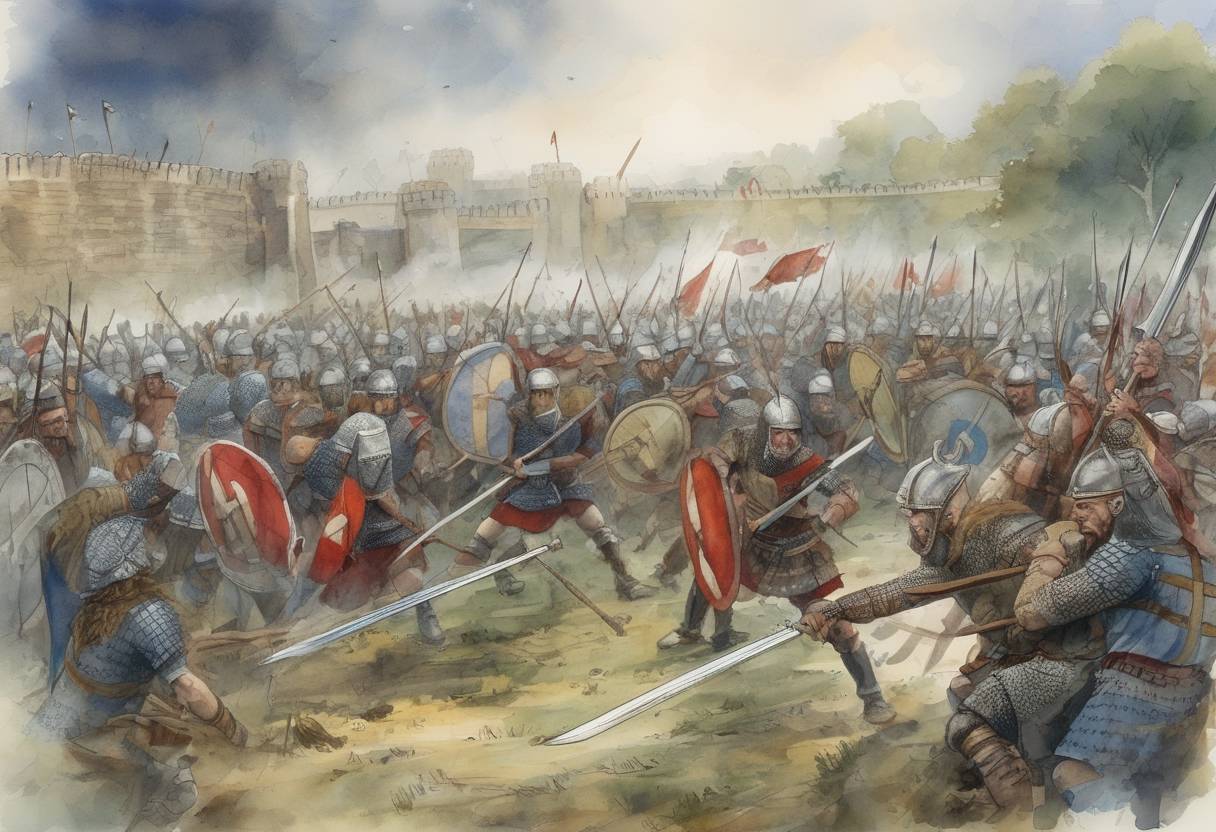
The Battle of Stamford Bridge, fought on September 25, 1066, was a pivotal moment in English history, marking the end of the Viking Age in England. This battle saw King Harold II of England face off against the invading forces of King Harald Hardrada of Norway, with significant consequences for both leaders and the future of England.
The early 11th century was a period of intense rivalry and conflict over the English throne. Following the death of Edward the Confessor in January 1066, Harold Godwinson was crowned King Harold II of England. However, his claim was contested by several rivals, including Harald Hardrada, the King of Norway, who believed he had a legitimate claim to the English throne through an agreement with a previous English king.
In September 1066, Hardrada, allied with Tostig Godwinson (Harold’s estranged brother), launched an invasion of England. They landed in the north, quickly capturing York after defeating the local forces at the Battle of Fulford on September 20, 1066.
King Harold II, upon learning of the invasion, rapidly marched his army north from London, covering approximately 185 miles in just four days. This remarkable feat of logistics and speed allowed him to catch the Norwegian forces by surprise at Stamford Bridge, near York.
The battle commenced on September 25, 1066, with the English forces launching a surprise attack on the Norwegians. The Norsemen, unprepared and without their full armor, were caught off guard. Despite this, they fought fiercely. A legendary tale from the battle describes a lone Viking berserker who held the narrow bridge against the English forces, allowing his comrades time to regroup, until he was eventually overcome.
King Harold II’s forces ultimately overwhelmed the Norwegians. King Harald Hardrada was killed during the battle, and Tostig Godwinson also met his end. The defeat effectively ended the Viking threat to England.
The Battle of Stamford Bridge was a decisive victory for King Harold II, but it came at a high cost. The English forces were exhausted and depleted, having fought a significant battle and marched extensively in a short period.
This victory, however, was short-lived. Just three days after the battle, on September 28, 1066, William of Normandy landed on the southern coast of England, initiating the Norman Conquest. Harold’s forces had to march south to face this new threat, leading to the famous Battle of Hastings on October 14, 1066, where Harold was defeated and killed, and William the Conqueror claimed the English throne.
The Battle of Stamford Bridge is often seen as marking the end of the Viking Age in England. It demonstrated the resilience and military prowess of the English under Harold II, but also highlighted the vulnerabilities that would soon be exploited by the Normans. The events of 1066 would reshape the English monarchy and have lasting impacts on the cultural and political landscape of England.
Source: en.wikipedia.org